Small Space Decor Home Decor Trends
Privacy Fence Ideas That Work in Small Yards
Eight privacy fence and screening ideas for small gardens, from horizontal slats and vertical gardens to bamboo, frosted panels, laser-cut metal and fence toppers.
By Admin Published 9 min read

A small garden brings its own design puzzle. You want a private retreat away from overlooking windows and passers-by, but the wrong screening can make a compact plot feel closed in, like sitting at the bottom of a box. On tight urban and suburban plots every bit of ground matters, and the vertical surfaces around the edge do a lot to set the mood of the whole space.
Good privacy screening for a small yard or garden balances three things: how well it works, how it looks, and how big it makes the space feel. Materials that let light filter through, lines that lead the eye sideways, and planting worked into the boundary can all turn a fence from a barrier into a feature you enjoy looking at.
1. Horizontal slats
Horizontal slatted fencing has become a go-to for contemporary small gardens. Where upright boards pull the eye up and down, long horizontal lines carry it along the boundary, which helps a narrow plot read wider than it really is.
Slats also let you decide how private you want to be. Butt the boards closely for near-total screening, or leave narrow, even gaps so air and a little sunlight get through. Those gaps are what stop a tall slatted fence feeling like a fortress wall. Cedar, larch or a hardwood such as ipe give a warm, natural grain that suits both minimalist and more traditional planting; softwood stained in a deep colour is a more modest alternative.
- Keep the gap consistent: a spacer block cut to size makes this quicker and neater.
- Run slats on the side facing your seating, so the posts sit on the neighbour's side or are hidden behind planting.
- Wider gaps reduce privacy at close range, so test a sample section at your seating position before committing.
2. Vertical gardens
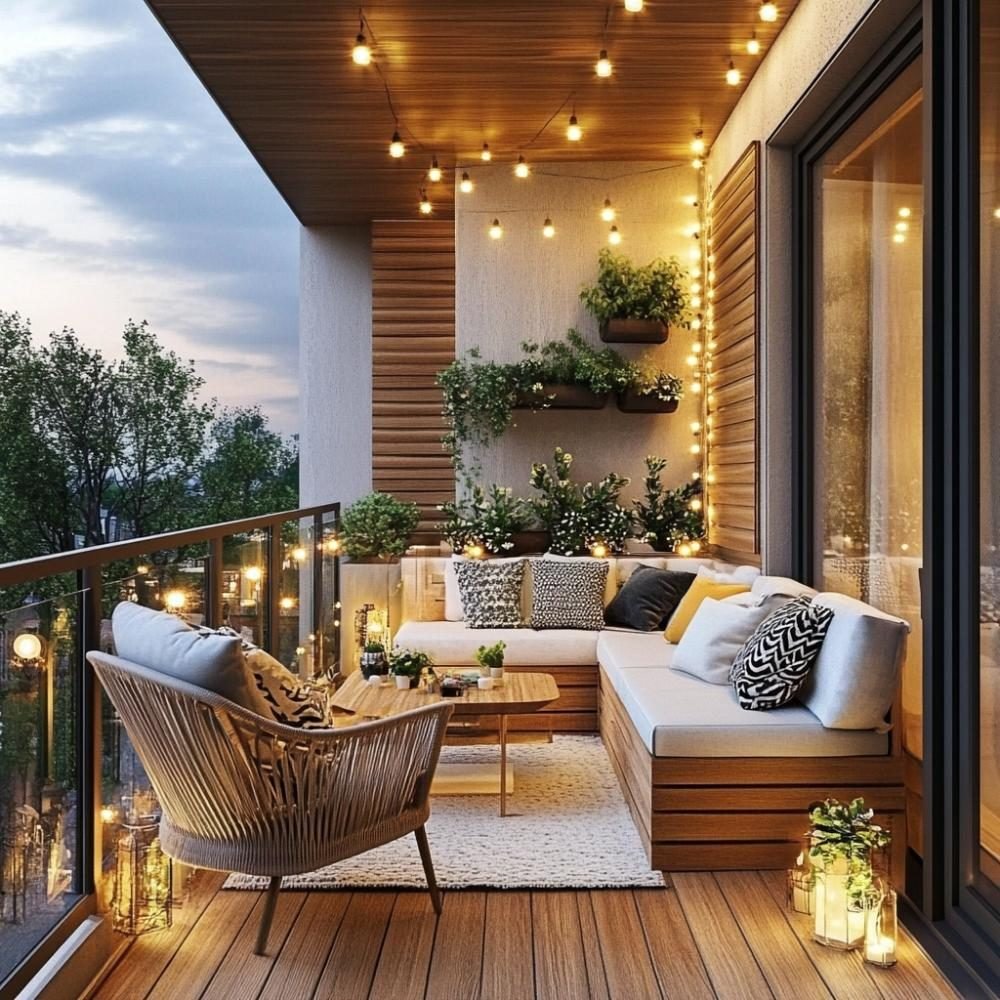
When ground space is short, grow upwards. A living wall softens a hard boundary and gives you planting without giving up a single paving slab. Pocket planters, slim timber troughs or a steel mesh grid fixed to the fence can hold trailing plants, ferns, grasses and herbs such as rosemary, thyme and mint at a height where you can actually pick them.
Plan for the practical side before you start:
- Weight: wet compost is heavy. Check that the fence posts and panels can take the load, and spread it across posts rather than hanging everything from one panel.
- Whose fence it is: boundary fences often belong to the neighbour. Ask before fixing anything to it, or put up your own freestanding frame just inside your boundary.
- Watering: small pockets dry out quickly in summer. A simple drip line on a timer saves a lot of daily watering, and keeping water off the fence timber helps it last.
- Protection: a liner or a small air gap between planters and timber stops damp sitting against the boards.
3. Lattice trellis
Lattice is an underrated choice for small spaces. Its open diamond or square grid marks the boundary without blocking every view or breeze, and that semi-open quality matters where a solid wall would feel oppressive.
On its own, lattice offers only light screening. It comes into its own as a frame for climbers: star jasmine, honeysuckle, clematis and climbing roses will knit through it and turn it into a fragrant green screen with dappled light coming through. For cover all year round, include an evergreen climber, such as star jasmine or an evergreen clematis, rather than relying only on deciduous plants that leave the trellis bare in winter. Lattice panels are generally less expensive than solid timber panels, and they take paint well if you want them to match window frames or garden furniture.
4. Bamboo screens
Bamboo brings a fine, upright texture that does not overwhelm a small space, and it suits relaxed, Japanese-inspired or jungle-style gardens. There are two very different ways to use it.
Bamboo screening rolls
Rolls of split or whole bamboo canes are one of the quickest screening upgrades. They can be wired or tied over an existing chain-link fence, a tired timber fence or a balcony railing, and they give a warm, golden backdrop straight away. Expect to replace them eventually, as weather fades and loosens the canes over time.
Living bamboo
Planted bamboo makes a dense, rustling screen, but choose carefully. Running bamboo can spread aggressively underground, including under fences and into neighbours' gardens, and it is very hard to remove once established. Choose clumping types, and either install a proper root barrier to the depth the supplier recommends or grow bamboo in large, sturdy containers, which also keeps it under control on a patio.
5. Frosted panels
If your garden is already short on light, a tall solid fence can make things worse by casting long shadows. Frosted or translucent panels in a slim metal frame block clear views while still letting soft daylight through, so the space stays bright.
- Use toughened safety glass or outdoor-grade acrylic, never ordinary glass, and follow the manufacturer's guidance on frame fixing and wind exposure.
- Acrylic is lighter and easier to handle; glass resists scratching better and keeps its clarity.
- Backlighting with LED strips can turn the panels into a soft glowing boundary at night. Choose fittings rated for outdoor use, and have any mains-powered lighting installed by a qualified electrician.
Frosted screening suits contemporary homes and pairs well with large-format paving and powder-coated metal furniture.
6. Laser-cut metal
For a bold statement, laser-cut metal screens work as functional art. Patterns range from geometric repeats to leaf and branch motifs, and low sun throws their outline across the paving so the garden changes through the day.
Metal screens can be slimmer than a timber fence, which saves a few precious centimetres along a tight boundary. A powder-coated or weathering steel finish needs little more than an occasional rinse. Because a full run of patterned metal can feel busy, these screens often work best as accent panels, for example one or two behind a seating area set into an otherwise plain fence. Check how much the pattern hides: the more open the design, the less privacy it gives at close range.
7. Mixed materials
A single material over a whole boundary can feel flat in a tight space. Combining textures, such as stone with timber or timber with metal, adds depth and gives the eye different points to rest on.
A low gabion wall (wire cages filled with stone) topped with a lighter timber screen is a good example. The base feels solid and grounded, the upper part stays light, and the gabion can double as a perch or a backdrop for planting. You can also play with colour: cool grey stone against warm stained timber, or black metal framing against pale boards. Make sure any gabion base sits on a firm, level footing and that the screen above is fixed to its own posts rather than relying on the cages for support.
8. Fences with toppers
You do not always need a full-height solid wall to feel private. A standard fence, often around 1.5–1.8 m (5–6 ft), can be lifted with a topper of trellis, lattice or decorative spindles, typically 30–60 cm (1–2 ft) deep. The solid lower part screens people sitting down, while the open band above lets you see sky and treetops.
This layered approach helps avoid the shoebox effect, because keeping the top open keeps a connection with the wider surroundings. Check heights before you build. In England, a fence, wall or gate generally needs planning permission if it is over 2 m high, or over 1 m next to a highway used by vehicles (or the footway beside it), and trellis toppers and screens fixed to a fence count towards that height. Listed buildings, conservation areas and some estates have extra restrictions. In the US, height limits vary by town and HOA, so check locally before you buy materials.
Design principles for small gardens
Beyond the material, how you finish and light the boundary makes a real difference.
- Colour: dark shades such as charcoal, black or deep green tend to recede, so the edges of a small garden seem further away and planting stands out against them. Pale colours bounce light into shady corners and keep the space feeling bright. Pick based on how much sun the garden gets.
- Lighting: do not let the boundary vanish at night. Soft uplighting or wall-washing along the fence shows the full extent of the space and makes it usable after dark. Use outdoor-rated fittings and a qualified electrician for mains power.
- Direction of line: in a long, narrow garden, horizontal elements help it read wider. In a short, shallow garden, upright elements draw the eye up towards the sky so it feels less squashed.
- Layering: a row of planting or a few large pots in front of the fence blurs the boundary, so the eye cannot tell exactly where the garden ends.
Tip: Before choosing a height, sit where you will actually relax and have someone stand at the boundary. Screening only needs to block the sightlines that bother you, which often means a taller section in one spot rather than a tall fence all the way round.
FAQ
What is the most affordable privacy fence for a small yard?
Bamboo screening rolls and timber trellis are usually cheaper than other options, especially when they are fixed over an existing fence or frame. Frosted panels, masonry and custom metalwork sit at the higher end.
How high should a privacy fence be in a small garden?
Around 1.8 m (6 ft) usually blocks views of a standing person, while a lower fence screens seated areas. Limits depend on where you live: in England, over 2 m (or over 1 m next to a highway used by vehicles) generally needs planning permission, with toppers counting towards the height. In the US, rules vary, so check with your local authority or HOA before you build.
Will a solid fence make my small garden feel smaller?
It can, especially a tall, dark, solid one with nothing in front of it. Gaps between slats, translucent or open toppers, light-reflecting finishes and planting along the base all soften the effect.
Can I install a privacy fence myself?
Bamboo rolls, trellis panels and some slatted kits are manageable for a confident DIYer. Glass, masonry, gabions and custom metalwork usually need a professional to make sure they are fixed securely and safely, and it is worth checking for buried cables and pipes before digging post holes.
How do I look after a living privacy screen?
Expect regular watering, pruning and occasional feeding, especially in the first couple of years. For lower maintenance, choose hardy evergreens suited to your soil and aspect, and consider a drip irrigation line on a timer.
Final thoughts
The best privacy screening for a small garden blocks the views that matter while keeping light, air and a sense of space. Before you build, read our guide to privacy fence mistakes and our breakdown of what drives privacy fence cost, and if you are weighing up low-maintenance panels, see our vinyl fence ideas for small yards. For help planning screening, planting and lighting together, explore our balcony and terrace decoration service or book a consultation.


