The Ultimate Guide to Hanging a Heavy Mirror Without Drilling
Seven ways to hang a heavy mirror without drilling: adhesive strips, mounting tape, structural glue, leaning, over-door hangers, tension poles and push-in hooks, with honest limits.
By Admin Published 9 min read

The desire to transform a living space often starts with a mirror. Mirrors do more than reflect your image: they bounce light around a room, create the illusion of more space and serve as a sophisticated focal point. However, for many renters, flat dwellers, or anyone simply wary of damaging their plasterboard (drywall), the prospect of taking a drill to the wall is a major deterrent. The good news is that you don’t always need power tools to achieve a polished, professional look.
Hanging a heavy mirror without a drill takes more than luck: it needs the right materials, a little physics and careful preparation. This guide explores the most effective low-damage methods to secure your reflective centrepieces safely and stylishly, and is honest about where each one stops being suitable. If you rent, also read our dedicated guide to hanging heavy mirrors in rentals without drilling, and check your tenancy agreement before you start.

1. Adhesive strips
When most people think of no-drill solutions, adhesive strips are the first thing that comes to mind. Adhesive technology has moved far beyond the flimsy stickers used for posters. High-capacity picture-hanging strips use an interlocking hook-and-loop or snap system that clicks together to provide a secure hold.
To succeed with adhesive strips, pay close attention to the weight rating. Ratings vary by product, so check the packaging, never exceed the stated limit, and don’t rely on adhesives alone for heavy mirrors. Spreading several sets evenly around the frame helps distribute the load. The secret to success lies in surface preparation: clean both the wall and the mirror frame with isopropyl alcohol to remove oils and dust. Once applied, press the strips firmly and, crucially, let the adhesive set for the time stated on the packaging before you hang the weight of the mirror. Test a strip on a hidden spot first to see how your paint reacts when it comes off.
2. Mounting tape
Industrial-strength mounting tape is the more permanent cousin of adhesive strips. While strips are designed to be removed cleanly, heavy-duty mounting tape provides a much more aggressive bond. It can suit mirrors without a traditional frame, or those being mounted on very smooth surfaces such as tile or glass.
The application process is similar to strips, but the stakes are higher. Once this tape touches the wall, it is very difficult to reposition, and removing it can take paint or plaster with it, so it is not a renter-friendly option. It is best kept for mirrors you plan to leave in place for a long time, within the tape’s stated rating. Many installers apply it in vertical strips rather than horizontal ones, which leaves channels for air to circulate behind the mirror and helps reduce trapped moisture, especially in bathrooms.
3. Structural glue
Structural adhesives, sometimes sold as “liquid nails”-style construction adhesives, are a permanent solution. They are only for walls you are prepared to damage, perhaps in a garage, a workshop, or a home where you plan to renovate the walls later, and never in a rental. Removing a glued mirror will almost certainly damage the wall surface, and can break the mirror. This method is mainly used for frameless mirrors that need to sit flush against the wall.
The glue creates a strong bond between the mirror and the wall, but that bond is only as good as the surface beneath it: if the glue is applied over paint, the paint itself can peel away under the load. Use an adhesive made for mirrors, as some can damage the mirror’s backing. You will need to support the mirror with a temporary brace or heavy-duty masking tape while the glue cures; follow the packaging for curing times. It is a common choice for large, gym-style mirrors, ideally fitted by a professional.
4. Leaning mirrors
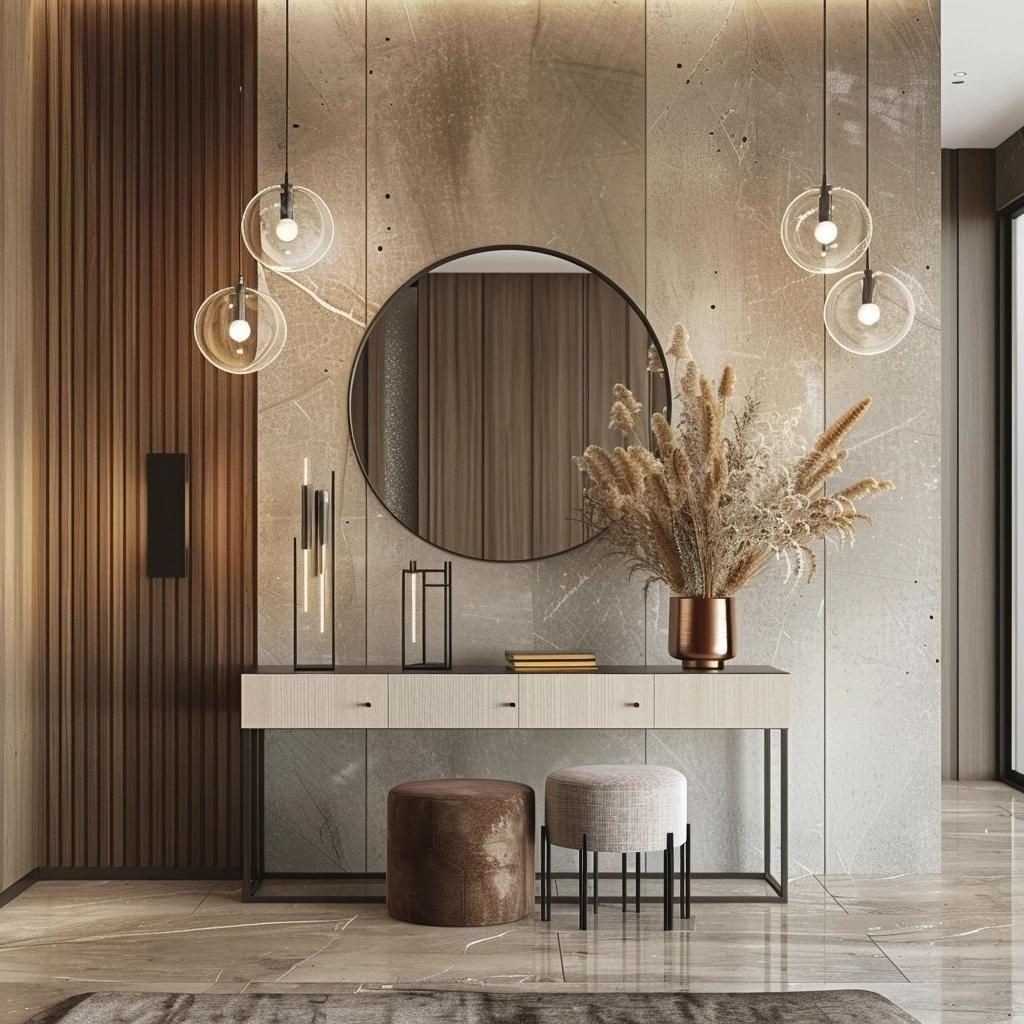
Sometimes the best way to “hang” a mirror is not to hang it at all. The leaning mirror has become a staple of interior design, conveying a sense of relaxed elegance and effortless style. Large floor mirrors, or oversized leaners, are designed specifically for this purpose, and smaller heavy mirrors can rest on a sturdy chest of drawers, sideboard or console instead.
While this method requires no wall fixings, safety is still paramount. A leaning mirror can slide outwards on wooden or tiled floors, so add anti-slip pads to the base. It can also tip forward, which is a real hazard if you have children or pets. Use an anti-tip strap that tethers the top of the mirror to the wall; adhesive versions reduce the risk rather than remove it, and for very heavy mirrors a properly fixed strap (with your landlord’s written permission if you rent) is the safest choice. Make sure any furniture you lean on is stable too: see our guide to anti-tip safety for freestanding furniture and shelving.
5. Door hangers
If wall space is limited, or you are strictly forbidden from touching the walls, the door can be your best friend. Over-the-door mirror hangers carry the weight of the mirror over the top edge of the door rather than on the wall.
This method is ideal for full-length mirrors in bedrooms or bathrooms. Choose sturdy steel hooks and check their rating, and look for foam padding on the back of the hooks to prevent scratching the door’s paint. Remember that a heavy mirror strains the door itself: hollow doors can be damaged, and the extra weight can make a door sag on its hinges over time. Make sure the door still closes properly, and add small adhesive pads to the bottom of the mirror to stop it clanging against the door every time it is opened or closed.
6. Tension poles
Tension poles are an architectural workaround for the no-drill dilemma. They use a spring-loaded mechanism or a screw-thread expansion to wedge themselves between the floor and the ceiling. Once the pole is vertical and locked, you can attach various accessories, including mirror brackets.
This is a favourite for industrial-style lofts or flats with high ceilings. It creates a “floating” mirror effect that can also act as a room divider. Because the pressure is exerted vertically against the floor and ceiling, the walls are left untouched, and the set-up can be moved whenever you rearrange your furniture. Follow the manufacturer’s load and height limits exactly, use the protective pads, check the pole regularly for movement, and only fit poles against solid, sound ceilings, never fragile or suspended ones.
7. Push-in hooks
While they technically go through the wall, spring-steel push-in hooks are often grouped with no-drill methods because they don’t need a drill, wall plugs or large holes. They are made of hardened spring steel and are pushed through plasterboard by hand.
Once pushed through, the hook curves upwards behind the board and braces against its back face. Check the product’s rating and never exceed it; for a heavy mirror, two hooks spread the load and add stability. Only use them in sound plasterboard (not solid plaster, brick or crumbling board), and check for cables and pipes behind the wall before you push one in. They leave a small hole, so renters still need landlord permission.
Ensuring success and safety
Whichever method you choose, there are three golden rules for hanging heavy mirrors without a drill:
- Know your weight: never guess the weight of your mirror. Weigh yourself on bathroom scales holding the mirror, then subtract your own weight. Check the product’s rating and never exceed it: if the mirror is heavier than the fixing is rated for, the mirror will eventually fall.
- Clean the surface: any grease, dust or moisture will cause adhesives to fail. Use a lint-free cloth and isopropyl alcohol before application.
- Check the temperature: adhesives do not bond well in extreme cold or heat. Make sure the room is at a normal living temperature during application and while the adhesive sets.
Tip: Check every no-drill set-up every few months. A peeling strip corner, a sagging door or a leaning mirror that has shifted is your early warning to fix it before it fails.
Final thoughts
For light and mid-weight mirrors, well-prepared adhesive strips, door hangers and push-in hooks can all work, within their ratings. For genuinely heavy pieces, leaning the mirror on the floor or resting it on sturdy furniture, with anti-slip pads and an anti-tip strap, is usually the safest low-damage option. Permanent methods such as mounting tape and structural glue belong only on walls you are happy to repair.
Frequently asked questions
Can I use adhesive strips on textured walls?
Most adhesive manufacturers recommend their products for smooth surfaces only. On heavily textured walls (such as Artex, or the popcorn and knockdown textures common in the US), the adhesive cannot make full contact with the surface, which significantly reduces its hold. For textured walls, leaning the mirror or using a tension pole is much safer.
How do I remove heavy-duty mounting tape without peeling the paint?
Use gentle heat and a sawing motion. Warm the adhesive with a hairdryer on a low setting, then work a length of dental floss or fishing line behind the mirror to “saw” through the tape, with someone supporting the mirror. Once it is off, a citrus-based adhesive remover can clean residue from the wall. Even with care, strong tape may lift paint, so test the remover on a hidden spot first.
How long do adhesive methods last?
Applied correctly to a clean, smooth surface and not overloaded, good-quality adhesive products can last a long time. However, high humidity, such as in a poorly ventilated bathroom, can gradually weaken the bond, so check the mirror’s stability every few months.
Is there a weight limit for over-the-door hangers?
Yes: both the hooks and the door have limits. Check the hanger’s rating and never exceed it, and remember that the door and its hinges take the strain. Hollow doors in particular can be damaged or sag on their hinges with very heavy mirrors.
Can I hang a mirror on wallpaper using adhesives?
It is generally not recommended. The adhesive bonds to the wallpaper, not the wall, so a heavy mirror may simply peel the paper away. For wallpapered rooms, consider a leaning mirror or a tension pole system.
If you rent, read our guide to heavy mirrors and shelving in rentals without drilling and our advice on anti-tip safety for freestanding shelving. Planning a bigger arrangement? See our gallery wall spacing guide. Explore our wall decor and wallpaper service, or book a consultation to plan your walls with a designer.


