Budget Home Decor Home Decor Trends
Landscape Edging: Pros, Cons, and Who It's Right for
Plastic, metal, stone, wood, concrete or a simple cut edge: the honest pros and cons of each type of landscape edging for your lawn and borders, and who each one suits.
By Admin Published 9 min read

In garden design, the difference between a garden that looks unfinished and one that looks considered often comes down to the details. Healthy planting and a green lawn matter, but it is the frame around them that gives the finishing touch. Landscape edging is that frame: it creates clear boundaries that improve how the garden looks and does useful work at the same time.
Landscape edging means installing a physical barrier between two parts of the garden, most often between the lawn and a border, or between a path and the grass. It helps keep grass out of planting, stops mulch washing away in heavy rain and gives your mower and strimmer a clean line to follow. In the UK you will also hear it called lawn edging or border edging. Choosing the right material is not a one-size-fits-all decision, though. From simple plastic to permanent poured concrete, each option has its own advantages and drawbacks.
1. Plastic
Plastic edging, often called poly edging, is one of the most common types in residential gardens. It usually comes in long, flexible coils of black or green polyethylene.
Pros
The main reason people choose plastic is that it is usually the cheapest option, which makes it practical for long runs. It is also flexible, so it follows tight curves and wavy borders that rigid materials struggle with. It is light and generally easy for a DIYer to install without special equipment.
Cons
The drawbacks are durability and looks. Plastic is prone to frost heave, where freezing and thawing soil gradually pushes the edging up out of the ground so it needs resetting. It is also easily damaged by mowers and strimmers: if a blade catches it, it can chip or tear and leave a ragged edge. Visually, plastic tends to read as functional rather than attractive, and it can look cheap unless it is set neatly in line with the ground.
Who it's right for
Plastic suits the budget-conscious gardener who wants a working barrier and is not chasing an architectural finish. It is also a sensible temporary choice for a new garden that you may expand or reshape later.
2. Metal
Metal edging, usually steel or aluminium, is a favourite of many garden designers. Its thin profile almost disappears and gives a very sharp line.
Pros
Metal is very durable. Powder-coated steel and weathering steel, which forms a stable rust-coloured surface layer, resist the elements well, and metal does not rot. It is thin enough not to distract from the planting. Aluminium is another good choice, as it is light and does not rust. Because metal edging can be set deep into the soil, it is also good at holding back spreading grasses such as couch grass (Bermuda or zoysia in warmer US climates).
Cons
Cost is the main barrier: metal is noticeably more expensive than plastic and can cost more than timber. It also needs more precise installation. A thin metal top edge can be sharp, so choose products with a rolled or otherwise safe top edge, and keep exposed edges away from areas where children play barefoot or pets run. Ordinary steel may rust over time, and rust can stain nearby paving or pale gravel; weathering steel is chosen precisely for its rusty look, so keep it away from surfaces you do not want marked.
Who it's right for
Metal is the right choice for a minimal or modern garden. If you want a clean look where the edging disappears, it is hard to beat. It also suits anyone who wants an edge that needs very little attention once it is in.
3. Stone
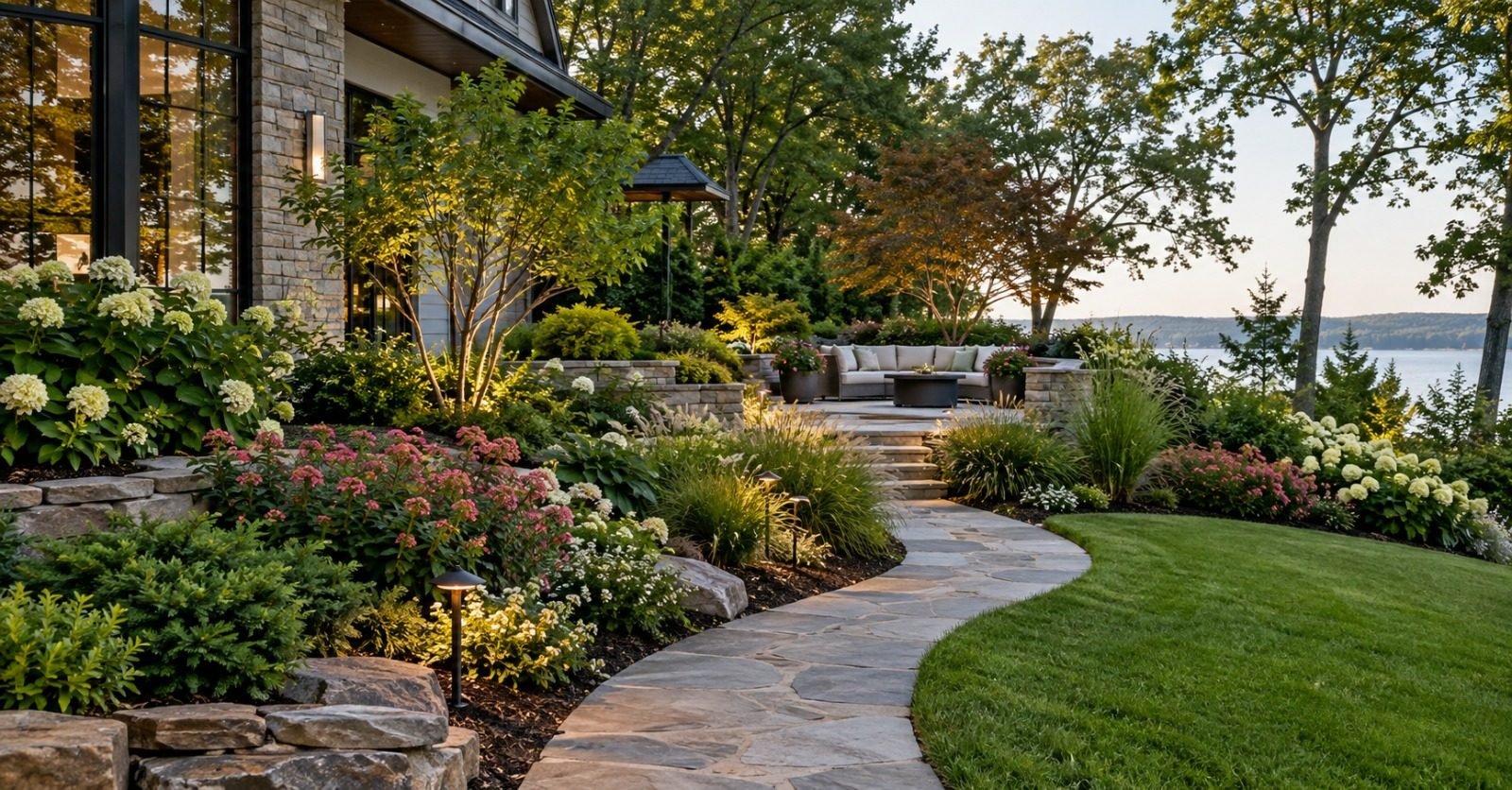
Stone edging gives a classic, timeless look that blends naturally into the garden. It ranges from flagstone and slate to rounded cobbles and granite setts.
Pros
Natural stone is extremely hard-wearing. It does not rot, rust or bend, and it brings a texture and natural character that synthetic materials struggle to match. It is versatile too: you can stack it into a low wall around a raised border, or lay it flat as a mowing strip so the mower wheels run along it and you need far less strimming.
Cons
The main drawback is the labour. Stone is heavy, awkward to move and slow to lay. To keep it neat, you usually need to dig a trench and lay a base of sand or gravel so the stones do not sink or shift. Because it is not one continuous piece, weeds can grow in the gaps unless the joints are mortared or filled.
Who it's right for
Stone suits traditional, cottage-style and rustic gardens. It is best for people who value longevity and a natural look over quick installation and are prepared to do the heavy work themselves or hire a professional.
4. Wood
Timber edging gives a warm, natural border and is especially popular in vegetable gardens and rustic designs.
Pros
Wood is relatively inexpensive and gives a structured, geometric look. It is excellent for straight lines and raised beds. Naturally durable timbers such as cedar or larch give an attractive, untreated border, while pressure-treated softwood is a longer-lasting, more utilitarian option.
Cons
Even durable timber will rot eventually, because it sits against damp soil. How long it lasts depends on the species, any treatment, how it is installed and your climate. It can also be attacked by insects. Unlike plastic or metal, timber boards are rigid, so they do not follow curved borders unless you use short vertical stakes or log-roll edging, which can look dated.
Who it's right for
Wood is the best fit for raised beds and straight-edged, geometric layouts. It suits DIYers who are comfortable with basic carpentry and anyone who wants an earthy, natural feel in the garden.
5. Concrete
Concrete edging is either precast blocks or kerbs, or a continuous edge poured in place with a specialist machine.
Pros
Concrete is the most permanent option. Poured edging can be coloured, stamped and patterned to resemble brick, stone or even timber. Because it is one solid piece, it makes a very effective barrier against grass and weeds. It gives a crisp, finished look, and while a well-kept garden can add appeal when you sell, whether edging adds value depends on your local market, so treat it as an upgrade you choose for yourself.
Cons
Concrete is permanent: if you decide to reshape your borders in a few years, it has to be broken out. Poured edging is usually the most expensive option and almost always needs a professional crew with specialist equipment. Concrete can also crack over time with ground movement or big temperature swings.
Who it's right for
Concrete suits long-term homeowners who have settled on their garden layout and want a custom, high-end edge that needs very little maintenance.
6. Cut edge
A cut or trench edge, sometimes called Victorian edging, means cutting a clean, sharp V-shaped or vertical edge into the turf to separate the lawn from the border.
Pros
There is no material to buy if you already own a spade, a half-moon edging iron or a powered edger. It gives the most natural look of all, a shadow line that defines the space without adding anything to the garden. It also makes it very easy to enlarge or reshape your borders.
Cons
The trade-off is upkeep. A cut edge needs re-cutting regularly through the growing season to stay crisp. Without a physical barrier, mulch spills onto the lawn more easily, and grass roots can eventually cross the gap if the edge is not cut deep enough.
Who it's right for
A cut edge is for the purist and the keen gardener who enjoys time outdoors. It suits anyone who wants a classic, well-groomed look without the cost of materials.
The benefits of proper edging
Beyond the visual lift, edging does three useful jobs:
- Containment: it keeps mulch, decorative gravel and soil in the borders and off the lawn, path or driveway, especially in heavy rain.
- Keeping grass out: a deep, continuous edge acts as an underground wall, slowing spreading grass roots before they reach your perennials.
- Easier maintenance: a flat edge can double as a mowing strip, letting you run the mower wheels along it so you need less strimming afterwards.
Whichever material you choose, check for buried irrigation pipes and garden lighting cables before you dig the trench. Our guide to how to build paver edging covers this, and the rest of the installation, step by step.
Making the final decision
When you choose your edging, ask yourself three questions:
- What is my budget? Plastic and a cut edge cost least; concrete and stone usually cost the most.
- What shape are my borders? Curves call for flexible metal or plastic; straight lines suit timber.
- How long am I staying in this house? Short-term plans favour plastic; long-term plans favour concrete or stone.
The right edging is one of the quickest ways to turn an untidy garden into a structured one. Whether you choose the sleek line of steel or the rugged charm of natural stone, the definition it adds will show.
Tip: Before you buy, lay a hose or rope along each proposed line and leave it for a few days. Walk and mow around it; if the shape still feels right, you have a design that will look just as good once the edging is in.
FAQ
Does landscape edging stop all weeds?
No. Edging is very good at stopping grass creeping into borders and keeping mulch in place, but it cannot stop weed seeds blowing in. It does greatly reduce the work of keeping the border line tidy.
How deep should landscape edging be installed?
Deep enough to block grass roots, often 10–15 cm (4–6 in), with a little showing above the soil. Follow the edging manufacturer's guidance for the product you choose.
Will metal edging rust over time?
Ordinary steel will eventually rust unless it is galvanised or powder-coated. Some people choose weathering steel precisely because it develops a rust-coloured surface layer; check the manufacturer's guidance on staining and suitable locations.
Can I install concrete edging myself?
Precast concrete blocks and kerbs are a realistic DIY project. Continuous poured-in-place edging needs a specialist machine and experience to get a smooth, even finish, so it is normally left to a professional.
How do I stop plastic edging popping out of the ground?
Use the stakes supplied, at the manufacturer's spacing, and set the edging deep enough that only a small lip shows above the soil. This helps keep it anchored through freezing and thawing.
Final thoughts
The best landscape edging is the one that suits your borders, your budget and how much upkeep you are happy to take on. If you have settled on block paving, follow our step-by-step guide to how to build paver edging; for edges around a drive, read paver driveway pros and cons or common gravel driveway mistakes. For help planning a garden or terrace where every edge, path and border works together, explore our balcony and terrace decoration service or book a consultation.


