Decor That Moves Well Between Apartments: How to Buy Once and Take It With You
How to choose furniture, rugs, curtains, lighting and art that adapt from one rented flat to the next, plus practical packing advice so your favourite pieces arrive intact.
By Admin Published 6 min read

If you rent, your furniture will probably see several homes. Each move brings a new floor plan, different window sizes, unfamiliar wall rules and, often, a narrow staircase. The pieces that survive are not always the most expensive ones; they are the ones that adapt. Choosing decor that travels well between apartments saves money, reduces waste and means each new place feels like home sooner.
This guide explains what to look for, category by category, and how to pack it so it arrives in one piece.
The principles: adaptable, standard, demountable
Before buying anything for a rental, ask three questions:
- Will it work in a different room? A sideboard that can serve as a TV unit, a hallway console or bedroom storage is worth more to a renter than a piece that only fits one spot.
- Is it a standard size? Standard mattress, curtain and frame sizes are easy to replace and re-use.
- Can it come apart? Removable legs, bolt-together frames and flat-pack-able designs get through doorways and into lifts that a solid piece will not.
Furniture that adapts
Modular and demountable pieces
- Modular sofas can be reconfigured from a corner sofa to two separate seats or a straight run as rooms change. Check that the sections lock together securely.
- Sofas with removable legs and arms fit through tighter doorways. Measure door widths, stair turns and lift dimensions before moving day.
- Bolt-together beds and shelving survive repeated assembly better than furniture held together with cam locks in chipboard, which can loosen each time.
- Extending or drop-leaf dining tables suit both a studio and a larger flat.
Sizes that travel
- Keep large pieces moderate in scale. A sofa of around 180–210 cm (71–83 in) fits most living rooms; very deep or very long sofas limit your choice of next home.
- Choose a standard double or king-size bed so mattresses, bedding and frames are easy to replace.
- Low, wide storage is easier to move and more stable than tall, narrow units, and can often double as a bench or display surface.
- Nesting tables, stools and folding chairs flex from extra seating to bedside tables.
For more on making a compact plan work, see how to arrange furniture in a small living room.
Rugs and curtains that adapt
Rugs
- Mid-sized rugs of around 160 × 230 cm (5 × 8 ft) or 200 × 300 cm (6½ × 10 ft) suit most living rooms and bedrooms. Very large rugs may not fit the next home; very small ones can look lost.
- Layering lets a smaller favourite rug sit on top of a plain, larger one if the next room is bigger.
- Flatweaves and washable rugs roll tightly for moving and are easier to clean between tenancies.
- Use a non-slip underlay sized to the rug; it travels with it.
Curtains
Windows change with every move, so curtains need to flex:
- Buy longer than you need. Floor-length curtains can be hemmed up, clipped with ring hooks or tied back; short curtains cannot be lengthened easily.
- Choose generous widths, around 1.5–2 times the window width, so curtains still cover a wider window in the next flat.
- Header styles that work with both poles and tracks, such as tab-top with removable hooks or pencil pleat, give you more options.
- Keep a telescopic pole and a tension rod; between them they cover many windows. For tricky windows, read our guide to curtains for awkward and bay windows.
Lighting that plugs in
Ceiling lights stay with the property, but plug-in lighting moves with you, and it does most of the work of making a room feel warm.
- Floor lamps light reading corners and fill dark areas without wiring.
- Table lamps work on sideboards, desks and bedside tables in any layout.
- Plug-in wall lights with a neat cable run give the look of wall lights without an electrician; check the cable can be routed safely and not trailed across walkways.
- Lightweight shades, such as paper lanterns, are inexpensive and can fold or nest for moving.
- Warm white bulbs of similar colour temperature across all lamps make any rental feel more cohesive.
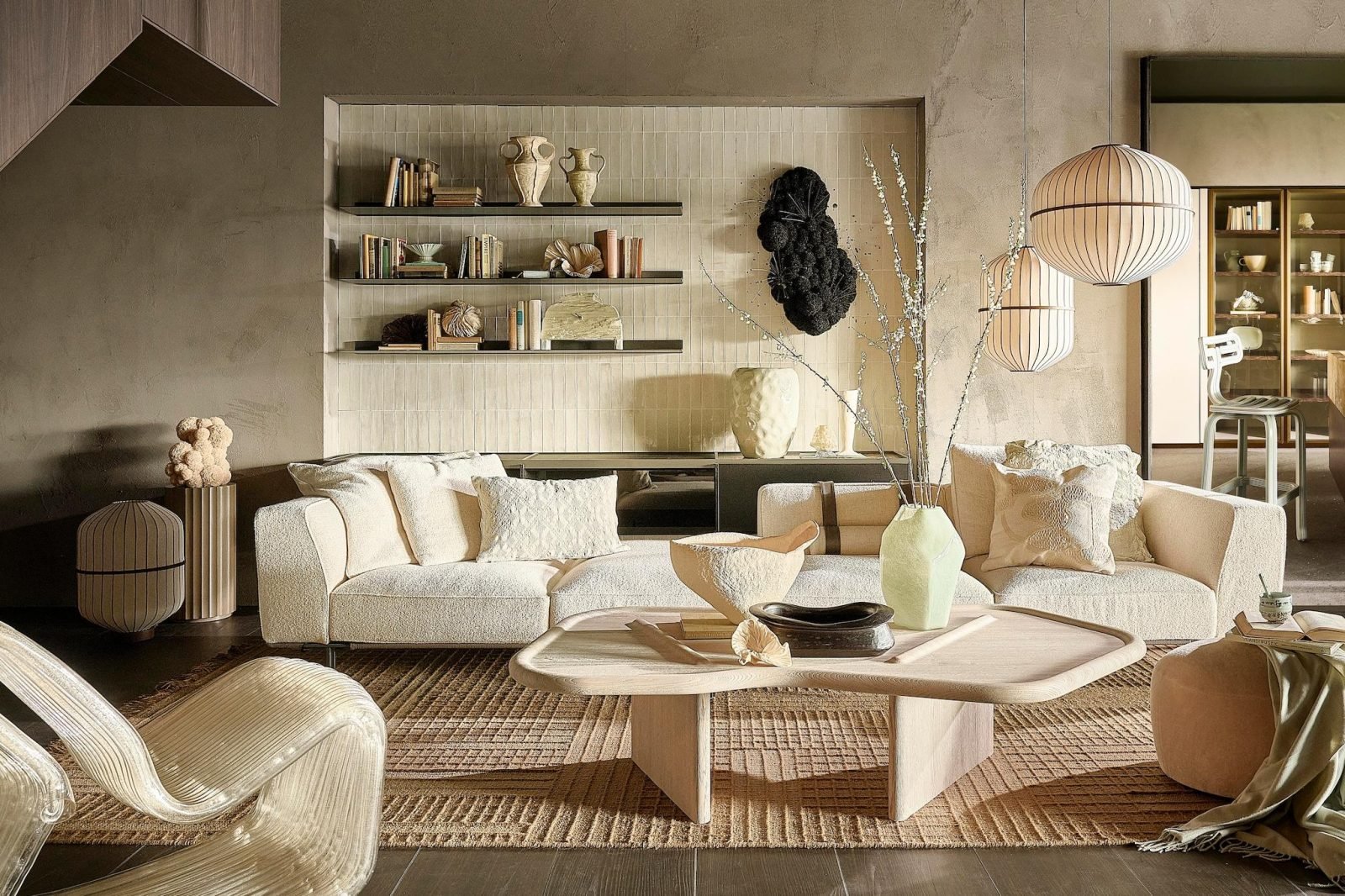
Our layered lighting guide explains how to combine lamps for each room.
Art and mirrors without holes
- Lean, don’t hang. Art and mirrors leaning on sideboards, picture ledges or the floor can be rearranged freely in every new home.
- Use standard frame sizes so prints can be swapped and frames re-used.
- Build a flexible collection of pieces in different sizes rather than one very large artwork that only fits a certain wall.
- Follow weight ratings on removable strips and test them on a hidden spot first; heavier pieces are better leaning. Our guide to heavy mirrors and shelving without drilling covers this in detail.
Soft furnishings and accessories
Cushions, throws, baskets and plants travel easily and do a lot of the work of making a space feel personal. Keep to a loose colour palette, perhaps two main colours and one accent, so pieces you bought for one flat still work together in the next. Baskets and lidded boxes double as packing containers on moving day.
Packing tips so pieces arrive intact
- Photograph furniture before you take it apart, and keep the assembly instructions in a labelled folder.
- Bag and label fixings, taping each bag to the piece it belongs to.
- Wrap legs and corners with corner protectors or cardboard; remove legs where possible.
- Roll rugs pile-side in and wrap them in a breathable cover; avoid folding them, which can leave creases.
- Pack mirrors and framed art upright, never flat, in mirror boxes or between sheets of cardboard, with extra protection on the corners.
- Use curtains and throws as padding around lamps and ceramics, but pack lampshades separately so they are not crushed.
- Measure the new home first, including doorways, stairs and lifts, so you know what will fit and where it will go.
Tip: Pack one clearly labelled “first night” box with bedding, a lamp, bulbs, an extension lead, basic tools and the bags of fixings. Being able to light a room and build the bed on day one makes a new flat feel like home much faster.
What to think twice about
- Built-to-measure pieces designed for one specific alcove or window.
- Very large sectional sofas that cannot be separated.
- Heavy, fragile glass furniture that is hard to move safely.
- Made-to-measure blinds for one window size, unless you plan to stay for several years.
For more renter-friendly ideas, read our small apartment decorating ideas and storage ideas for small homes, or explore our small space and apartment decoration service. To plan a flat that works now and in your next home, book a consultation.


