Small Space Decor Budget Home Decor
Floating Deck Ideas That Work in Small Yards
Floating deck ideas for small gardens: low platforms, decks placed away from the house, gravel and stone surrounds, built-in planters and separate platforms at different levels.
By Admin Published 8 min read

Turning a compact garden into a usable outdoor room can feel like a puzzle. In a small space, a traditional attached deck can look bulky and means fixing a ledger board to the house wall. A floating deck, also called a platform or island deck, is different: it is a freestanding structure that sits just above the ground on blocks or pedestals, with no deep footings and no connection to the house. For small yards and gardens, that freedom is the whole point. You can put the deck where the sun, shade and view are best, keep it low so sightlines stay open, and make the garden feel larger rather than more cluttered.
This guide focuses on ideas that only a freestanding platform makes easy. For general small-deck tricks such as corner nooks, benches and screens, see our wood deck ideas for small yards.
1. Low-profile platforms
The main goal in a small garden is to avoid visual weight. A floating deck that sits only a few centimetres above the ground does exactly that. At that height you usually do not need railings, which can make a small space feel caged in, and the deck can meet the lawn, gravel or planting almost flush, so the eye moves across the whole garden without a hard break.
Because the frame is so close to the soil, ventilation and drainage matter more than on a raised deck:
- Use pressure-treated timber rated for ground contact for the frame.
- Strip the turf, lay a weed membrane and add compacted gravel, about 5 cm (2 in), under the deck blocks.
- Leave a gap of about 3–6 mm (1/8–1/4 in) between boards, or follow the board manufacturer's spacing, so water drains and air moves.
- Keep at least part of the sides open rather than boxing the frame in tightly.
The result is a clean, modern stage that invites you to step straight out and sit down.
2. Place it where the garden works best
An attached deck has to start at the back door. A floating deck can go wherever the garden is at its best: the corner that catches the evening sun, a level patch under a mature tree, or the far end of the plot as a destination you walk to. In a small garden, a deck placed away from the house often makes the space feel longer, because the eye travels to it and you use the whole plot rather than just the strip by the door.
- Follow the sun: watch the garden for a few days and note where the light falls at the times you actually sit outside.
- Under trees: keep the blocks clear of large roots, avoid digging into the root area, and expect leaves and sap on the boards.
- Corners: tucking the deck into a corner keeps the centre of the garden open. Our small yard wood deck ideas cover corner layouts in more detail.
- Link it with a path: stepping stones or a gravel path to the deck make it feel intentional rather than dropped on the lawn.
3. Gravel and stone surrounds
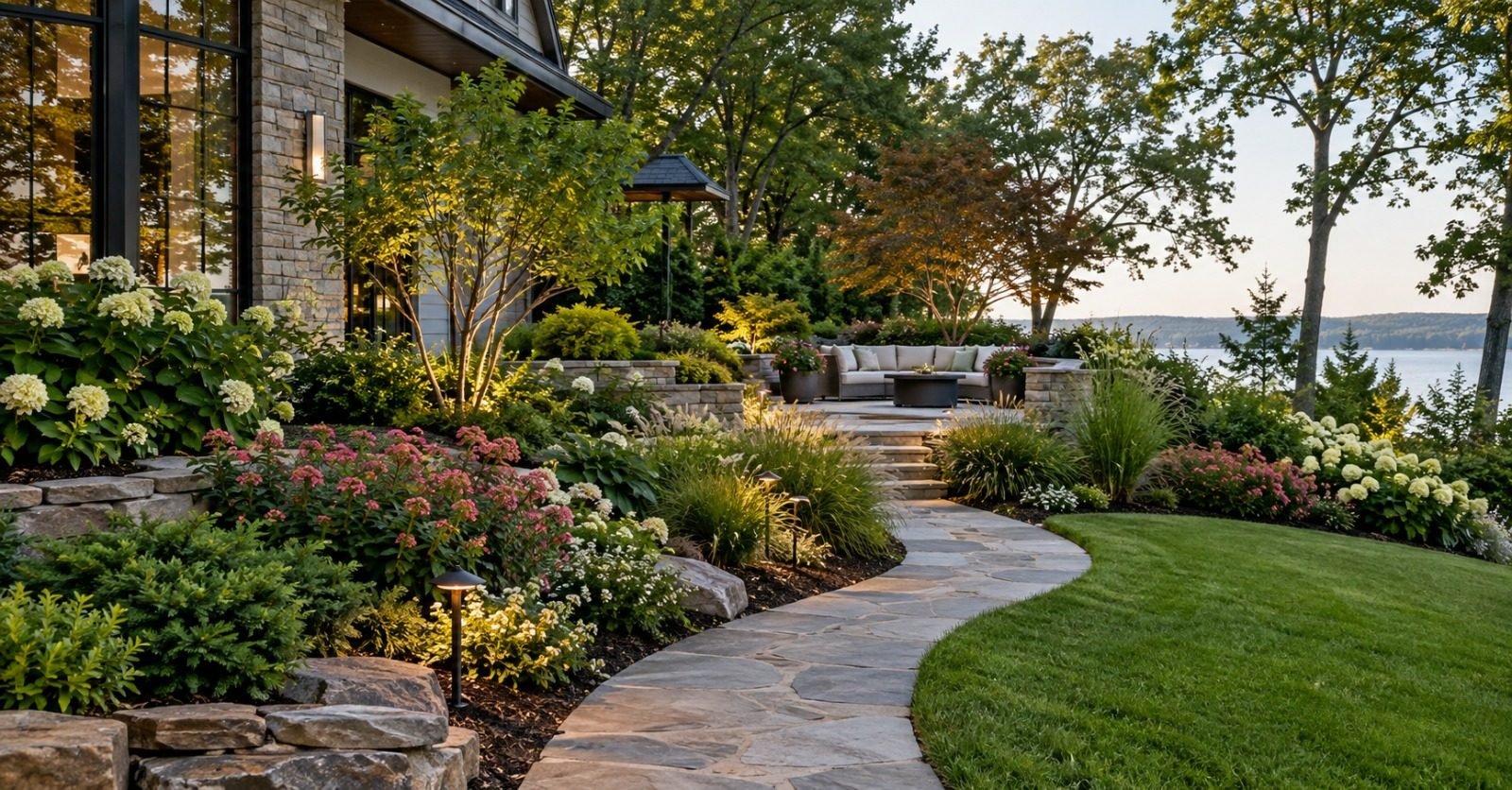
In a confined space, one material can feel flat. Surrounding a floating deck with a band of pea gravel, pebbles or large pavers sets the warm timber against cooler stone and defines the deck as its own outdoor room.
A stone border also does practical work. It lets rainwater soak away instead of pooling against the edge boards, it reduces splash-back of soil onto the timber, and it acts as a mowing strip, so the mower and strimmer never catch the deck. Keep the gravel level just below the top of the frame, and use an edging strip so the stones do not migrate into the lawn.
4. Integrated planters
A common small-garden mistake is to separate the living space from the green space. Instead of standing pots on the deck, where they take up walking room, you can build planters into the structure. On a freestanding platform this is straightforward: leave openings in the frame and board around them, or build planter boxes into the corners using the same boards as the deck.
- Line timber planters, and make sure they drain freely, so wet soil never sits against the deck frame.
- Where an opening goes straight to the ground, add extra framing around it so the boards are fully supported at the edges.
- Use the planters for herbs near the seating, tall grasses for screening, or a small tree for height and shade.
Using the same timber for planters and decking gives a calm, architectural look and helps the deck feel as if it grew out of the garden.
5. Separate platforms at different levels
Because floating decks are freestanding, you do not have to build one large structure. Two or three smaller platforms set at slightly different heights can define a dining zone and a lounging zone, and they handle a gentle slope better than one big deck that has to be perfectly level across the whole site. The step between them can be wide and shallow, doubling as an extra seat.
This modular approach is often easier for a DIYer: each platform is a manageable size to frame and level, and you can build one now and add another later. Keep every step even and clearly visible, and remember that a platform built higher on a slope may need guarding and approval under local building regulations. For step-by-step framing, read how to build a floating deck.
6. Built-in seating and storage
Built-in benches along one or two edges save floor space, define the edge of a low deck without a railing, and can hide cushions or tools under lift-up lids. The ideas are the same as for any small deck; see the small yard wood deck ideas guide for layouts.
7. Diagonal boards and a picture-frame border
Laying boards at 45 degrees creates longer lines for the eye and makes a small platform look wider. Diagonal boards need joists set closer, often 300 mm (12 in) centres, per the board manufacturer, and produce more cutting waste. A picture-frame border of boards around the edge hides the cut ends and gives a neat, finished look.
8. Vertical privacy
A slatted screen on one or two sides turns a floating deck into an outdoor room and gives you somewhere to hang planters or lights. On a freestanding deck, fix the screen posts securely, as a tall screen catches the wind, and check local height limits for screens near boundaries.
Tip: Before you buy materials, mark the deck out with string and pegs in a few different spots and leave it for a few days. Put your chairs inside the outline at the times you would use it, and you will quickly see which position gets the best light and privacy.
FAQ
Does a floating deck need a permit?
Rules vary. In England, decking is generally permitted development if it is no more than 30 cm (12 in) above the ground and, together with outbuildings, covers no more than half the garden. Many US codes exempt small, low, freestanding decks. Raised decks, flats, listed buildings and conservation areas have stricter rules, so check with your local planning or building authority (and any homeowners' association) before you build.
How long does a floating deck last?
It depends on the materials, your climate and how well the site drains and the deck is maintained. Ground-contact-rated framing, a free-draining gravel base and good airflow make the biggest difference. For boards, check the manufacturer's warranty for its stated term.
Can I build a floating deck over concrete or bare soil?
Yes. Over soil, remove the turf, lay a weed membrane and cover it with gravel to control weeds and moisture. Over an existing concrete patio, use adjustable deck pedestals or low sleeper joists so the timber is lifted clear and water can drain away underneath.
What is the best material for a small floating deck?
Cedar and redwood are popular for their natural rot resistance and warm colour. Composite boards need less upkeep and do not splinter. Dense hardwoods such as ipe are very durable and have a high-end finish. Whatever you choose for the boards, the frame should be timber rated for ground contact.
How do I stop a floating deck from shifting?
A floating deck is held in place mainly by its own weight. Set it on a compacted, level gravel base, use enough deck blocks or pedestals to support the joists along their length, and check the level after the first winter. In exposed, windy spots, ask a builder whether ground anchors are worth adding.
Can I put a fire pit on a floating deck?
Only if both the fire pit and decking manufacturers allow it. Follow the fire pit manufacturer's clearances, use a heat-resistant mat or pad, keep it away from screens, planters and overhanging branches, and never leave it unattended. A gravel area beside the deck is often a safer place for a fire pit in a small garden.
Final thoughts
A floating deck suits a small garden because it can go wherever the space works best, stays low enough to keep the view open, and blends into gravel, stone and planting. Before you decide, weigh up the floating deck pros and cons, then follow our guide on how to build a floating deck, and borrow layout ideas from wood deck ideas for small yards. Explore our balcony and terrace decoration service, or book a consultation to plan your garden with a designer.


