Small Space Decor Home Decor Trends
Patio Deck Combo Ideas That Work in Small Yards
Eight patio deck combo ideas for small gardens: tiered steps, mixed materials, sunken patios, built-in seating, pergolas, planters, glass guarding and layered lighting.
By Admin Published 9 min read

Making the most of a small outdoor space takes a careful blend of structure, materials and zoning. For homeowners with limited room, combining a deck with a patio is one of the most effective layouts a garden designer can use. It does more than give you somewhere to sit: by pairing the raised, built feel of a deck with the grounded, earthy character of a stone or paved patio, you create distinct "outdoor rooms" for dining, cooking and lounging, and the variety tricks the eye into reading the space as larger than it is.
The usual problem with a small yard, or small garden in UK terms, is a lack of visual interest and a feeling of being boxed in. A single flat surface can make the whole plot look like one uninspired rectangle. Introducing a change of level and contrasting textures breaks that up. The ideas below show how to fit a deck and patio into a compact footprint so that every part of it earns its place.
1. Tiered transitions
In a small garden, height is your best friend. A tiered transition simply means a modest change of level between the deck and the patio. It does not need to be dramatic: two or three steps are enough to separate one zone from another.
Raising part of the garden, usually the deck by the back door, gives you a natural platform for dining or cooking, while the lower patio becomes a calmer place to relax. Keeping the deck low also helps you avoid bulky guarding that would block the view. Make the steps generous: deep, wide treads double as overflow seating when friends come round, so you need fewer chairs cluttering the walkway. Choose materials that complement each other, such as a warm hardwood deck with pale sandstone steps, so the change of level feels deliberate.
2. Mixed materials
Contrasting materials are a powerful tool in a small space. When the deck and patio are made from the same material, the boundaries blur and the area can read as one continuous, cramped slab. Mixing timber or composite with stone, brick or concrete defines each "room" through texture and colour.
For a contemporary look, pair a dark grey composite deck with large-format light grey porcelain paving; the difference in grain and finish gives a crisp visual break. For something more traditional, a pressure-treated softwood deck with a weathered finish sits well beside a red brick patio laid in herringbone. Keep the colour palette connected: if your deck has warm undertones, choose paving with hints of buff or beige. The textures differ, but the overall scheme still feels calm rather than busy.
3. Sunken patios
A sunken patio works particularly well in small gardens where privacy matters. Setting the patio slightly lower than the deck and the surrounding ground creates a sense of enclosure without tall fences, much like the conversation pits of mid-century modern interiors.
In this layout the deck is the landing from the back door and the sunken patio is the destination. Because the patio sits lower, you can build stone or timber benches around its edge, which saves a great deal of floor space, with the raised ground or deck behind acting as a backrest. A lowered area can feel more sheltered from the wind, which makes it a natural spot for a fire pit. Keep the fire pit on the stone patio, well away from the deck, its steps and any timber benches, follow the manufacturer's clearances and never leave it unattended. A sunken patio also collects rainwater, so it needs a proper drainage plan from your designer or installer.
4. Built-in seating
In a small garden, every piece of furniture is a potential obstacle, and standard patio sets are often bulky and awkward to move around. Building benches into the edge of the deck or into the low retaining walls around the patio frees the middle of the space for walking and gathering.
Built-in seating can also hide storage. A hinged bench lid on the deck can hold cushions, tools or children's outdoor toys, keeping the garden tidy. For comfort, add outdoor-grade seat pads and generous cushions that you can swap to change the look with the seasons. Seating that is part of the structure makes the deck and patio feel like a permanent, architectural part of the home rather than an afterthought.
5. Vertical features
When you run out of floor space, look up. Trellises, pergolas and living walls can tie the deck and patio together while adding privacy. A pergola that starts over the deck and reaches slightly over the patio gives the space a visual "ceiling", so it feels like a real room.
Vertical planting is just as useful. Instead of filling the patio with large pots, fix a trellis or wall planter for climbers such as jasmine or clematis. The foliage softens the hard edges of timber and stone. A well-placed screen can also hide less attractive necessities such as an air-conditioning unit, heat pump or the bins, keeping attention on the meeting point between your deck and patio. Check local height limits for structures near boundaries before you build anything tall.
6. Integrated planters
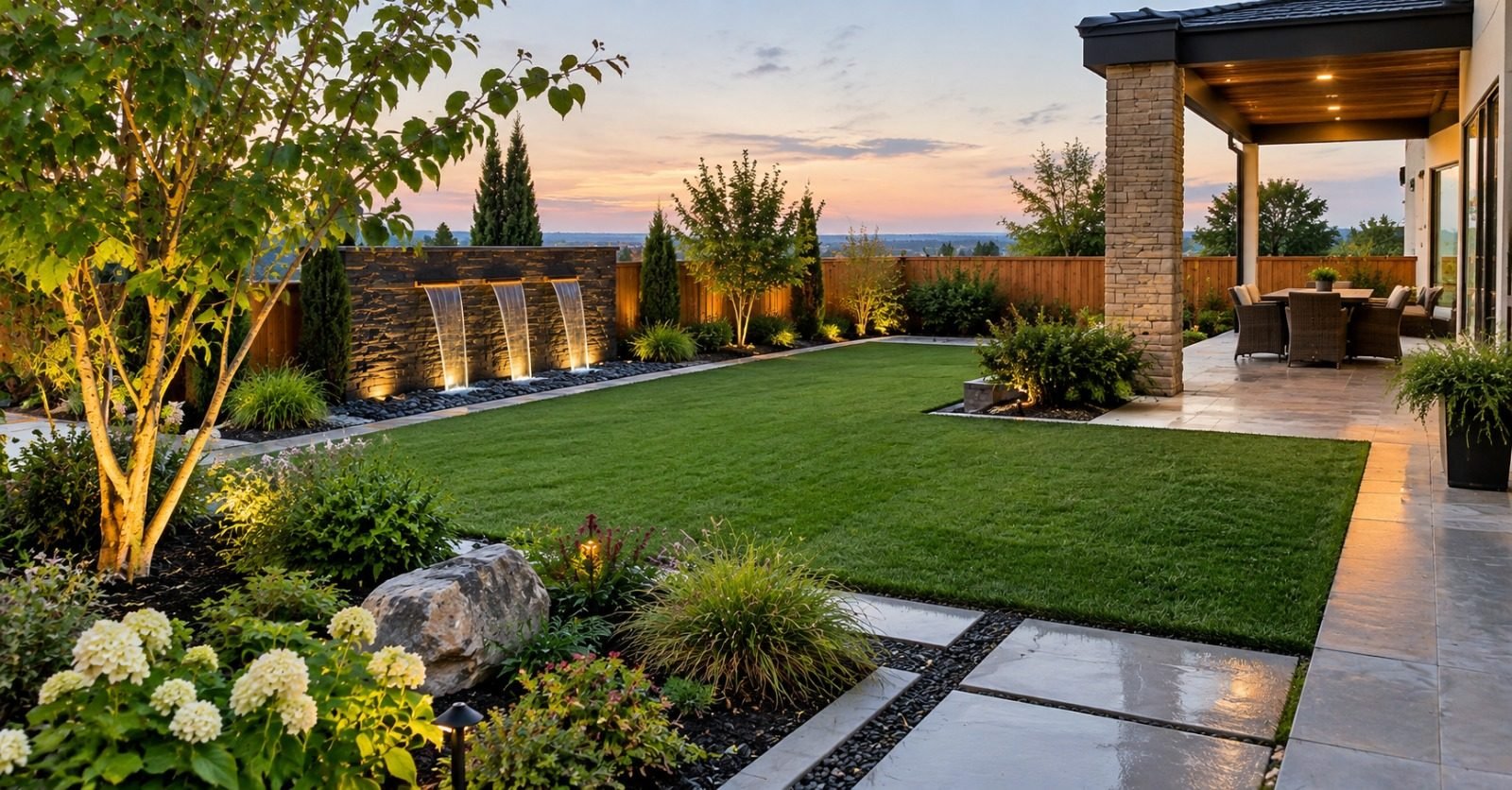
To stop a small garden turning into a hard-landscaped desert, build planting into the design itself. Planters made from the same timber as the deck, or the same stone as the patio walls, look cohesive and can act as a soft buffer where the two surfaces meet.
Raised planters also make gardening easier on the back and stop soil washing onto the paving or boards when it rains. Line timber planters, leave drainage holes and keep wet soil from sitting against the deck frame. In a small space, mix plant heights: ornamental grasses add movement and a gentle rustle in the breeze, while low herbs such as rosemary and thyme add scent where you sit. The greenery breaks up the solid blocks of timber and stone and makes the whole garden feel more alive.
7. Glass railings
Most low decks do not need a railing at all, which is one reason a low tiered design suits small gardens so well. If your deck is high enough to need guarding, though, traditional timber or metal balustrades can act as a visual full stop that makes the garden feel smaller. Glass panels give the required protection without the visual weight of rows of balusters.
With glass, the eye can travel from the deck, across the patio and on to the far boundary without interruption, so the two levels feel like one connected space. Glass also reflects light into shady corners. Use toughened safety glass in a system designed as guarding, and agree the height and fixings with your building control body or building department before you order. As examples, guidance in England (Approved Document K) generally calls for guarding of about 1100 mm on raised external areas, while many US codes based on the International Residential Code require guards on decks more than about 76 cm (30 in) above grade, at least 91 cm (36 in) high. Rules vary locally, so confirm what applies to you.
8. Strategic lighting
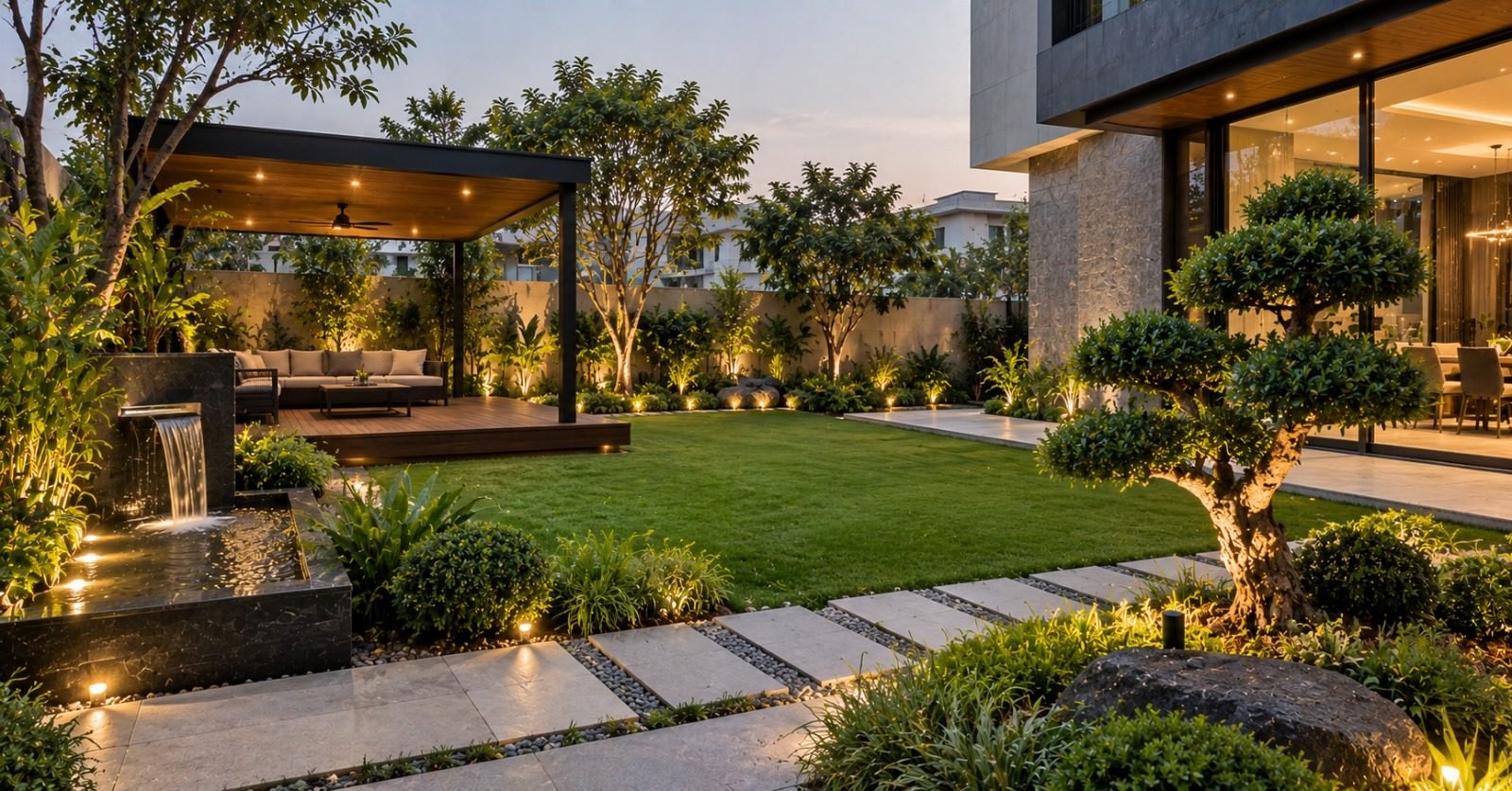
Lighting is the final layer that makes a small patio and deck usable after dark and makes the garden look bigger. Light each zone separately. Small recessed lights in the deck boards can mark the edge, and lights under the step nosings or treads make the change of level safe and show off the tiers.
Over the patio, festoon lights strung overhead create a soft "ceiling" that draws the eye up and gives a cosy, sociable feel. Uplighting a tree, trellis or pergola at the back of the garden adds depth, and lighting the furthest corners removes dark gaps so the whole plot feels lived in. Low-voltage or solar lights are simple to add; have a qualified electrician install anything mains-powered, with RCD protection, and in the UK make sure the work meets Part P of the Building Regulations.
Tip: Before you commit, lay garden hoses or rope on the lawn to trace the outline of the deck and the patio, then walk the route from the back door to each zone. If you have to squeeze past where the table will go, adjust the shapes now while they are still only lines on the grass.
FAQ
Do I need permission for a small deck and patio combo?
Often the patio does not, but the deck might. In England, decking is generally permitted development if it is no more than 30 cm (12 in) above the ground and, with outbuildings, covers no more than half the garden; raised or attached decks may need planning permission and building regulations approval. In the US, many codes require a permit for decks that are attached to the house or above a certain height. Flats, listed buildings and conservation areas have stricter rules, so always check with your local planning or building authority first.
Is wood or composite better for a small garden?
Composite is often chosen for small gardens because it needs less upkeep and comes in cool greys that can make a space feel larger. Natural timber offers warmth and an organic feel that many people prefer. Both work well as long as they contrast with the paving on the patio.
How do I look after the area where the deck meets the patio?
The junction is where leaves, debris and moisture collect. Make sure water can drain away from under the deck, that the patio falls gently away from the house and the deck frame, and that timber is not sitting directly on the paving. Sweep the gap regularly so it does not hold damp against the framing.
Can I build a patio deck combo on a slope?
Yes, and a sloping garden is often a natural fit. The deck can project from the higher ground near the house while the patio is set into the lower part of the slope, giving you a multi-level garden that follows the land. Retaining walls and raised decks on slopes need proper design, so involve a qualified builder or engineer.
How can I make a tiny garden feel bigger with this design?
Use diagonal lines or large-format paving. Laying deck boards or paving slabs at 45 degrees to the house draws the eye along a longer line, making the garden feel wider and deeper. Diagonal boards usually need closer joist spacing, so check the board manufacturer's guidance.
Final thoughts
A small garden does not have to limit your ideas. Combining a deck with a patio gives you two distinct places to use, a better route through the space and more interest in every view from the house. To weigh up the trade-offs, read patio deck combo pros and cons, then see how to build a patio deck combo, or browse wood deck ideas for small gardens. For help planning and styling your outdoor rooms, explore our balcony and terrace decoration service or book a consultation.


