The Ultimate Guide to Rug Size for Sectional Sofas
How to choose the right rug size for a sectional sofa: all legs on, front legs only, U-shaped and chaise layouts, the tape test, rug shapes, materials, colour and when to size up.
By Admin Published 10 min read

Choosing the right rug for a sectional sofa is one of the most common design dilemmas homeowners face. Because sectionals are larger and more dominant than traditional three-seater sofas, they demand a rug that can anchor their weight and define the seating area without making the room feel cramped or disjointed. A rug that is too small will look like a “postage stamp” floating in the middle of the floor, while one that is too large can swallow the room’s architecture.
The secret to a well-styled living room lies in the balance between your furniture and your flooring. Whether you are working with an L-shaped sofa, a sprawling U-shaped sectional or a modular pit sofa, the rug is the canvas your living room is built on. In this guide we explore the main layouts, sizes and design tricks to help your rug and sectional work together. If your room measures 12 × 14 ft (about 3.7 × 4.3 m), see our rug size guide for a 12 × 14 living room with a sectional, which includes worked examples for that exact room.
1. All legs on the rug
The “all legs on” approach is a classic choice for a luxurious, cohesive look. By placing the entire sectional, front legs, back legs and chaise, on top of the rug, you create a dedicated “island” within the room. This is particularly effective in open-plan spaces where the living area needs to be clearly defined from the dining or kitchen areas.
To achieve this look, you typically need a very large rug, such as 270 × 360 cm (9 × 12 ft), 300 × 420 cm (10 × 14 ft) or even larger. The rug should extend at least 15–30 cm (6–12 in) beyond the back and sides of the sofa. This layout prevents the sectional from feeling as if it is “falling off” the rug and gives a soft surface for walking all the way around the furniture. It creates a high-end, hotel-lobby feel that is comfortable and intentional.
2. Front legs only
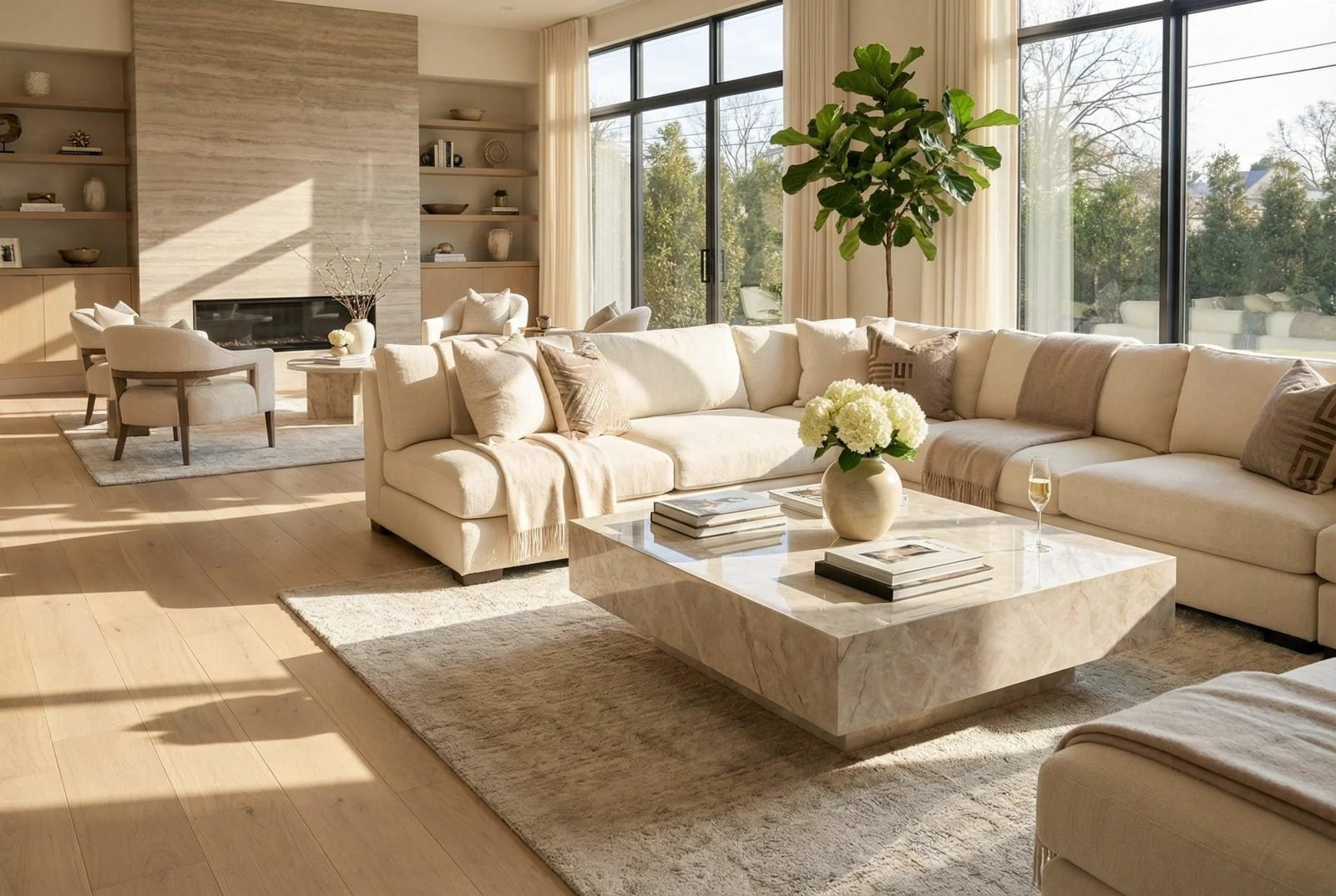
The “front legs only” rule is perhaps the most popular and versatile layout for standard-sized living rooms. In this configuration, the rug tucks under the front third of the sectional, while the back legs rest on the bare floor. This technique anchors the furniture to the rug without needing a huge piece, so a smaller, more affordable rug can do the job.
For an L-shaped sectional, make sure the rug is long enough to sit under the front legs of the long side and also extend under the chaise. Usually, a 240 × 300 cm (8 × 10 ft) rug is the minimum size for this layout. It creates a visual connection between the seating and the rug while allowing the flooring, such as beautiful wood or tile, to remain visible around the edges of the room. This keeps the space feeling airy and stops it looking overly carpeted.
3. Fitting a rug to a U-shaped sectional
U-shaped sectionals are the giants of the furniture world, and they need a specific strategy. Because these sofas wrap around on three sides, they create a “well” in the centre. If you use a rug that is too small, it will look trapped inside the U.
For a U-shaped sectional, you almost always want a rug large enough to go under all three sides of the sofa. A 300 × 420 cm (10 × 14 ft) or 360 × 450 cm (12 × 15 ft) rug is often necessary. The rug should fill the centre and extend outward under the seating. This unifies the three sections of the sofa and creates a cosy “conversation pit” atmosphere. If the rug is too small, the arms of the U will feel disconnected, making the room look fragmented.
4. A floating rug in the centre
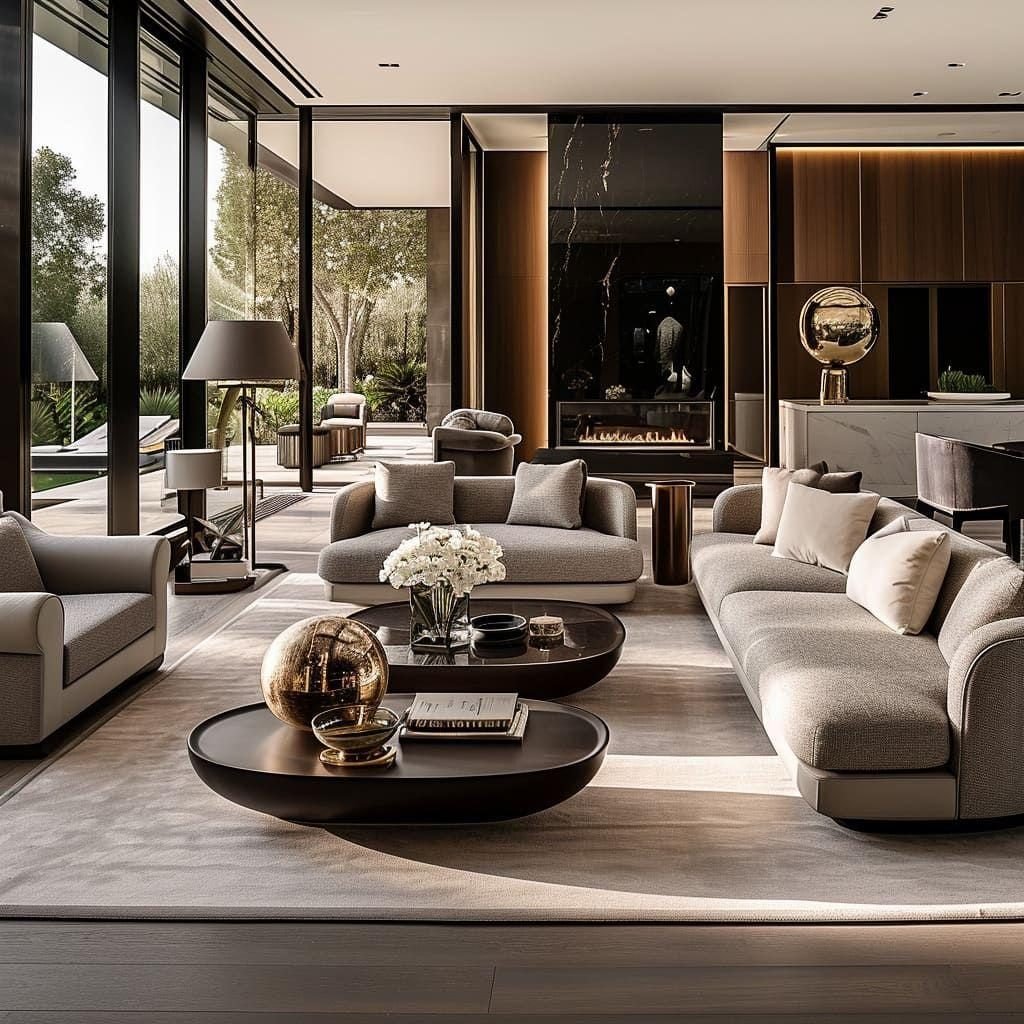
The “floating” layout is a little more controversial in the design world, but it can work in specific modern or minimalist settings. In this arrangement, the rug does not touch the sectional at all. Instead, it sits in the centre of the L or U, usually under a coffee table.
This is generally only recommended if you have a very small room or a striking rug you want to show off as a piece of art. Be warned, though: this layout can make the room feel disjointed. To make it work, the rug must be large enough to hold the coffee table and still leave some breathing room around it, but close enough to the sofa (within 8–13 cm, or 3–5 in) that it does not look as if it is drifting away.
5. Allowing for the chaise
When dealing with a sectional that has a long chaise, the rug needs to accommodate the “protrusion”. A common mistake is choosing a rug based on the sofa’s width but forgetting about the depth of the chaise. If the rug ends right where the chaise starts, it looks unbalanced and visually awkward.
Ideally, the rug should extend at least 30 cm (1 ft) past the end of the chaise. This grounds the longest part of the furniture. If you are using a 240 × 300 cm (8 × 10 ft) rug, try orienting it horizontally, with the 300 cm side parallel to the sofa’s longest backrest. If the chaise is particularly long, you may need to rotate the rug or move up to 270 × 360 cm (9 × 12 ft) so the chaise is not hanging off the edge.
6. Measure first with the tape method
Before you click “buy” on that beautiful rug, measure. Designers often use a simple trick: take a roll of low-tack masking or painter’s tape and mark out the size you are considering, for example 240 × 300 cm or 270 × 360 cm, directly on the floor around your sectional. Test the tape on a hidden spot first, especially on oiled or freshly finished floors.
This lets you see exactly how much floor will be covered and how the rug will interact with other furniture, such as TV units, bookcases or doorways. Leave the tape down for a day and walk around the room. Does the outline get in the way of a door swing? Does it feel too small next to the sofa? Seeing it on the floor is far more effective than looking at numbers on a screen.
7. Choosing a rug shape
While rectangular rugs are the standard, they are not your only option. Square sectionals or symmetrical L-shapes often look fantastic with square rugs. If you have a curved sectional or a very modern, rounded sofa, a large circular rug can soften the lines of the room and create a more organic, flowing feel.
Circular rugs are also great for “breaking the grid” in a room with lots of sharp angles. The same rules apply, though: at least the front legs of the sectional should touch or sit on the circle to keep a sense of connection. Irregularly shaped rugs, such as cowhides, can be layered over larger, neutral rectangular rugs to add texture and interest.
8. Pile height and material
Size is not the only factor; the thickness (pile height) and material affect how the rug sits under a heavy sectional. High-pile or shag rugs are very comfortable but can be difficult to level under a heavy sofa. If only the front legs of a heavy sectional sit on a thick shag rug, the sofa may tilt slightly forward. Deep-pile rugs can also be a trip hazard at the edges, so use a suitable rug pad to keep the rug flat and in place; our guide to rug pad types for hardwood floors explains the options.
For sectionals, medium-pile wool or low-pile synthetic rugs are often the best choice. They are durable enough to take the weight of the furniture with less risk of permanent dents, and they are easier to clean. If you love the look of a natural-fibre rug such as jute or sisal, make sure it is large enough, as these materials can feel scratchy on bare feet if you are sitting on the sofa and your feet do not reach the rug.
Tip: Move the sofa a few centimetres every few months, or use furniture cups under the legs, to spread the load and reduce dents in the pile.
9. Colour and contrast
The size of the rug also dictates how much colour and pattern it brings into the room. If you have a dark sectional, a larger, lighter rug will help lift the room and stop the sofa looking like a dark void. Conversely, if you have a light beige or white sectional, a rug with a bold pattern or deep colours can provide the grounding it needs.
When choosing a size, remember that the more rug is visible, the more its pattern will dominate the room. A 300 × 420 cm (10 × 14 ft) rug with a busy pattern will become the focal point of the space. If you want the sectional to be the star, choose a larger rug in a plain, neutral tone.
10. When in doubt, size up
When in doubt, go bigger. A rug that is slightly too large can almost always be made to work by tucking more of it under the furniture. A rug that is too small is much harder to fix: it breaks up the visual flow of the floor and can make a room look smaller than it is.
By rounding up to the next size, say from 240 × 300 cm (8 × 10 ft) to 270 × 360 cm (9 × 12 ft), you give the sectional plenty of room to breathe. The extra space also lets side tables or floor lamps sit on the rug, further unifying the living room.
Final thoughts
The right rug size for a sectional comes down to how much of the sofa you want on the rug. For most L-shaped sofas, start with 240 × 300 cm (8 × 10 ft) and the front legs on; choose 270 × 360 cm (9 × 12 ft) or larger for an all-legs-on look or a U-shaped sofa. Always leave a border of floor to the walls, check the chaise, and mark the outline with tape before you buy.
Frequently asked questions
Can a rug be too big for a sectional?
Yes. If the rug is so large that it touches the skirting boards or walls, it can look like wall-to-wall carpet, which may not be the effect you want. Ideally, leave 30–45 cm (12–18 in) of bare floor between the edge of the rug and the walls to keep a border that frames the room.
What rug size is best for a standard L-shaped sectional?
For most standard L-shaped sectionals, around 230–280 cm (90–110 in) wide, 240 × 300 cm (8 × 10 ft) is the minimum recommended size. However, 270 × 360 cm (9 × 12 ft) is often the sweet spot, letting the front legs sit comfortably on the rug with plenty of space for a coffee table.
Should the rug be centred on the room or the sectional?
Centre the rug on the sectional and the TV or focal point, rather than on the room’s walls. Since the sectional anchors the living area, the rug should follow its lead to create a cohesive seating zone.
How do I handle a rug with a sectional in a small room?
In a small room, use the front-legs-only rule. Choose a 180 × 270 cm (6 × 9 ft) or 240 × 300 cm (8 × 10 ft) rug and tuck it just under the front edge of the sofa. This defines the space without covering so much floor that the room feels closed in. Avoid very dark colours in small rooms; light, reflective tones work better.
Is it okay to layer rugs under a sectional?
Yes. Layering is a great way to use a rug that is a little too small. Place a large, affordable natural-fibre rug, such as jute, as a base to cover the area needed under the sectional, then layer a smaller decorative or patterned rug on top in the centre. Make sure the top rug lies flat so its edges do not become a trip hazard.
For a specific room size with worked examples, read our guide to the rug size for a 12 × 14 living room with a sectional. Choose the right underlay with our guide to rug pad types for hardwood floors, and see how rugs and curtains work together in our living room rugs and curtains guide. Explore our living room decoration service, or book a consultation to plan your layout.


