Mastering the Art of Textiles: How to Choose Rugs and Curtains for Your Living Room
How to pair rugs and curtains: colour, texture, size and placement, pattern, light, style, durability and layering for a living room that feels finished.
By Admin Published 6 min read

Interior design is often compared to a language: furniture provides the nouns and lighting the verbs. Textiles, rugs and curtains above all, supply the adjectives, the descriptive depth that turns a house into a home. Choosing the right combination is one of the trickiest parts of styling a room. Done well, rugs and curtains ground the space, add warmth and pull different elements together. Done poorly, they can make a room feel disjointed, cluttered or cold.
1. Colour palette
The most important step is a cohesive colour palette. Designers often use the 60-30-10 rule: around 60% of the room in a dominant colour (usually the walls and large furniture), 30% in a secondary colour (textiles such as rugs and curtains) and 10% in an accent (cushions, art and accessories).
Decide which of the two will be the star and which the supporting act. With a vibrant, multicoloured Persian rug, choose plain, neutral curtains in one of the rug's quieter tones. With bold patterned curtains, a plain or subtly textured rug stops the room feeling overwhelming. Matching colours exactly can look flat; tonal variation is more sophisticated, such as forest green curtains with an olive or sage rug. See our living room colour scheme guide for palettes.
2. Fabric texture
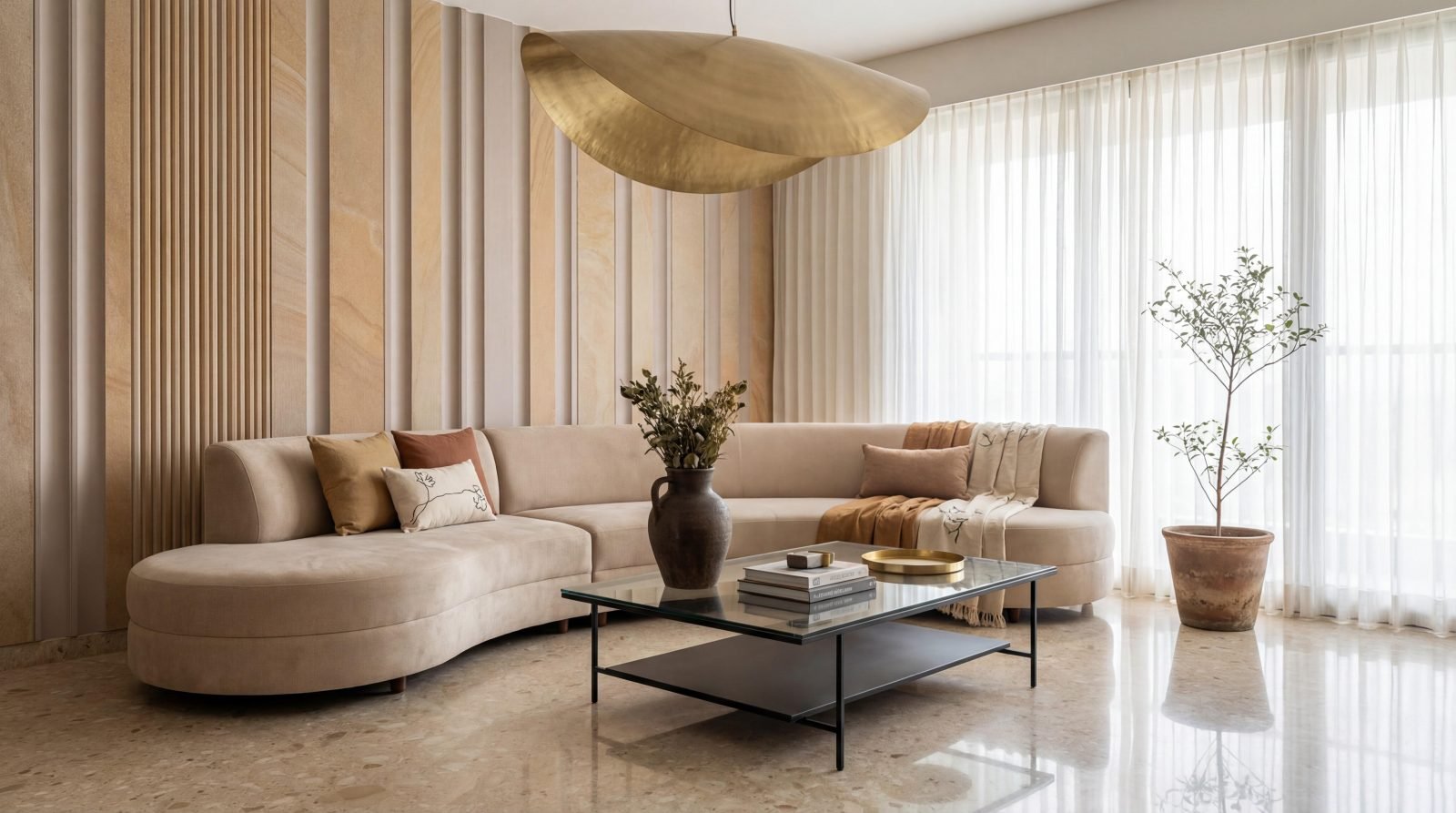
Texture is the secret ingredient that keeps a neutral or tonal room from looking dull, adding visual weight. If your living room feels sterile, a deep-pile rug or heavy velvet curtains will add instant warmth and cosiness.
Think about how light and shadow play across different materials. A jute or sisal rug feels natural and pairs beautifully with light linen curtains, a staple of coastal and farmhouse looks. For a more formal setting, try a low-pile silk-blend rug with heavy damask or velvet drapes. Aim for balance: if everything is smooth and shiny the room feels cold, and if everything is rough and matte it can feel overly rustic. A soft, plush rug with crisp, structured curtains gives a pleasing contrast.
3. Size and placement
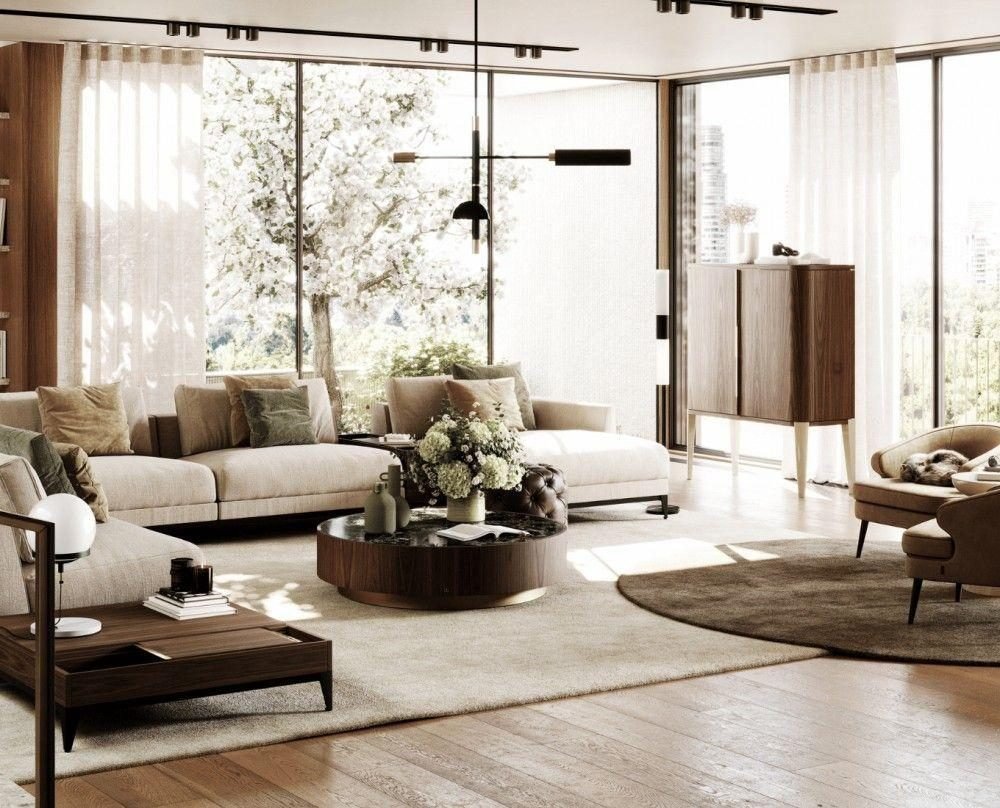
Size and placement are where the most common mistakes happen. A rug that is too small makes a large room look choppy, and curtains hung too low make the ceiling feel lower.
For rugs, the most luxurious approach is all legs on: the rug is big enough for every leg of the sofas and chairs to sit on it, turning the seating into a single island. At the very least, the front legs of all seating should be on it. For curtains, think high and wide. Fix the pole 10 to 15 cm (4 to 6 inches) above the window frame, or higher towards the ceiling, to create a sense of height. Extend it 20 to 30 cm (8 to 12 inches) beyond the window on each side so open curtains frame the glass without blocking daylight. Our curtain guide covers fittings in more detail.
4. Pattern coordination
Mixing patterns takes a careful eye for scale. The main rule is to vary it: if the rug has a large floral or geometric motif, keep the curtains plain or choose a very small pattern such as a fine stripe or a delicate dot.
If both have pattern, make sure they share at least one colour. A navy rug with a large cream lattice, for example, works with cream curtains edged in a narrow navy border. You can also mix types of pattern: a traditional, intricate Oriental rug with clean contemporary striped curtains gives a transitional look that feels collected over time rather than bought as a set.
5. Light filtration
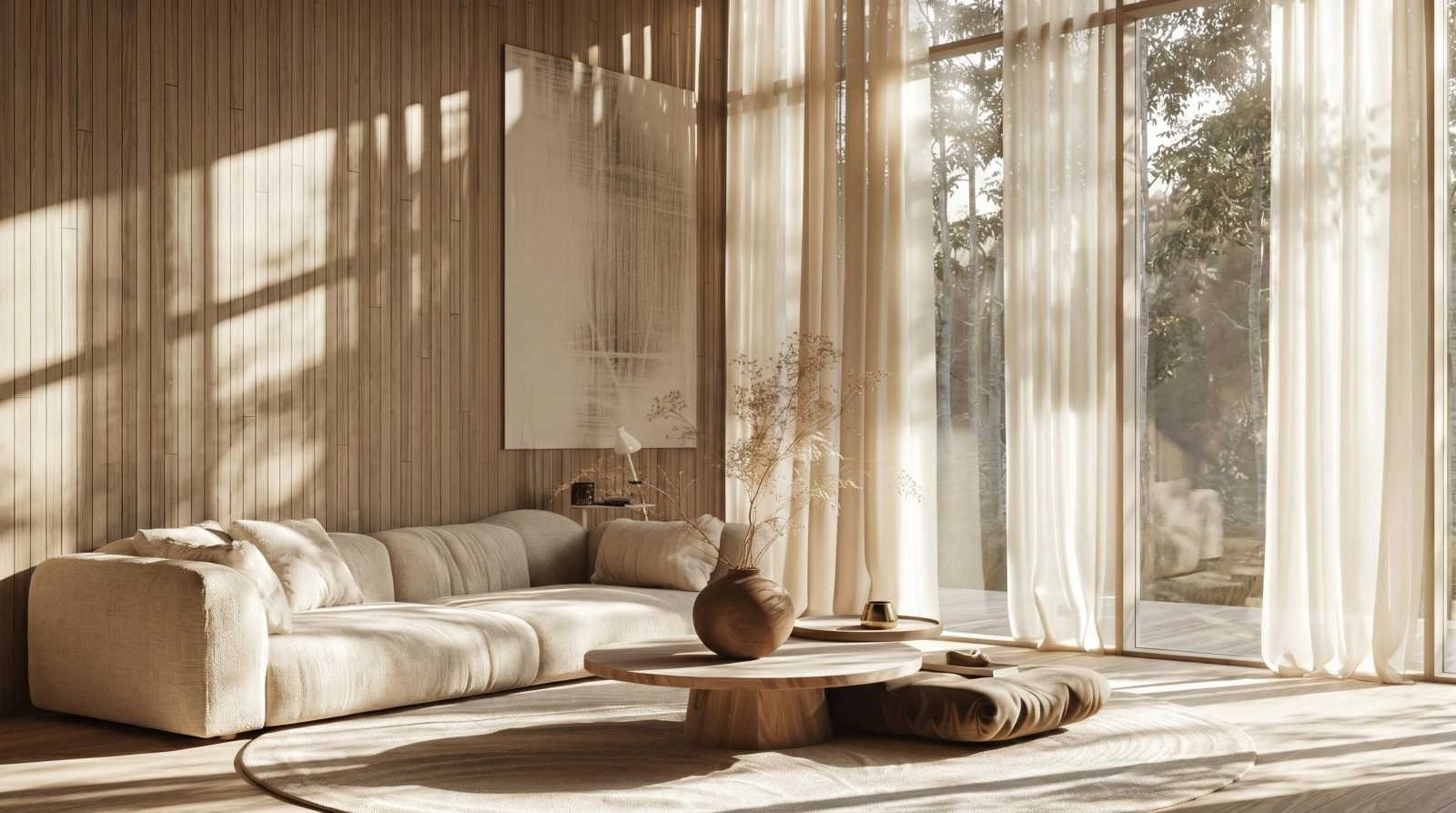
The way your curtains handle light changes how your rug looks through the day. Sheers give a soft glow that brings out a rug's colours. Blackout curtains are excellent for privacy and temperature control but make the room darker and colours more muted.
Consider the room's orientation. North-facing rooms get cooler, bluer light, so warm-toned rugs and curtains (reds, oranges, ochres) help balance the chill. South-facing rooms get warm, golden light that can make hot colours feel intense, so cooler blues, greys and teals give a refreshing contrast. Always look at fabric and rug samples in the room itself at different times of day before you commit.
6. Design style
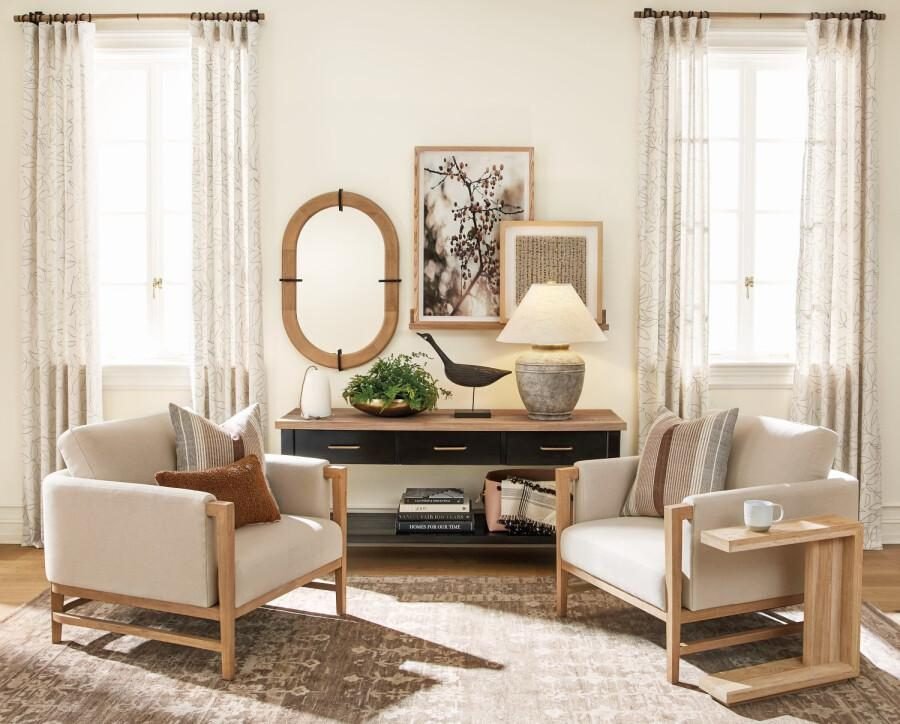
Your textiles should reinforce the overall style of the home:
- Minimal or Scandinavian: a neutral palette, flat-weave rugs and simple cotton or linen curtains in white or pale grey.
- Bohemian: layered rugs (a patterned rug over a larger jute one) and colourful patterned curtains with tassels or fringing.
- Industrial: distressed or faded vintage-style rugs with heavy eyelet curtains in dark, moody tones such as slate or espresso.
- Traditional: wool Persian or hand-tufted rugs with pleated silk or velvet drapes and decorative tie-backs.
A consistent style means the rug and curtains enhance the character of the room rather than compete with it.
7. Durability
Looks have to work with real life. In a busy living room, or one shared with pets and children, a white silk rug and delicate lace curtains are impractical.
For rugs, consider performance fibres: polypropylene and polyester are stain-resistant and easy to clean, which makes them ideal for families. Wool is a durable natural alternative that resists soiling well, though it costs more. For curtains, synthetic blends often hold their pleats better and fade less in sunlight than pure silk or linen. If the room faces a busy street, heavier lined curtains help reduce noise, and a thick underlay beneath the rug absorbs the sound of footsteps and conversation.
8. Layering
Layering adds a depth and sense of luxury that a single rug or one set of curtains rarely achieves.
At the window, consider a double pole: sheers for daytime privacy and soft light, with heavier blackout or decorative drapes for the evening. On the floor, layering a smaller plush or patterned rug over a larger neutral jute or sisal rug adds a designer touch, and lets you use a smaller, more special rug you love without paying for a room-sized one. Layering makes a room feel complete and lets you combine textures and patterns without clutter.
Tip: Take a fabric sample of your curtains with you when you shop for a rug, or vice versa. Colours are very hard to judge from memory or from a screen.
Conclusion
Choosing rugs and curtains is a balancing act between form and function, colour and texture, scale and proportion. Treat them as a partnership rather than separate purchases and you will create a space that feels intentional, comfortable and beautiful, whether you want a minimal retreat or a vibrant, pattern-filled lounge.
For placing furniture on your new rug, read our furniture arrangement guide. Our curtains and window treatments service can measure, make and fit your curtains, or you can book a consultation.


