Living Room Decor Small Space Decor
Mastering the Art of Small Living Room Decoration
Twelve designer techniques for small living rooms, from vertical storage and see-through furniture to mirrors, layered lighting, scale, texture and plants.
By Admin Published 7 min read

More and more of us live in compact homes, and turning a small living room into a stylish, comfortable retreat has become a central challenge of modern interior design. A small living room is not a limitation. It is an opportunity to be precise, intentional and creative. By focusing on light, scale and function, even a modest room can feel both spacious and intimate.
The key is balancing looks with practicality. Forget big-room thinking, where more is better, and move to a curated approach in which every piece of furniture, every colour and every accessory has a job to do. This guide covers twelve techniques designers use to make the most of every square metre without giving up elegance.
1. Verticality
When floor space is scarce, the most underused asset is the wall. Designers call this drawing the eye upward. Using the full height of a wall distracts from a narrow floor: tall, slim bookshelves that reach the ceiling, or a gallery wall that climbs towards it, make the room feel taller than it is. Vertical storage also gives you room to organise without blocking walkways. Try floating shelves high above a doorway, or a tall, narrow cabinet that stores a lot on a small footprint.
2. Transparency
Visual weight matters in a small room. Heavy, solid furniture can anchor a space so firmly that it feels crowded. Decorators often turn to clear or translucent materials such as acrylic and glass instead. An acrylic coffee table or ghost chairs do their job while almost disappearing, because they do not block the line of sight. The floor keeps reading as one open surface, and the room's architecture and floor textures can show through.
3. Multifunctionality
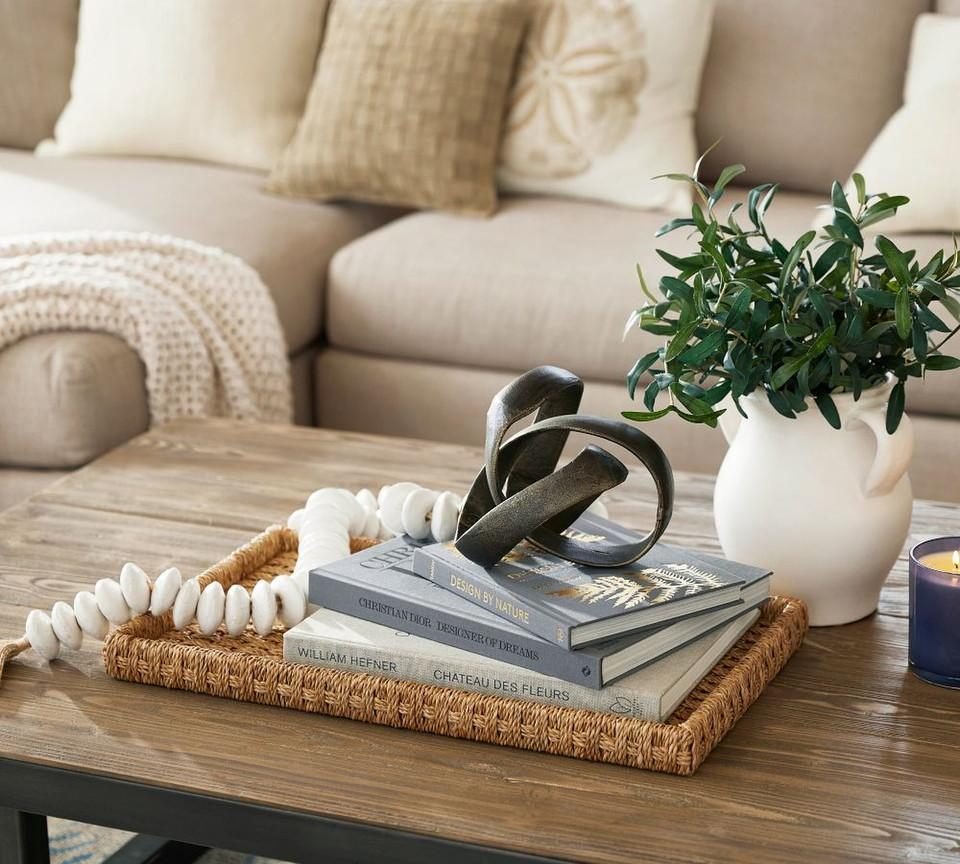
In a small living room every item has to earn its place, and single-use furniture is a luxury. Look for pieces that do two or three jobs. A large, sturdy ottoman can be a coffee table when topped with a tray, a footrest, or extra seating for guests. Nesting tables tuck away when not in use and come out for entertaining. If you often host overnight visitors, a good sleeper sofa or daybed gives you a seating area and a guest room in one. Pieces with hidden storage, such as lift-top benches or coffee tables with drawers, keep everyday clutter out of sight and the room calm.
4. Reflection
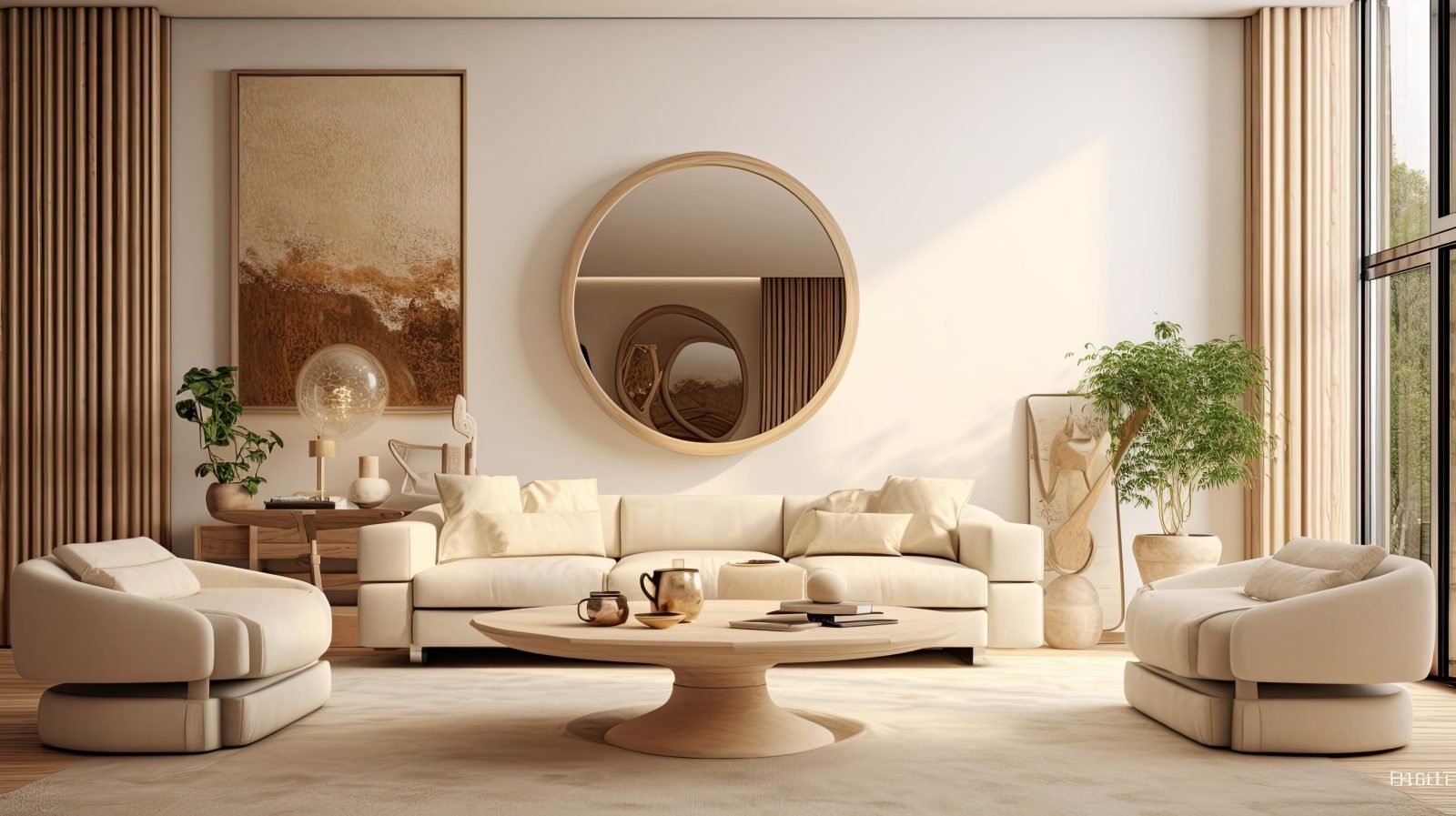
Mirrors are one of the most effective ways to create a sense of space. A well-placed mirror adds visual depth and spreads natural light. The best position is opposite a window, where it reflects the view and the daylight and acts almost like a second window. A large floor mirror leaning against the wall looks relaxed and makes the ceiling feel higher. For a more architectural look, try mirror-fronted cabinets or a group of smaller mirrors arranged as a focal point.
5. Illumination
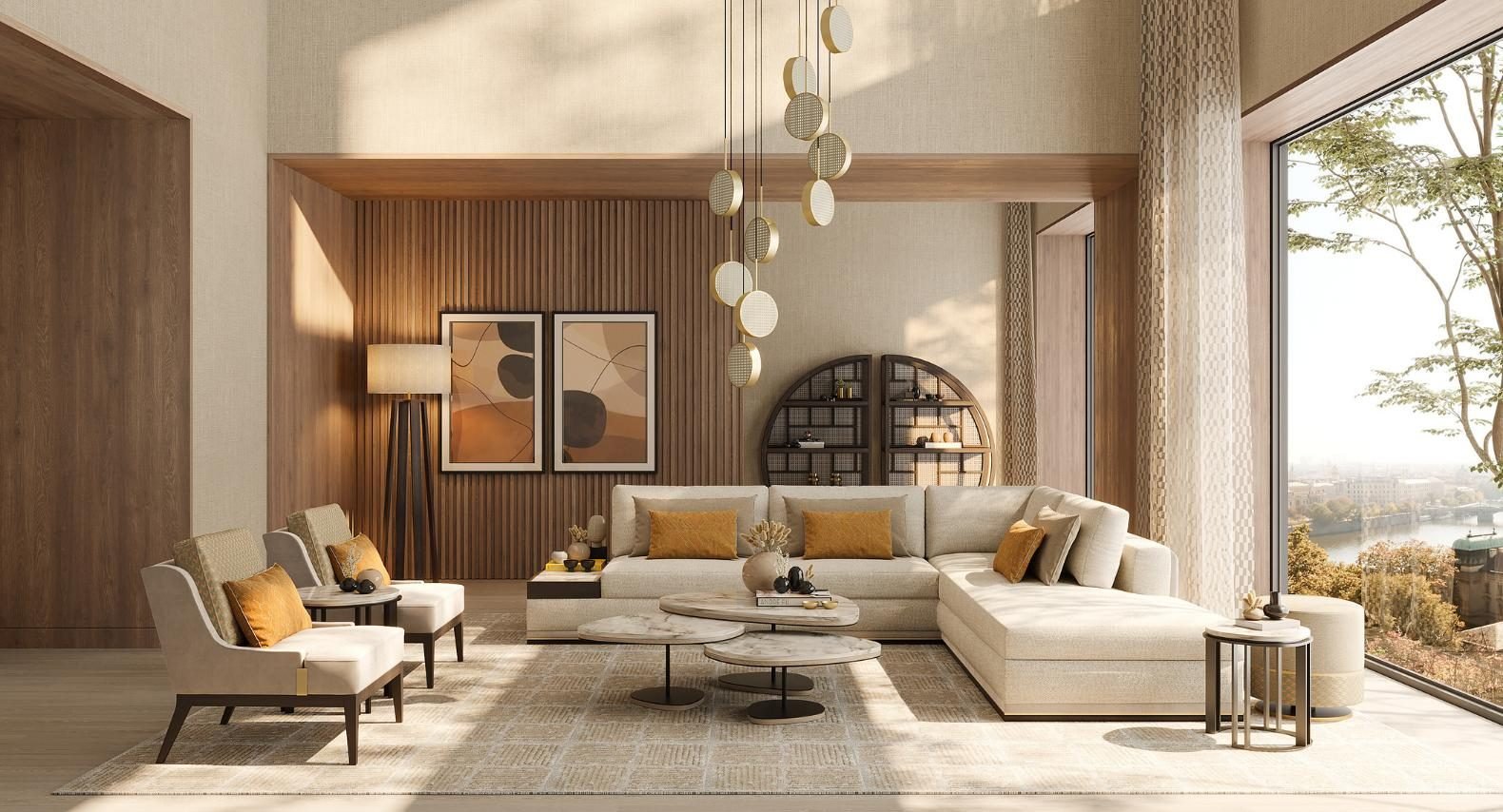
Good lighting stops a small room from feeling like a cave. A single overhead light casts harsh shadows that swallow the corners and shrink the room. Instead, layer three kinds of light: ambient for overall glow, task for specific activities (such as a slim floor lamp beside a reading chair) and accent for depth and drama (such as wall lights or LED strips behind the TV). Slim lamps and wall-mounted fittings save table and floor space while making sure every corner is well lit. Our layered lighting guide goes into more detail.
6. Scale
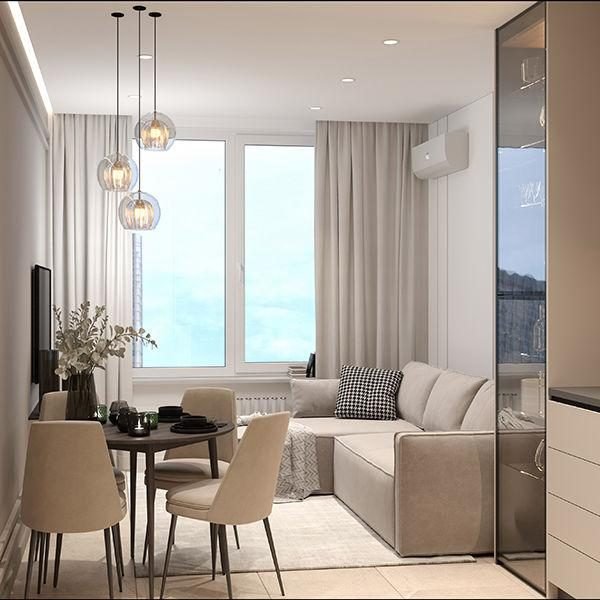
A common mistake is choosing miniature furniture. Lots of small pieces make a room feel busy. Surprisingly, one or two larger pieces, such as a generous sectional that fits the room exactly, can make the space feel more substantial and luxurious. Match the scale of the furniture to the room without overwhelming it. Avoid bulky arms and heavy skirts and look for furniture raised on legs: tapered legs, typical of mid-century design, let you see the floor underneath, which makes the room feel more open.
7. Neutrals
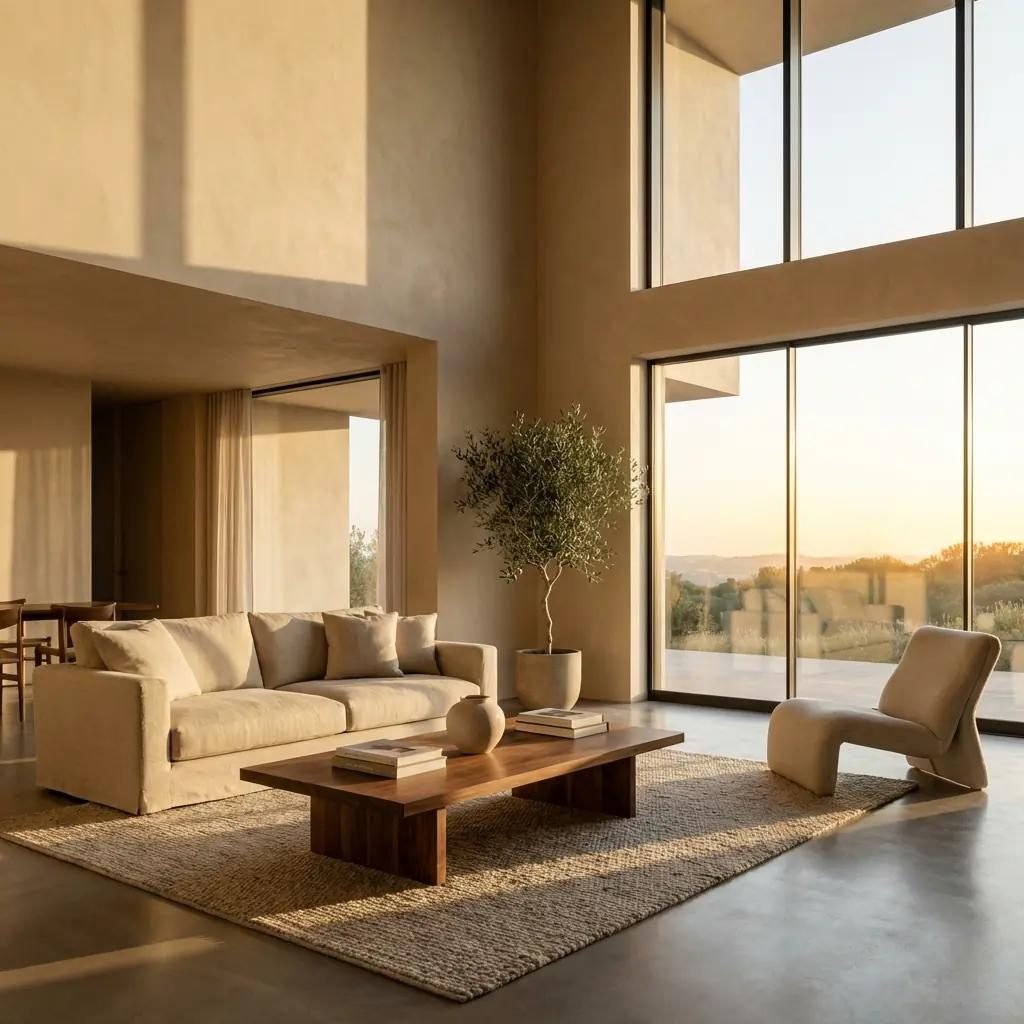
Colour has a big effect on how we perceive space. Light, neutral palettes are a reliable choice for small living rooms because they reflect light rather than absorbing it. White, cream, soft grey and pale taupe blur the line between walls and ceiling, so the edges of the room feel less defined. To keep a neutral room from feeling flat, mix textures: a chunky wool rug with a smooth linen sofa, velvet cushions and natural wood. Layered materials add depth without the strong contrasts that can visually break up a small room. Our living room colour scheme guide covers more palettes.
8. Curated minimalism
Clutter is the enemy of a small living room, because every object on display is magnified. A curated approach means being selective about what stays. Instead of a shelf full of small trinkets, choose one or two statement objects that reflect your personality. Clear the coffee table and other surfaces regularly so the room keeps feeling fresh. Empty space is a design element in its own right: leaving some floor and wall bare lets the eye rest and shows off the pieces you have chosen to keep.
9. Flooring
The floor is the foundation of how a room reads. Choose a rug large enough to ground the whole seating area. A small rug floating in the middle of the floor chops the room into pieces and makes it feel disjointed. A rug that sits under at least the front legs of the sofa and chairs pulls the furniture together into one zone. Choose light colours or subtle, large-scale patterns; busy small patterns can feel chaotic in a tight space. With timber or laminate floors, running the boards along the longest dimension of the room helps it look longer.
10. Texture
When the palette is kept simple, texture becomes the main source of interest. A jute rug, a leather armchair or silk curtains give a rich, high-end feel, adding visual weight without taking up physical space. A subtle grasscloth wallpaper, for example, brings a warmth and depth that paint alone cannot. These tactile details make a room feel considered and prove you do not need a large floor plan for a sophisticated result.
11. Drapery
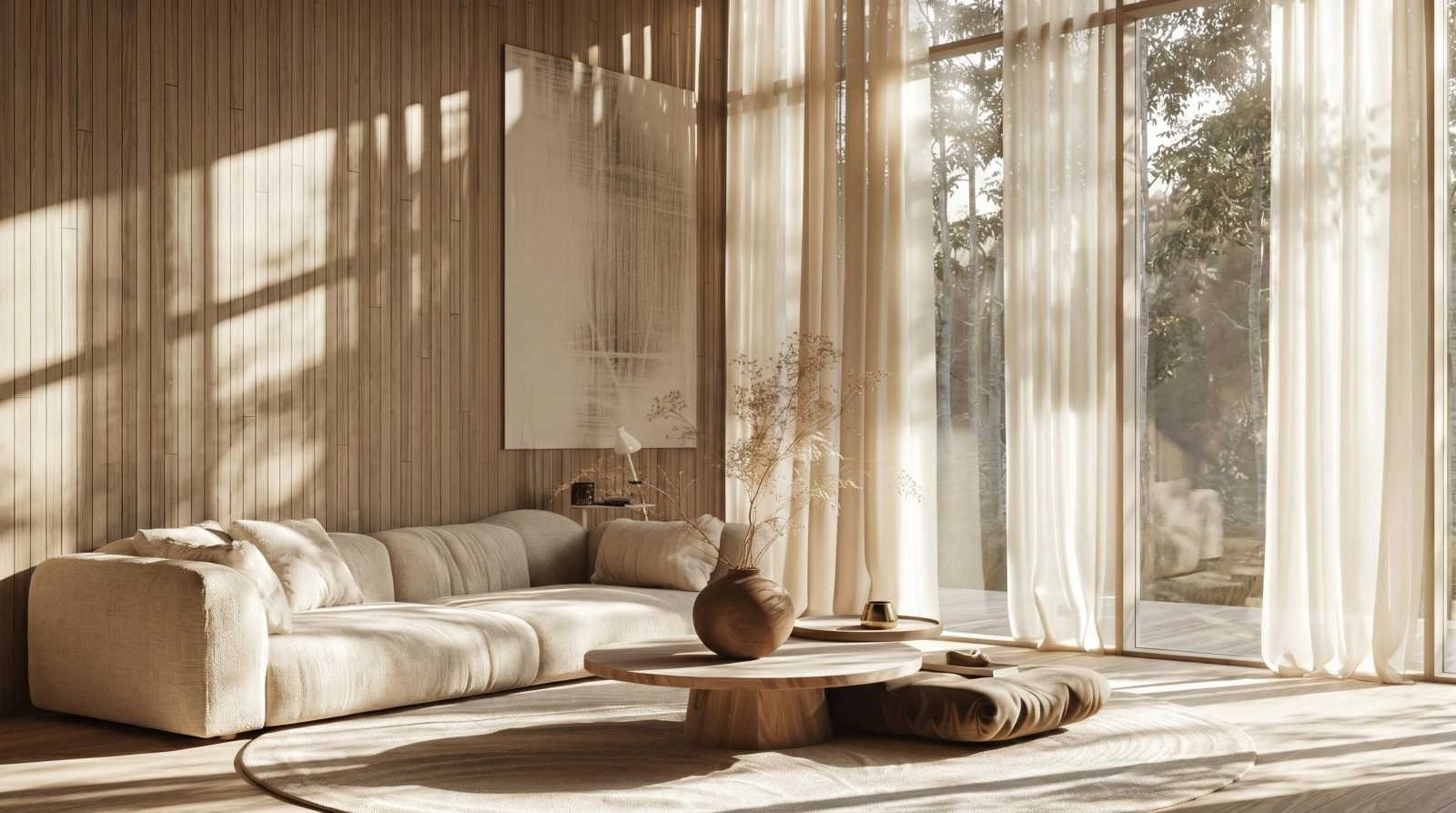
Curtains change how tall and wide a room feels. To make the ceiling seem higher, hang the rod well above the window frame, even right up at the ceiling, and let the fabric reach the floor or pool slightly. Choose sheers or light linens that let daylight through while giving privacy. To make a narrow window look wider, extend the rod beyond the frame so that open curtains cover the wall rather than the glass. More light comes in and the window looks more generous. See how to choose curtains for your living room for fabrics and fittings.
12. Greenery
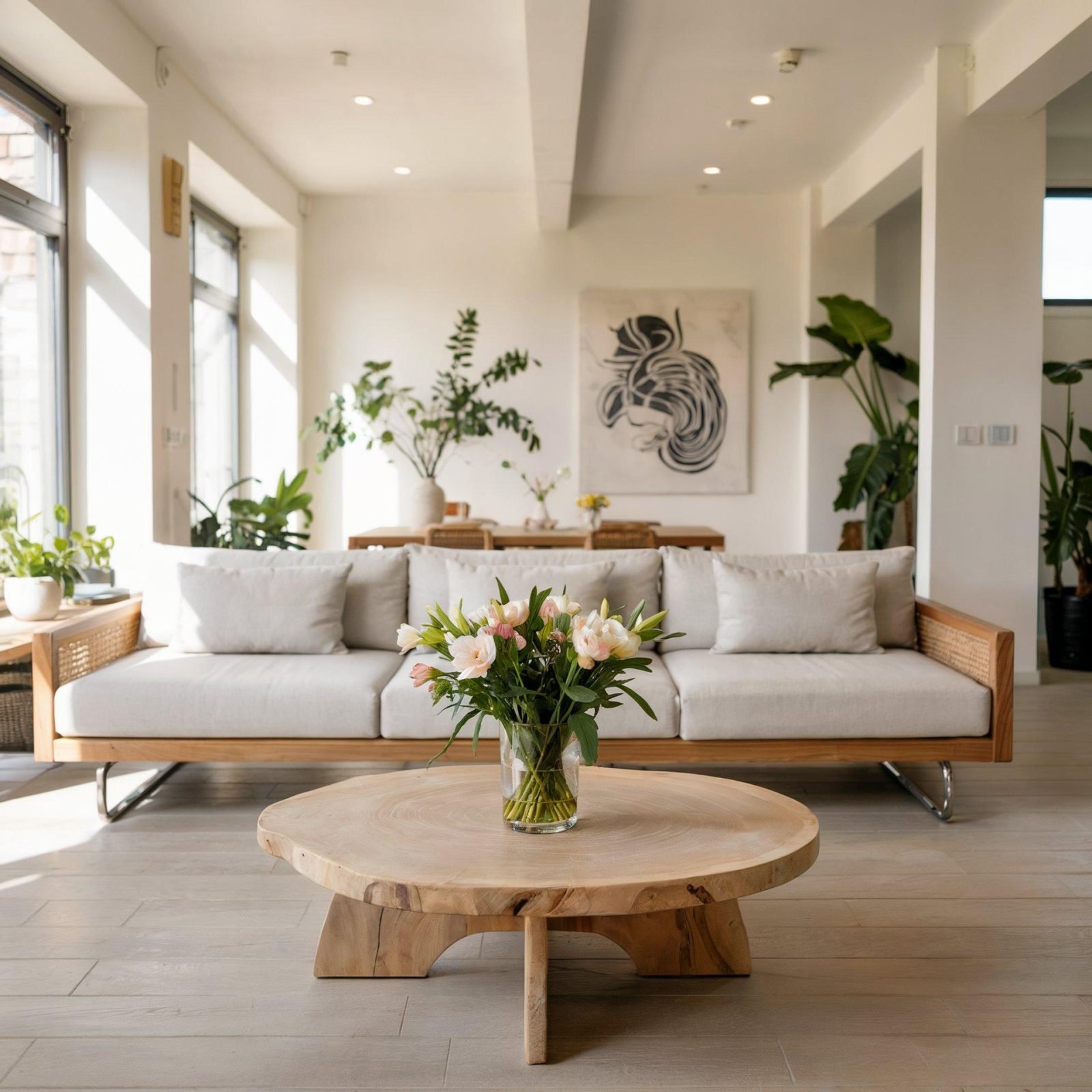
Plants are the finishing touch that brings a small living room to life, adding colour, texture and a vitality that artificial decor cannot match. Use them to soften sharp corners or fill awkward gaps. A tall, architectural plant such as a fiddle-leaf fig or snake plant adds height without taking much floor space. Trailing plants like pothos or string of pearls make use of vertical space and add lushness from above. Many people also simply find a room with plants more relaxing to be in.
Tip: Before buying anything, mark the footprint of new furniture on the floor with masking tape and live with it for a day. It is the quickest way to check walkways in a small room.
Conclusion
Decorating a small living room is an exercise in thoughtful curation and planning. Prioritise light, use the walls, and choose furniture that is both stylish and multifunctional, and you can create a room that feels spacious and sophisticated. The size of a room does not limit its potential.
For more ideas, read how to arrange furniture in a small living room and our storage ideas for small homes. If you would like a plan for your own space, our small space and apartment decoration service can help, or you can book a consultation.


