Decor for Humid and Hot Homes: Materials That Cope and How to Keep Rooms Cool
Which materials resist mould in a damp flat, what to avoid, and how to keep rooms cooler without air conditioning using colour, airflow, fabrics and smart window dressing.
By Admin Published 8 min read

Humidity and heat are hard on a home. Damp air settles into soft furnishings, feeds mould on anything organic and porous, and makes a room feel heavier than it is. Heat does the opposite job on your patience: dark, dense, heavily layered rooms trap warmth and feel stuffy by mid-afternoon. The good news is that a well-chosen scheme can handle both. This guide covers the materials that cope, the ones to avoid, and the layout and fabric choices that keep a room cooler when you do not have air conditioning.
If you have been searching for “decor that doesn’t mold in a humid apartment”, the short answer is: choose non-porous or well-sealed surfaces, keep air moving around everything, and make the soft layer washable. The details below explain how.
First, check whether it is decor or damp
Decor can only do so much. Black spotting on walls, ceilings or window reveals, a persistent musty smell, peeling paint or tide marks usually point to a moisture problem in the building: condensation from poor ventilation, a leak, or rising or penetrating damp. If you rent, report mould on walls to your landlord or managing agent in writing, with dated photos, rather than painting over it. Covering it with furniture or a fresh coat of paint hides the symptom and can make the problem worse. Once the cause is dealt with, the decorating choices below help the room stay fresh.
Materials that cope with humidity
The rule of thumb is simple: the less a surface absorbs, the less mould has to feed on.
- Glazed ceramics and porcelain: Vases, lamp bases, planters and tableware with a full glaze wipe clean and do not hold moisture. Unglazed terracotta is more porous, so keep it for drier spots or seal it.
- Metal: Powder-coated steel, aluminium, brass and stainless steel handle humidity well. Raw iron and mild steel can rust, so look for a protective finish on frames, shelving brackets and curtain poles.
- Glass and stone: Glass-topped tables, mirrors and sealed stone or quartz surfaces are low-maintenance in damp air. Check that mirror backs and frames have a good seal.
- Solid hardwoods with a good finish: Teak, oak and similar dense hardwoods are more stable than cheaper composite boards, which can swell at the edges when moisture gets in. A quality lacquer, oil or varnish matters as much as the wood itself; re-oil oiled pieces as the maker recommends.
- Linen and cotton: Natural, breathable and, crucially, washable. They dry faster than heavy wools and velvets and can be laundered whenever they start to smell stale.
- Outdoor-grade synthetic fabrics: Solution-dyed acrylic and polyester fabrics made for garden furniture resist mildew and fading and are increasingly available in soft, indoor-looking weaves. They are a strong choice for sofas and cushions near a damp window.
- Rattan and cane, with care: These are popular in warm climates and breathe well, but they are organic. Choose sealed or lacquered pieces and keep them off damp floors and away from walls.
What to avoid in a damp home
- Dense pile rugs on damp floors: A thick shag or high-pile wool rug on a cold ground-floor slab can trap moisture underneath. Choose flat-weave cotton, washable rugs or outdoor-grade polypropylene, and lift them occasionally to check the floor below.
- Unsealed jute and sisal in damp spots: Natural fibres look right in a relaxed scheme, but in bathrooms, by a leaking door or in a basement they can stain and grow mildew. Keep them in the driest rooms.
- Furniture pushed hard against external walls: Cold outside walls are where condensation forms. A wardrobe, sofa or bookcase touching that wall stops air circulating and gives mould a sheltered spot. Leave a gap of at least 5–10 cm (2–4 in) behind large pieces.
- Heavy, unwashable upholstery: Velvets, thick chenilles and fixed covers can hold moisture and odours. If you love a heavier fabric, keep it to accent cushions you can air or clean.
- Cardboard and paper storage on the floor: Boxes absorb damp and attract pests. Swap them for lidded plastic, metal or sealed timber containers, raised off the floor.
- Too many pot plants in a poorly ventilated room: Plants release moisture. A few are fine; a jungle in a room that already struggles with condensation adds to the problem.
Airflow, dehumidifiers and washable layers
Most mould problems inside furniture and fabric come down to still, damp air. Small habits make a big difference.
- Keep air moving: Open trickle vents if your windows have them, use extractor fans while cooking and showering and for a while afterwards, and open windows briefly each day where it is safe to do so.
- Raise furniture: Pieces on legs let air flow underneath. Sofas, beds and cabinets with legs of 10–15 cm (4–6 in) are easier to keep fresh than solid plinth bases sitting on the floor.
- Do not overfill wardrobes: Leave space between hanging clothes, and keep doors ajar now and then. Slatted or ventilated doors help.
- Use a dehumidifier: In a persistently damp flat, a dehumidifier is often more effective than any decorating choice. Run it in the rooms where you dry laundry or where condensation forms, and follow the manufacturer’s guidance on placement and emptying.
- Dry laundry outside or near ventilation: Drying clothes on radiators or airers in a closed room adds a lot of moisture to the air.
- Choose washable covers: Removable sofa and cushion covers, machine-washable throws and washable rugs let you deal with musty smells at the source.
Tip: Before buying a sofa or headboard for a damp home, check the care label for removable, washable covers. It is the single feature that will keep it fresh the longest.
Decor for hot climates without AC
When the problem is heat rather than damp, the aim is to keep sunlight from building up inside, keep air moving and make surfaces feel cool to the touch.
Light-reflective colours
Pale walls, ceilings and large surfaces reflect more light and feel cooler than dark ones. Soft whites, chalky stone, pale sage and washed blues work well. Keep deep colours to small accents, such as a cushion or a lamp base, rather than whole walls in sunny rooms. Matt or eggshell finishes avoid glare in strong light.
Cross-ventilation and layout
Air needs a path through the room. Open windows on opposite or adjacent sides in the early morning and evening, when the air outside is cooler, and close them in the hottest part of the day. Do not block that path with tall furniture: keep bookcases and wardrobes off the line between windows and doors, and leave at least 60–90 cm (24–36 in) of clear space in front of windows you open.
Fans
Ceiling fans move air across the whole room; check the ceiling height and the manufacturer’s minimum clearance before fitting, and use a qualified electrician. Pedestal and tower fans are a good renter-friendly alternative. A fan placed to push air out of an open window in the evening can help draw cooler air in from the opposite side.
Breathable fabrics and bedding

- Linen is the classic warm-weather fabric: it feels cool, dries quickly and looks better slightly creased. Use it for curtains, cushion covers, tablecloths and bedding.
- Cotton percale sheets feel crisp and cool; sateen weaves feel warmer and silkier.
- Swap seasonal layers: Pack away wool throws, faux-fur cushions and heavy rugs in summer and replace them with cotton, linen or flat-weave versions.
- Choose lighter upholstery: Leather and some synthetics can feel sticky in heat. A loose linen or cotton slipcover over the sofa makes a noticeable difference.
Blinds, sheers and thermal curtains
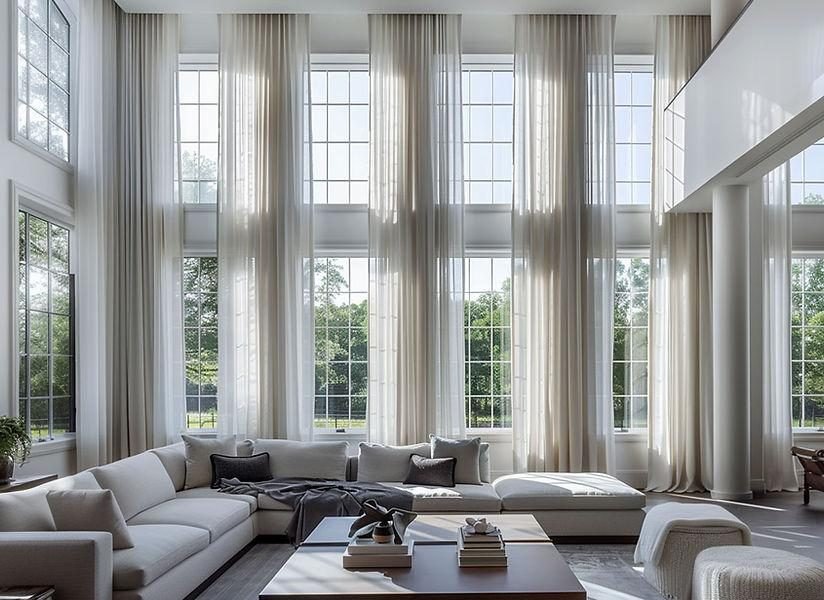
Windows are where most heat gets in on a sunny day. Layering lets you control it.
- Sheers: Floor-length sheer curtains filter glare and soften light while letting air pass through an open window.
- Blinds: Pale or reflective-backed roller blinds, or adjustable wooden or aluminium Venetian blinds, block direct sun while keeping a view. External shutters or awnings are even more effective if your building allows them.
- Thermal or blackout curtains on the sunny side: On south- and west-facing windows, draw lined thermal curtains during the hottest hours to keep sunlight out, then open them in the evening. Choose a pale lining facing the window.
Hang poles 10–15 cm (4–6 in) above the frame and extend them beyond it so curtains clear the glass fully when open. Our guide on how to choose curtains for your living room covers lengths and fullness in more detail.
Cool surfaces and accessories
- Bare or lightly dressed floors in tile, stone, polished concrete or sealed timber stay cooler underfoot than wall-to-wall carpet.
- Keep surfaces less cluttered in summer: fewer objects means less to dust and a calmer, airier look.
- Switch to LED bulbs, which give off less heat than older halogen and incandescent bulbs.
- Glazed ceramic, glass and metal accessories feel cool and cope with humidity, so they work for both problems.
Quick checklist
- Report any mould on walls or ceilings to your landlord before decorating around it.
- Choose glazed, metal, glass, sealed hardwood and washable fabric pieces.
- Keep furniture 5–10 cm (2–4 in) off external walls and raised on legs.
- Use flat-weave or washable rugs, not thick pile, on damp floors.
- Run a dehumidifier and extractor fans where moisture builds up.
- Paint in light, reflective colours and dress beds and sofas in linen and cotton.
- Layer sheers, blinds and thermal curtains, and close the sunny side by day.
A home that copes with humidity and heat is mostly about choosing the right materials and letting the air do its job. For more ideas on making a compact flat work harder, see our small apartment decorating ideas and storage ideas for small homes. If you would like help planning a scheme for the whole home, explore our full home decoration service or book a consultation.


