Small Space Decor Home Decor Trends
How to Decorate a Maximalist Small Apartment Without Clutter
Bold colour, pattern and collections in a small flat, without the chaos: a unifying colour thread, pattern scale rules, vertical display, hidden storage and regular editing.
By Admin Published 7 min read

Maximalism and small spaces are often treated as opposites. Conventional advice for a compact flat is to keep everything pale, plain and minimal. But a small room filled with colour, pattern, art and objects you love can feel richer and more personal than a bare white box. The difference between a maximalist small apartment and a cluttered one is not how much you own; it is how deliberately it is arranged. Maximalism has a structure, and once you know it, you can layer generously without the room feeling chaotic.
Maximalism versus clutter
Clutter is accumulation without intention: post on the sideboard, chargers on the coffee table, mismatched objects with no relationship to each other. Maximalism is abundance with intention. Every piece is chosen, grouped and placed, and the everyday mess is hidden away. A useful test: if you could explain why an object is where it is, it is decor. If it is there because you had nowhere else to put it, it is clutter.
Choose a unifying colour thread
The single most effective way to make a lot of things look like one scheme is colour. Choose two or three colours that will run through every room, and let everything else relate to them.
- Start with one dominant colour for the largest surfaces, such as a deep green, ochre, terracotta or inky blue on the walls. In a small flat, painting walls, skirting and even the ceiling in the same colour blurs the edges of the room and can make it feel larger rather than smaller.
- Add one or two supporting colours that repeat in cushions, art, rugs and ceramics.
- Use a metal finish consistently, such as brass or aged gold, across lamps, frames and handles. It ties disparate objects together.
- Repeat each colour at least three times in a room so it reads as deliberate rather than accidental.
Our living room colour scheme guide explains how to build a palette that holds together.
Pattern scale rules
Mixing patterns is central to maximalism, and scale is what stops it from becoming noise.
- Vary the scale: Combine one large-scale pattern (a bold floral wallpaper or a big geometric rug), one medium (a striped or checked cushion) and one small (a fine ditsy print or a textured weave). Three patterns of the same size compete; three different sizes layer.
- Share a colour: Every pattern should contain at least one colour from your thread.
- Give the eye a rest: Pair busy patterns with plain, textured surfaces such as velvet, boucle, linen or a solid painted wall. Not every surface needs a print.
- Go bigger than you think: In a small room, a large-scale wallpaper often feels calmer than a tiny, busy print, because there are fewer repeats for the eye to process.
Curate collections, do not scatter them
A collection of twenty small objects spread across every surface reads as clutter. The same twenty grouped together on one shelf reads as a display.
- Group by one shared trait: colour, material, shape or theme. A shelf of green glass, a cluster of brass candlesticks, a wall of botanical prints.
- Use odd numbers and varied heights in each grouping, and overlap pieces slightly so they look connected.
- Use trays and plinths: A tray on a coffee table or a stack of books under a small sculpture turns loose objects into a single composition.
- Leave some empty space around each group. Even in a maximalist room, a little breathing room makes the collection stand out.
Display vertically
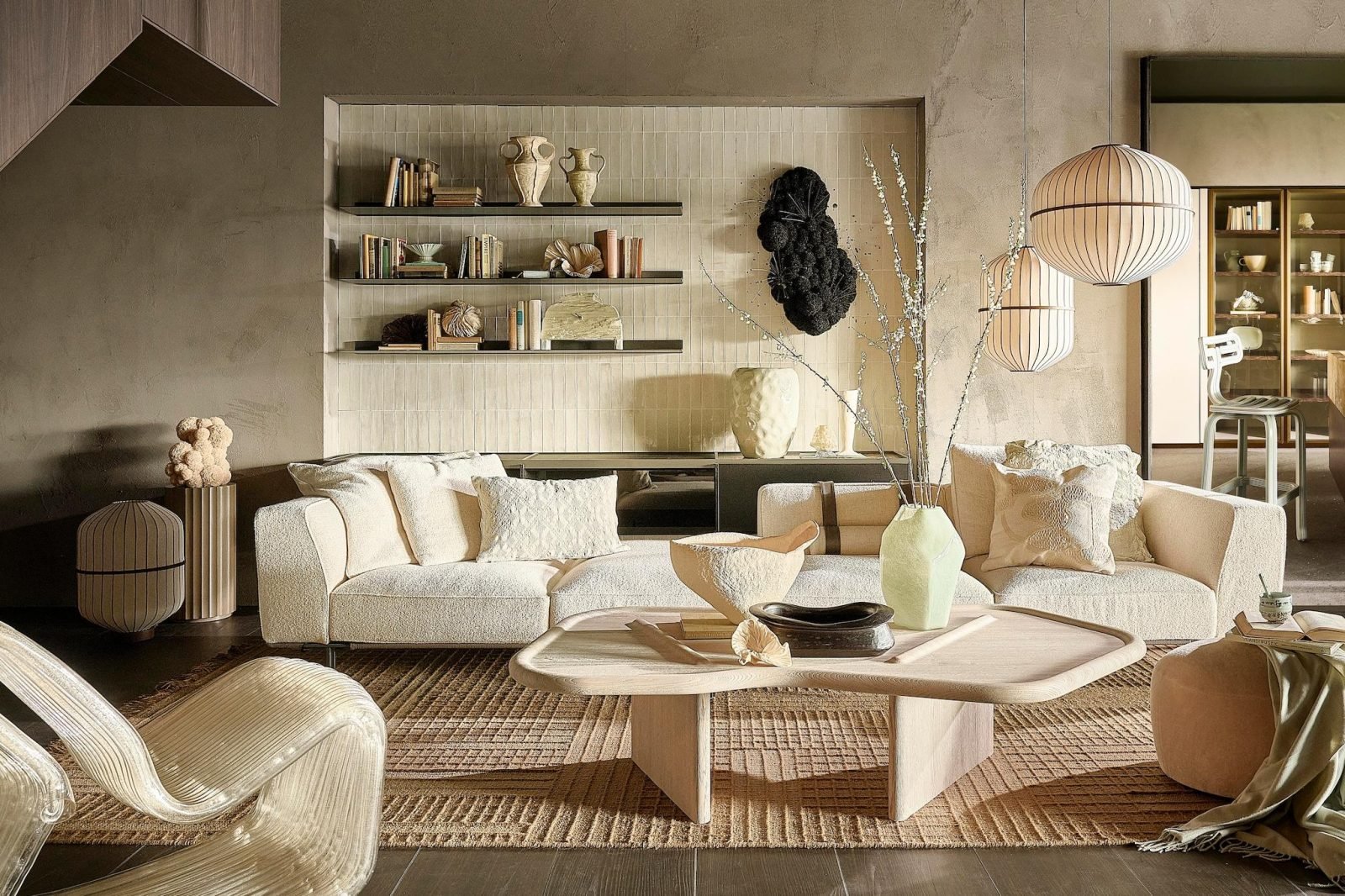
Floor space is precious in a small flat; wall space usually is not. Taking displays upwards frees surfaces and draws the eye up, which makes ceilings feel higher.
- Floor-to-ceiling shelving on one wall can hold books, objects and plants. Keep the lower shelves for closed storage and the upper shelves for display.
- Gallery walls: Lay the arrangement out on the floor first, keep 5–8 cm (2–3 in) between frames, and centre the group roughly at eye level, about 145–150 cm (57–60 in) from the floor. Using the same frame colour, or the same mount colour, calms a mixed collection of art.
- Picture ledges let you layer and swap art without new holes in the wall, which is ideal for renters.
- Hang over doors and windows: A shelf above a door frame or a run of plates above a window uses space nobody else does.
If you rent, check your tenancy agreement before drilling, test any adhesive hooks on a hidden spot first, and get the landlord’s written permission where in doubt, so your deposit is protected.
Hide storage behind the bold look
The secret of every successful maximalist small space is that the practical stuff is out of sight. Display is for things you love; storage is for everything else.
- Closed cabinets below, open shelves above: Sideboards, media units and the lower half of a shelving wall should have doors.
- Furniture with storage built in: Ottomans, lift-up beds, benches with drawers and coffee tables with shelves all keep everyday items hidden.
- Paint or paper the storage: Doors painted in the wall colour, or covered in the same wallpaper, almost disappear, so the bold scheme continues uninterrupted.
- Baskets and lidded boxes in colours from your palette make even open storage look intentional.
- A landing zone by the door for keys, post and bags stops daily items drifting onto decorative surfaces.
For more practical ideas, see our storage ideas for small homes.
One statement per wall
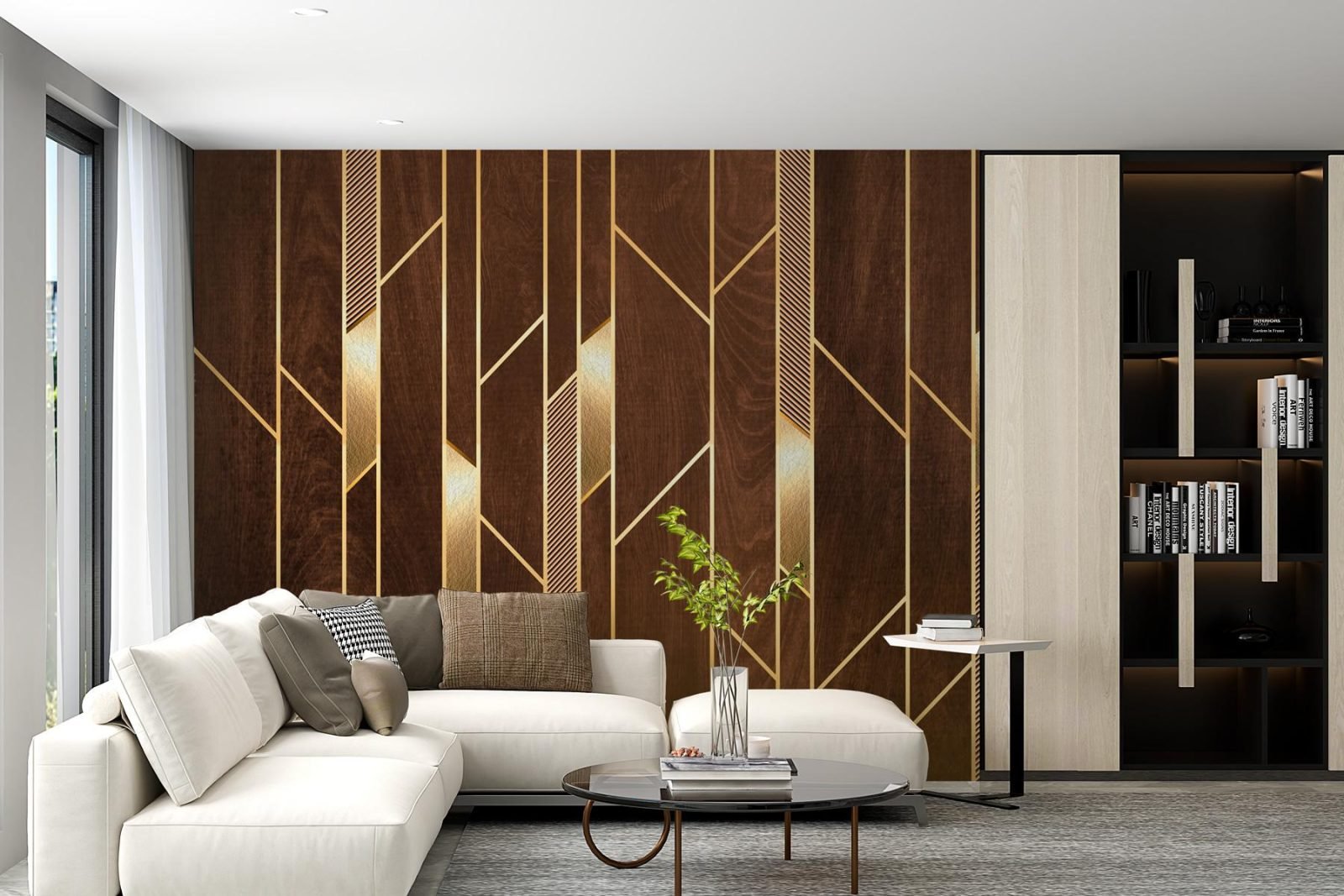
A simple rule keeps a small room from feeling overwhelming: give each wall one main job. One wall carries the gallery; another carries the bold wallpaper or panelled feature; a third holds shelving. When two big statements share the same wall, they compete and the room starts to feel crowded.
- Let the largest piece of art, the most dramatic mirror or the statement light anchor its wall, and keep what surrounds it quieter.
- Use furniture to support the statement rather than fight it: a plain sofa under a busy gallery, a patterned chair against a plain wall.
- Keep the wall you see first on entering the room the strongest, so the space has an obvious focal point.
Our living room feature wall ideas offers more ways to build a single strong focal point.
Edit and rotate
Maximalists collect, so the room will always want to grow. Regular editing keeps it lively rather than crowded.
- Clear one surface completely every few months, then put back only the pieces you really want to see.
- Rotate collections seasonally: Keep part of a collection packed away and swap it in, so displays feel fresh without adding more.
- Apply a one-in, one-out rule for decorative objects on a given shelf.
- Keep floors clear: Objects on the floor are the fastest route from maximalist to messy in a small flat. Keep pathways at least 75–90 cm (30–36 in) wide.
Layout tips for a full but functional flat
- Choose furniture on legs so you can see the floor beneath; it keeps a richly decorated room feeling lighter.
- Use a large rug rather than several small ones. One generous pattern grounds the room; several small rugs chop it up.
- Layer lighting with table lamps, wall lights and picture lights to make displays glow in the evening. Our guide to layered lighting covers this in detail.
- Use mirrors to bounce light and double the effect of a colourful wall, but treat a large mirror as that wall’s statement.
A maximalist small apartment works when colour connects everything, pattern is layered by scale, collections are grouped and the everyday is hidden away. For more compact-living ideas, read our small apartment decorating ideas. If you would like a designer to help you plan a bold scheme that still works day to day, explore our small space and apartment decoration service or book a consultation.


