Budget Home Decor Home Decor Trends
Grill Island Maintenance: A Seasonal Care Guide
Keep an outdoor kitchen looking good all year: spring gas checks, summer grease control, autumn winterising, winter covers, and care for steel, stone and cabinets.
By Admin Published 8 min read

A grill island turns a terrace into an outdoor room: somewhere to cook, gather and linger long after the meal. Built from stone or rendered masonry, with stainless steel appliances and a worktop to match, it is designed to live outside. But weather-resistant does not mean maintenance-free. Grease, rain, frost, sun and fallen leaves all take their toll, and a little care at the right time of year keeps the island safe to use and good to look at.
This guide sets out what to do in each season, then covers the materials that need the most attention: stainless steel, stone worktops, vent hoods and outdoor cabinets. Your appliance and worktop manuals take priority over the general advice here, so keep them to hand.
1. Spring: inspect and recommission
Spring is the time to check what winter has done. Start with the structure. Look over the masonry, render and stonework for cracks, loose stones or crumbling mortar joints. Water that gets into small cracks expands when it freezes and widens them, so repoint or seal any damage now, before it spreads.
Next, check the gas supply before the first cookout. Inspect the hose and regulator on a bottled-gas grill for cracks, stiffness or wear, and replace anything doubtful. Then do a leak test outdoors with the grill cold: turn every burner knob off, open the gas supply, and brush a mix of washing-up liquid and water over each connection. Bubbles that grow mean a leak. Turn the gas off and do not use the grill until it is fixed. Never test with a flame. A grill on a fixed mains gas line should be checked by a qualified gas engineer (in the UK, one who is Gas Safe registered).
Finally, check the burner tubes, sometimes called venturi tubes, which carry gas from the valves to the burners. Spiders and insects like to nest inside them over winter, and a blocked tube can cause a flashback fire behind the control panel. Grill makers recommend clearing them with a long, thin venturi brush.
2. Summer: keep on top of grease
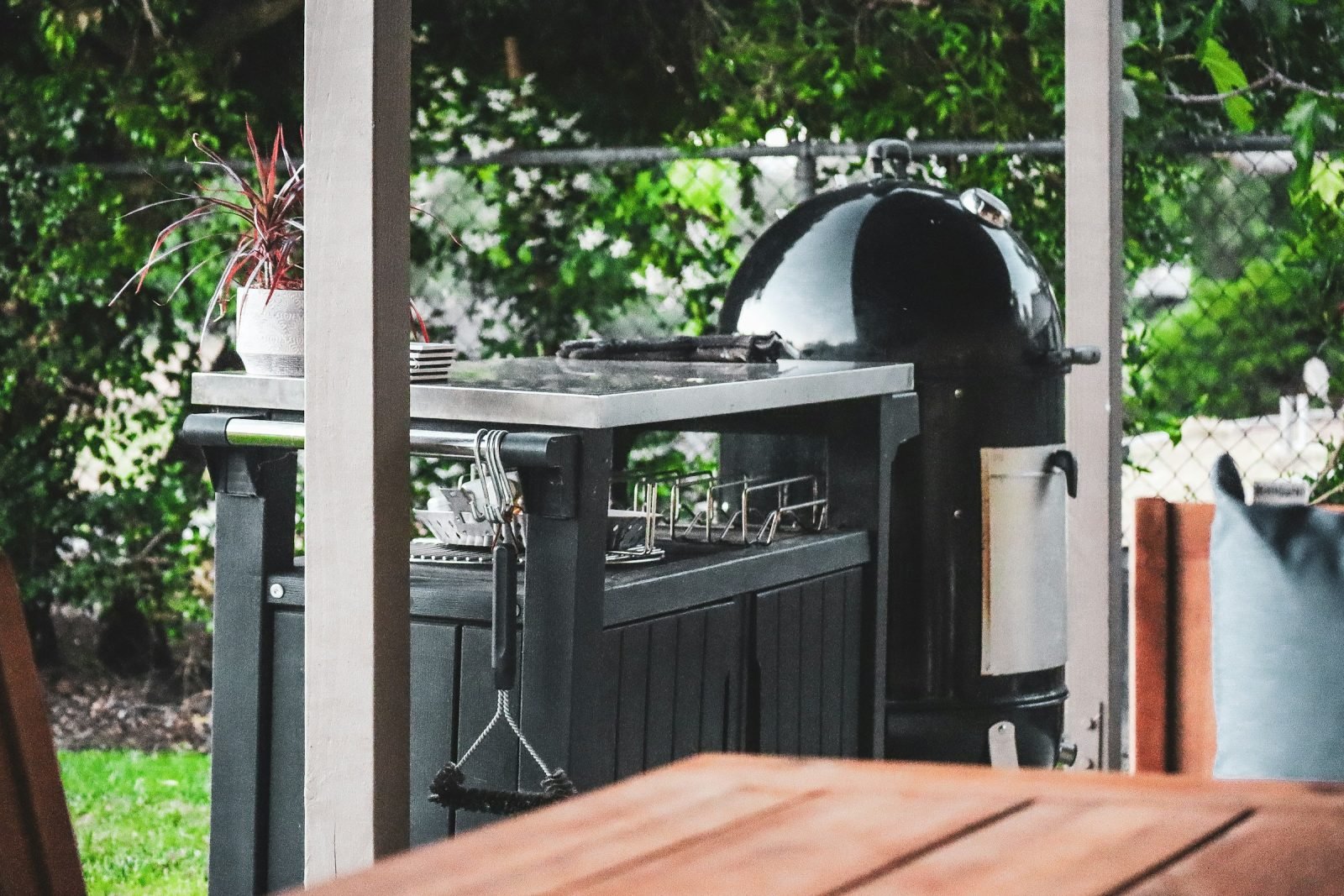
In summer the island is in constant use, and grease is the main problem. Built-up fat is a fire risk, it smells as it turns rancid in the heat, and it stains porous stone that it drips or splashes onto.
After each cook, run the burners on high with the lid closed for 10–15 minutes to burn off food residue, then brush the grates once they have cooled a little. If you use a wire brush, check the grates afterwards for loose bristles, which can end up in food; a bristle-free scraper avoids the problem. Empty and clean the drip tray and grease cup regularly, weekly when the grill is busy.
Wipe the worktops after each use with a cleaner that is safe for your stone, and clean up spills of oil, marinade, wine or citrus straight away. Use trivets for hot pans and trays rather than setting them straight on the stone.
3. Autumn: clear up and winterise
Falling leaves bring a new set of jobs. Leaves, twigs and pine needles collect behind the grill, under the island and in ventilation grilles. Dry, they are a fire risk; damp, they hold moisture against the structure and encourage mould, and on timber-framed islands they can lead to rot. Clear them regularly.
Give stainless steel a thorough clean after the summer, then apply a stainless steel protector or a light film of food-safe oil to help it shrug off winter damp.
If the island has a sink, tap or ice maker, winterise it before the first frost. Turn off the water supply to the island, drain the pipes and any appliances as their manuals describe, and leave the taps open so trapped water has room to expand. A pipe that bursts inside masonry is difficult and expensive to repair.
4. Winter: cover and protect
In much of the UK the island goes quiet over winter, and the aim is to keep moisture under control. A fitted, breathable cover is the best investment you can make. Avoid plastic tarpaulins, which trap condensation underneath and can encourage rust and mildew. A breathable cover lets moisture escape while keeping rain, snow and leaves off the surfaces.
If you will not be grilling, turn the gas off at the supply and disconnect and store any gas bottle as its supplier advises. If you do grill through winter, brush snow off the island after a fall. Do not use de-icing salt on paving near the island: the salt is carried into stone and masonry by meltwater, and as it recrystallises it can make the surface flake, or spall. It also attacks stainless steel. Sand or grit is a safer choice for slippery paving nearby.
5. Caring for stainless steel
Stainless steel resists rust but is not immune to it. Most outdoor kitchens use grade 304, which performs well in ordinary gardens. Near the coast or beside a swimming pool, chlorides from salt spray and pool chemicals can cause tea staining, the brown surface marks that appear on stainless steel outdoors. Tea staining is cosmetic at first but should be cleaned off before it can lead to pitting. If you live by the sea or are choosing new appliances for a poolside island, ask about grade 316, which copes better with chlorides.
Clean stainless steel along the direction of the grain with a soft cloth and a dedicated stainless steel cleaner or mild washing-up liquid, then rinse with clean water and dry it. In salty or poolside settings, clean more often. A paste of bicarbonate of soda and water helps lift stubborn marks if used gently. Never use steel wool or wire pads: they scratch the surface and leave behind particles of ordinary steel that rust and stain. Avoid bleach and other chloride-based cleaners too.
6. Sealing stone worktops
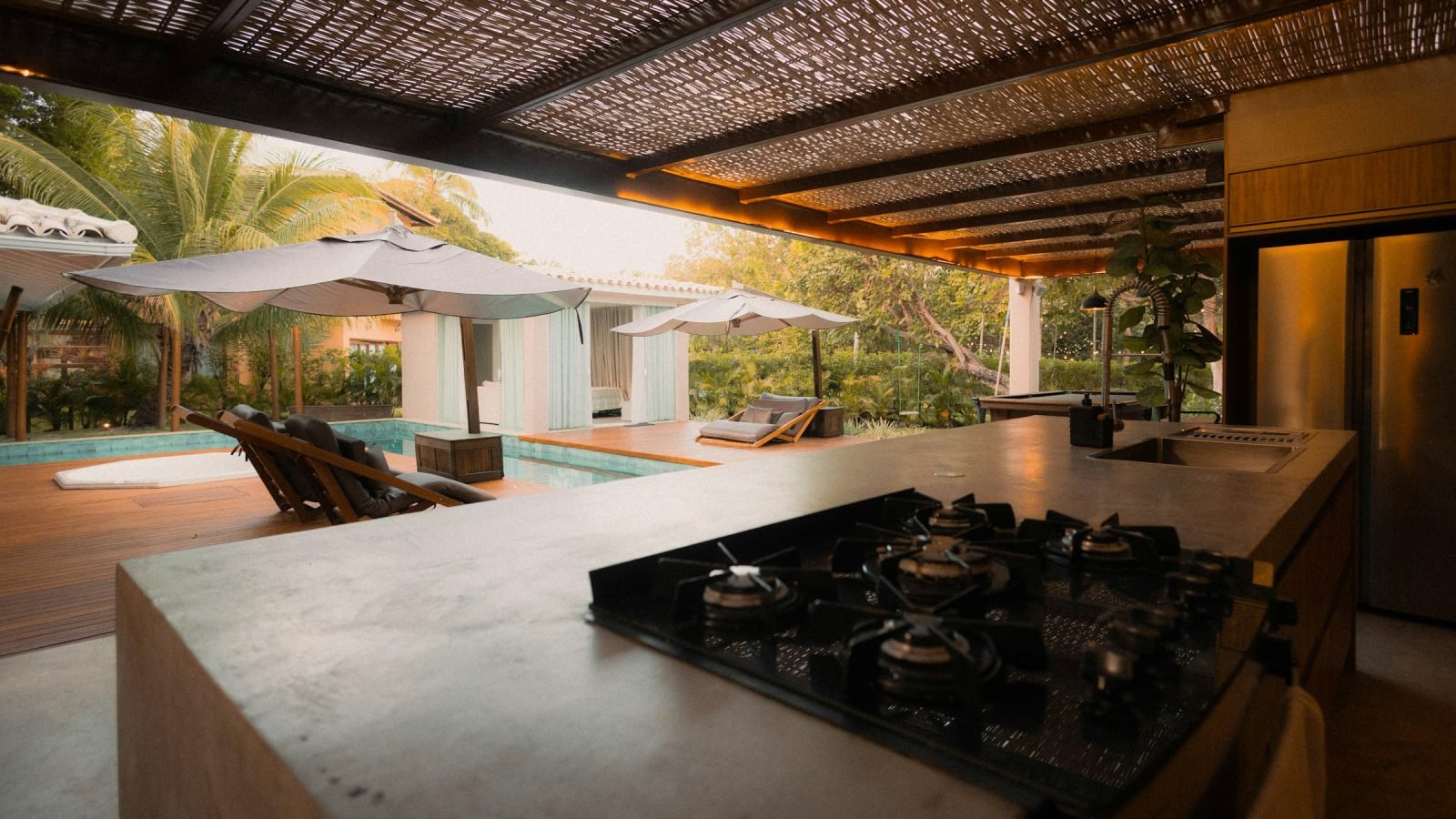
Granite, marble and concrete worktops take a beating outdoors from sun, rain and cooking. Most natural stone is porous, and an unsealed or worn surface soaks up oil, wine and the tannins from fallen leaves, which can leave permanent stains.
Check the seal each season with a simple water test. Put a few drops of water on the worktop and leave them for 10–15 minutes. If they bead up, the seal is working. If the stone darkens where the water sat, it is absorbing it and is due to be resealed. How often that is depends on the stone and its finish: dense, polished granite can go years between treatments, while lighter, more porous stone may need sealing every year or two. Use an impregnating sealer that is suitable for outdoor use on your type of stone, and apply it and buff off the excess exactly as the label directs.
Marble needs extra care outdoors. Acids in lemon juice, wine, tomato and vinegar etch it, leaving dull marks even when it is sealed, so wipe up spills quickly.
7. Vent hoods and ventilation
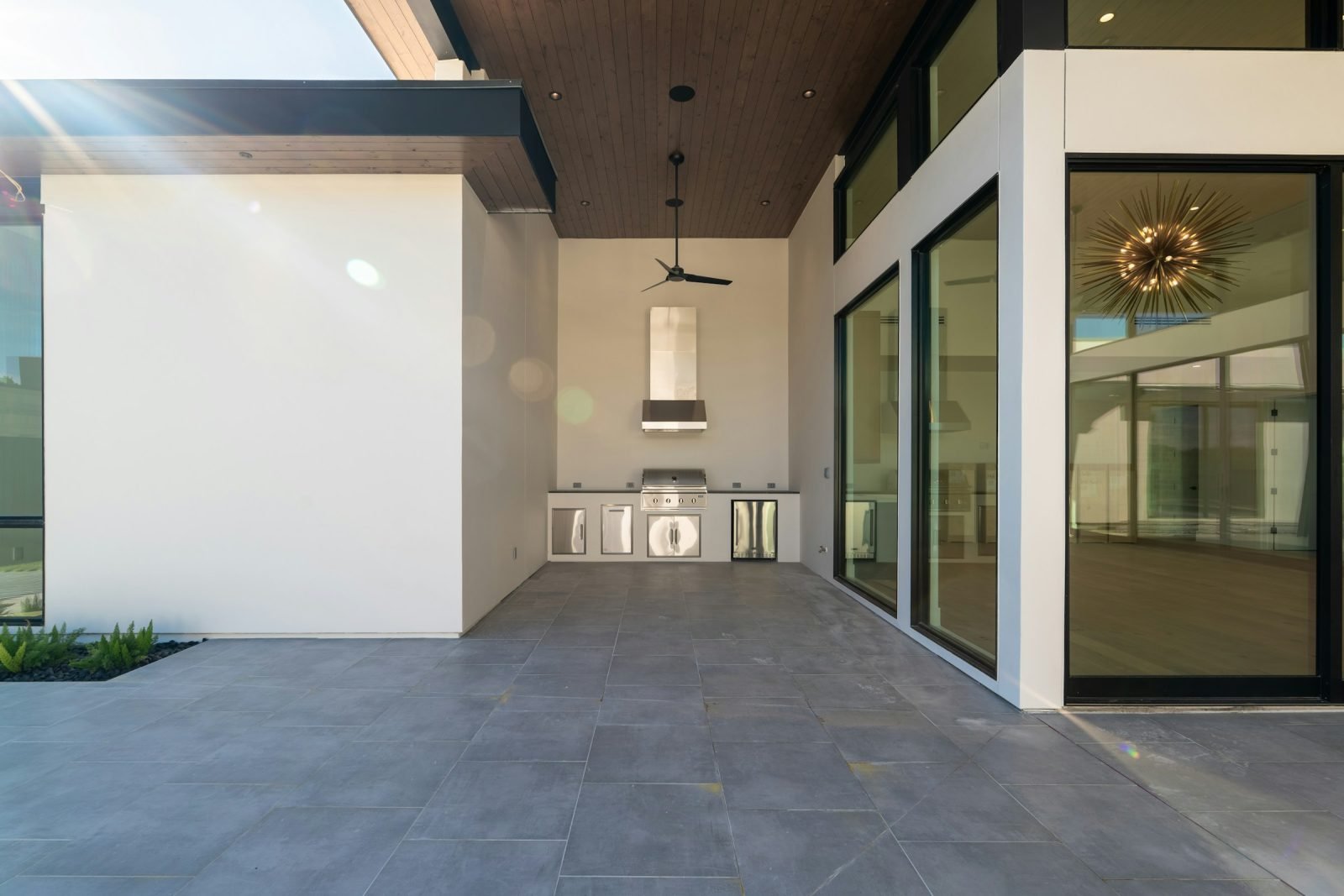
If your grill sits under a roof, pergola or pavilion, it probably has a vent hood, and this is one of the most neglected parts of an outdoor kitchen. Over a season the filters collect a heavy layer of grease and soot.
During the grilling season, take out the baffle filters once a month and wash them in hot, soapy water or a degreaser, or in the dishwasher if the manufacturer allows it. Check the fan for build-up, and make sure the external outlet is clear of nests and debris. A clogged hood clears smoke poorly and is a fire risk.
8. Outdoor cabinets and storage
Cabinets in a grill island are prone to damp and to insects looking for shelter. Each season, empty them completely and wipe the insides with a mild cleaner to keep mould at bay.
Check hinges and drawer runners, which suffer in outdoor air. A dry silicone spray or a marine-grade lubricant keeps them moving freely. Hardwood doors in teak or ipe need oiling, usually once a year, to keep their colour and stop them turning silver and checking. Doors made from marine-grade polymer (HDPE) need nothing more than a wash with soapy water.
FAQ
How often should I deep clean my grill grates?
Brush them after every use, and give them a deep clean, taken out and soaked in a degreaser, at the start and end of each grilling season. Built-up carbon affects both flavour and how evenly the grill heats.
Can I pressure wash my grill island?
It is best avoided. High pressure can damage the finish on stainless steel, wash out mortar between stones and force water into gas valves and electrical parts. A garden hose with an ordinary spray nozzle and a soft brush are safer and usually enough.
Why is my stainless steel grill rusting?
Stainless steel is stain-resistant, not stain-proof. Surface rust usually comes from iron particles left by steel wool or wire pads, or from salt and pool chemicals in the air. Regular cleaning, rinsing and drying, plus a protective product, will prevent most of it.
Do I need a cover if the island is under a roof?
Yes. A roof keeps off direct rain but not damp air, windblown leaves, dust or insects. A breathable cover keeps the appliances clean and ready to use.
What is the best way to clean the stonework?
Use a pH-neutral cleaner made for stone, with a soft brush and water. Avoid acidic cleaners such as vinegar or lemon juice and avoid bleach, which can etch natural stone and weaken mortar over time.
Final thoughts
A grill island that is checked in spring, kept free of grease in summer, winterised in autumn and covered in winter will stay safe, clean and inviting for years. Look after its steel, stone and cabinets along the way and it will remain the heart of your terrace. For more ideas on the space around it, see our guides to patio and deck combinations and patio ideas for small gardens. Explore our balcony and terrace decoration service, or book a consultation to plan your outdoor space with a designer.


