Small Space Decor Home Decor Trends
Designing the Accessible Sanctuary: Decor for Wheelchair Users in Small Apartments
How to design a stylish, wheelchair-friendly small apartment: open layouts, wall-mounted furniture, smooth floors, reachable storage, easy lighting, lower art and durable textiles.
By Admin Published 11 min read

Living in a small apartment presents a unique set of design challenges, and when you add wheelchair accessibility into the mix, it becomes an exercise in both creativity and precision. The goal is to move beyond mere “functionality” and into the realm of genuinely beautiful interiors. An accessible home should never feel clinical; it should feel like a curated reflection of your personality, designed around your movement and comfort.
In a compact space, every centimetre counts. For wheelchair users, the “choreography” of the room, meaning how you move from the kitchen to the living area or the bedroom, is the foundation of the design. By blending universal design principles with clever decor ideas, you can turn a cramped layout into a spacious, stylish sanctuary.
This is design guidance, not a personal assessment. Every person, chair and home is different, so the measurements below are commonly cited guidance rather than fixed rules. An occupational therapist can assess your needs and your space, and local accessibility guidance is a useful reference: in England, for example, Approved Document M of the Building Regulations covers access to dwellings, and in the US the ADA standards are often quoted. Use them as a starting point, not as a guarantee that a home is compliant.
1. Open layout
The most important element of a small, accessible apartment is the floor plan. Traditional furniture arrangements often create “islands” that are difficult to navigate around. Instead, aim for a perimeter-based layout. By placing larger pieces such as sofas and wardrobes towards the walls, you maximise the central turning space. A clear circle of around 150 cm (60 in) in diameter is commonly cited as the space needed for a wheelchair to make a full turn, although the space you actually need depends on your chair and how you move.
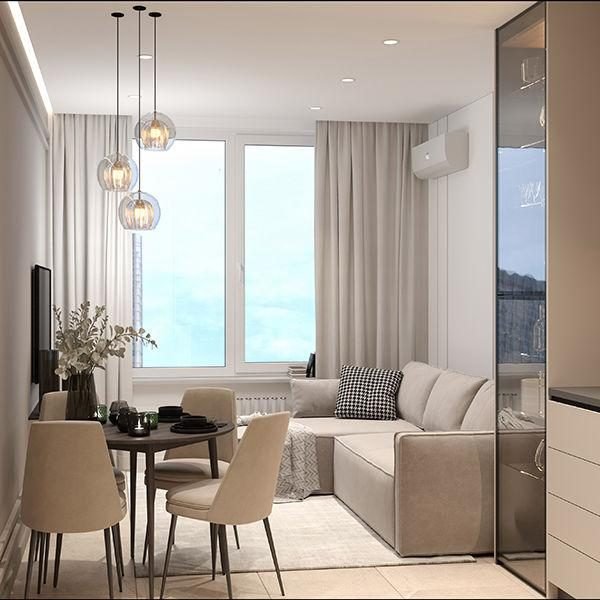
In a small apartment, this might mean choosing a bistro-style dining set-up over a full-sized table. Opt for a table with a pedestal base rather than four corner legs; this lets a wheelchair pull in closer without the front casters hitting the legs. Keep the centre of the room free of furniture and reserved for movement. This openness not only makes the space easier to navigate but also creates a sense of airiness that makes a small room feel larger.
Tip: Before buying anything, mark your turning circle and main routes on the floor with masking tape, then move around the room in your chair. It quickly shows which pieces can stay and where a slimmer alternative would help.
2. Floating furniture
When floor space is at a premium, look to the walls. Floating furniture, meaning pieces mounted directly on the wall, is extremely useful for wheelchair users. It removes the “leg clutter” that can catch on footrests or wheels. A wall-hung vanity unit in the bathroom or a floating desk in the living area provides clear knee space, so you can pull right up to the surface comfortably.
Wall-mounted pieces must be fixed securely into studs or masonry with fixings rated for the load, and anything someone may lean on or use for support, such as a desk, vanity or shelf edge, must be rated and fixed for that extra weight. Grab rails should be fitted by a competent installer. Beyond function, floating furniture creates a calm, minimalist look: the eye travels across the floor uninterrupted, which makes a room feel larger. In a small apartment, consider a wall-mounted bedside table or a floating bookshelf. These keep the floor clear for easy cleaning and effortless manoeuvring, so your wheels never feel hemmed in by furniture legs.
3. Seamless floors
The floor is your “highway”, and it needs to be as smooth as possible. In a small apartment, the change from one flooring to another, such as kitchen tile to living room wood, can create a jarring bump for a wheelchair. Use flush, low-profile threshold strips to create a seamless flow between rooms.
Rugs need careful thought. Some people find it simplest to avoid them altogether, especially where they would get in the way of turning or transferring. If you do want the warmth of a rug, choose a low-pile or flat-weave design, such as a kilim or a dense low-loop carpet, which adds texture and colour without the drag of a deep shag. Secure it firmly with a suitable non-slip underlay or rug tape so the edges cannot curl up and become a hazard, and check it regularly.
4. Accessible shelving
Storage in a small apartment often goes vertical because there isn’t enough horizontal space, but high shelves are often out of reach from a seated position. The solution lies in clever storage hardware. Pull-down shelving units can be fitted into standard wall cabinets, letting you bring the contents of the top shelf down to your level with a simple pull.
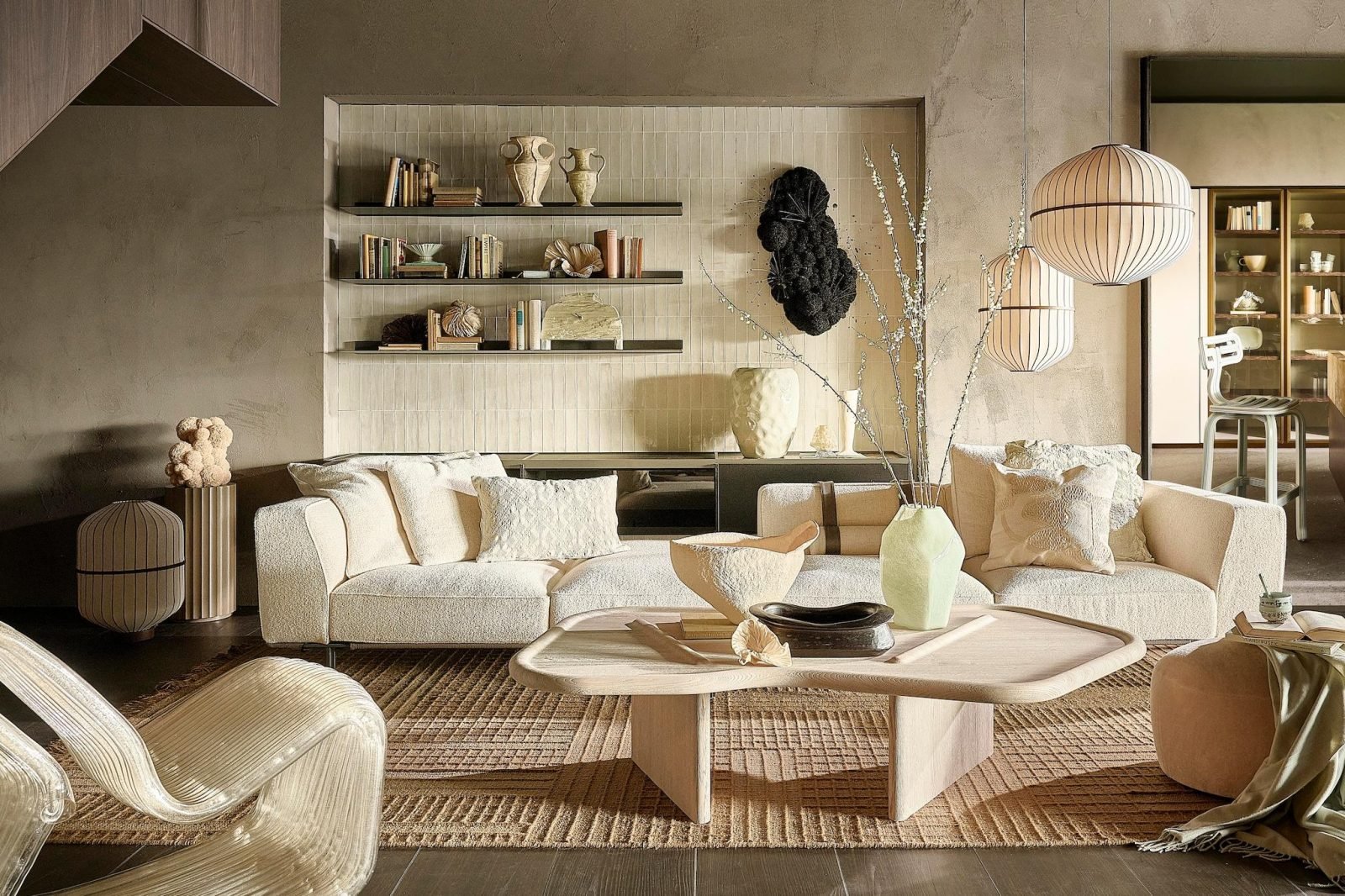
In the living area, plan open shelving within a comfortable reach range. A band of roughly 40–120 cm (15–48 in) from the floor is often suggested for a seated person, but test your own reach before fixing anything. Anything above that is best kept for decorative items that rarely need moving, or for seasonal items in lightweight baskets with long, easy-to-grab handles. By prioritising reachability, you keep your independence and reduce the need for help in your daily routine.
5. Smart illumination
Lighting is an often-overlooked part of decor, but it plays a big role in accessibility. Fumbling for a tiny switch on a lamp cable or stretching to a high wall switch can be frustrating. Large rocker switches, which can be pressed with the side of a hand or an elbow, are often easier to use than small toggles. Any change to wall switches or hard-wired lighting must be carried out by a qualified electrician.
Smart bulbs and smart plugs are a simple, plug-in alternative: they let you control lights from a phone app or with voice assistants. Decoratively, use layering to create atmosphere. Instead of one harsh overhead light, combine LED strip lighting under cabinets for tasks with floor lamps on weighted bases that won’t tip easily. Position lamps so their switches are within reach from a seated position, or choose touch lamps that turn on with a light tap on the base.
6. Eye-level art
Standard interior design advice says to hang art at “eye level”, which is usually calculated for a standing person, with the centre of the picture at about 145–152 cm (57–60 in) from the floor. For a wheelchair user, this is often too high, causing neck strain and an awkward viewing angle. To make your apartment truly yours, hang art lower, centred at about 115–120 cm (45–48 in), adjusted to your own seated eye line.
This does two things: it creates a gallery that is designed for you, and it helps ground the room. In a small apartment with high ceilings, lower art can make the seating area feel more intimate. Don’t be afraid to create a gallery wall that starts just above the skirting and extends up to your reach. It is a bold design choice that celebrates your own perspective.
7. Vertical gardens
Bringing greenery indoors can make a small apartment feel calmer and more alive. However, large floor pots can take up valuable turning space. The solution is a vertical garden: wall-mounted planters or a living wall let you enjoy lush greenery without giving up floor space. Make sure planters are fixed securely, as wet compost is heavy.
Choose low-maintenance plants such as snake plants or pothos, and position wall planters at a height where you can easily water and prune them. If you share your home with pets, note that both of these are toxic to cats and dogs; see our guide to non-toxic decor for cats for safer choices. If you have a small balcony, use railing-mounted planters that face inwards. This keeps the greenery at eye level while you enjoy a cup of coffee, turning a small outdoor space into a private, accessible garden.
8. Reflective surfaces
Mirrors are the oldest trick in the book for making small spaces feel larger, but for a wheelchair user they can serve a dual purpose. A well-placed mirror can help you see around corners or check who is at the door without turning your chair in a tight hallway.
Large leaning mirrors are popular, but make sure they are securely anchored to the wall so they cannot be tipped over if bumped by a wheelchair. Alternatively, a series of smaller mirrors arranged in a pattern can act as artwork while bouncing light into darker corners. In bathrooms, consider a tilting mirror or a mirror that extends all the way down to the splashback, so you have a full view from a seated position.
9. Durable textiles
The textiles in a small apartment need to be tough. Wheelchairs, especially powered ones, can be heavy, and the occasional scuff or tyre mark on upholstery or rugs is inevitable. Look for performance fabrics, which are designed to resist stains and stand up to heavy use; check the manufacturer’s cleaning and durability information.
Velvets and tight weaves are good choices because they don’t snag as easily as loose knits. For your sofa, choose a forgiving colour: mid-tones such as charcoal, navy or forest green are good at hiding the occasional smudge. Use cushions and throws to add pops of colour and texture; they are easy to swap and won’t interfere with your mobility.
10. Rolling storage
In a small apartment, you often need your belongings to move with you. Rolling carts, such as the classic three-tier metal trolley, are extremely versatile for wheelchair users. They can serve as a mobile pantry, a craft station or a bedside table. Because they are on wheels, you can push them out of the way when you need more room to manoeuvre and pull them close when you are ready to work or relax.
Choose a cart with good-quality, lockable casters that roll smoothly over your flooring. You can add magnetic hooks or side bins for extra storage. In the kitchen, a rolling cart can act as a movable island that you bring out when preparing food and tuck into a corner when you have finished.
A note for renters
If you rent, get your landlord’s written permission before drilling, changing switches or making other alterations. In the UK, disabled tenants can generally ask their landlord to make reasonable adjustments, and an occupational therapist or a local advice service can explain what may apply in your situation. Many of the ideas here, such as rolling carts, smart plugs, touch lamps and lower-hung art, need no permanent changes at all.
Final thoughts
An accessible small apartment can be every bit as stylish as any other home. A clear turning space, wall-mounted furniture fixed securely, smooth floors, storage within reach, easy-to-use lighting, art hung at your eye line and hard-wearing textiles all add up to a space that works with you rather than against you. Tailor each choice to the person who lives there, ideally with advice from an occupational therapist, and the result will feel like a sanctuary rather than a compromise.
Frequently asked questions
How wide should my doorways be for easy access?
Guidance commonly cites a clear opening of around 80–90 cm (32–36 in), with the wider end more comfortable, though the right width depends on your chair and the approach to the door. In a small apartment where you can’t widen the frames, swing-clear (offset) hinges allow the door to swing fully out of the opening, gaining a little extra clearance. Ask a competent joiner to fit them, and get permission first if you rent.
What is the best height for a kitchen worktop?
Standard worktops are around 90 cm (36 in) high, which is often too tall for a seated person. Heights of roughly 76–86 cm (30–34 in) are often suggested for wheelchair users, ideally with knee space beneath, but the best height is the one that suits you. If you rent and cannot change the worktops, a sturdy, height-adjustable rolling table can serve as your main preparation surface.
Are there specific types of chairs that are better for visitors?
In a small apartment, every piece of furniture should be versatile. For guests, choose lightweight, armless chairs that can be tucked into a corner or stacked. Armless chairs can also be easier for some wheelchair users to transfer into if they choose to sit on a regular chair for dinner or a film.
How can I protect my walls from wheelchair scuffs?
Small apartments mean tight corners. To protect your walls, you can fit a dado rail or wall panelling at the height where your footrests or wheels usually make contact, and corner guards on vulnerable edges. A scrubbable, wipeable paint finish also makes it much easier to remove scuffs without damaging the wall.
How do I handle window treatments in an accessible way?
Traditional blinds with long cords can be a tangling hazard and are often hard to reach. Motorised blinds or shades are a very convenient option, letting you control light and privacy with a remote or voice command. Alternatively, look for cordless shades that can be operated with a wand or a simple reaching tool.
For more ideas, read our guides to high-contrast decor for low vision, small apartment decorating ideas and storage ideas for small homes, or explore our small space and apartment decoration service. To plan an accessible, stylish home together, book a consultation.


