Elevating the Master Suite: Mastering Headboard and Accent Wall Design
Ten headboard and bedroom accent wall ideas, from upholstered panels and reclaimed wood to murals, moulding, integrated lighting, stone, cane and mirrors.
By Admin Published 7 min read

The bedroom is more than a place to sleep; it is a personal sanctuary, a retreat from the busy world and a reflection of your own taste. At the heart of this sanctuary is the bed, the undisputed focal point of the room. Yet a bed alone rarely defines the space. To turn a bedroom into a designer-calibre suite, it helps to think about how the headboard and the accent wall work together.
The wall behind the bed offers the biggest opportunity for creative expression. By combining textures, colours and architectural details, you can create a sense of depth, luxury and comfort. Whether you lean towards the clean lines of Scandinavian design or the rich textures of a boutique hotel, the ideas below will help you master the bedroom focal point.
1. Upholstered fabric
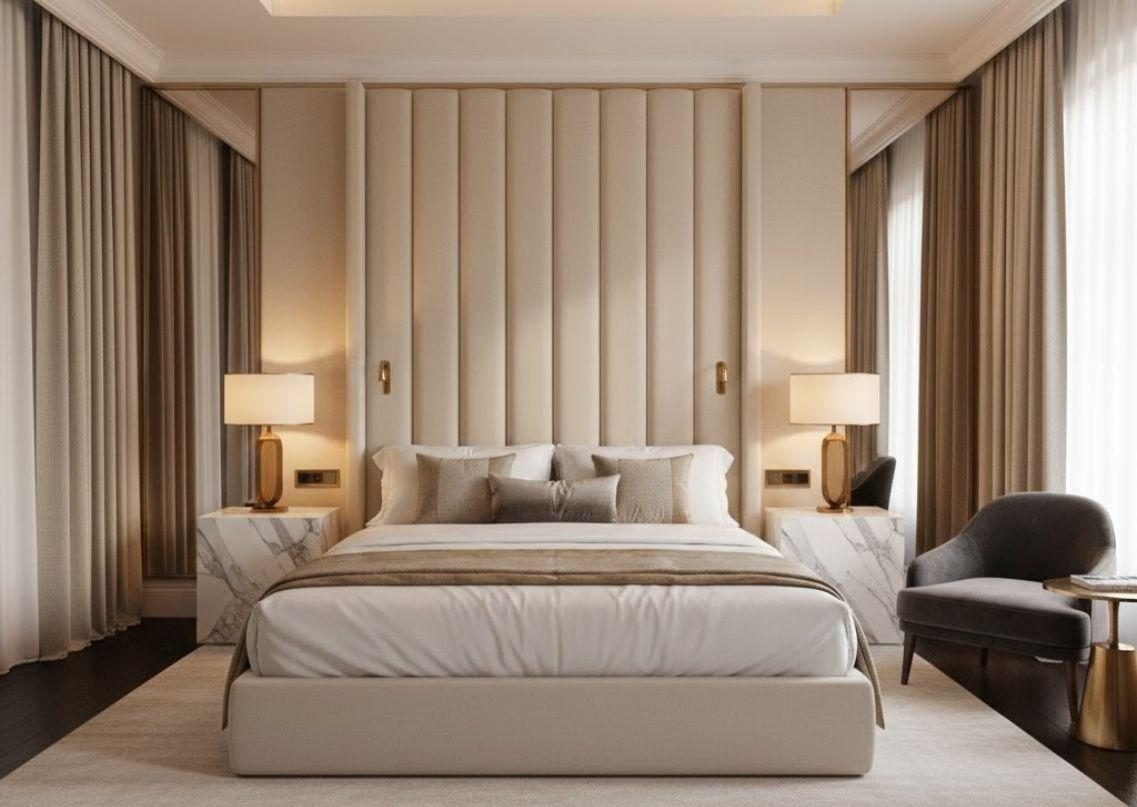
Upholstery remains one of the most popular choices for headboards thanks to the comfort and softness it brings to a room. When the headboard is extended beyond standard dimensions, either sideways to the edges of the bedside tables or upwards to the ceiling, it stops being a piece of furniture and becomes an architectural feature.
The fabric sets the mood. Velvet has a rich, light-catching sheen that feels luxurious, while linen gives a crisp, natural look that suits coastal or modern farmhouse schemes. For a contemporary edge, consider channel-tufted panels or a grid of padded blocks. As well as making a comfortable backrest for reading, a padded wall helps soften sound, so the bedroom feels quieter and more secluded.
2. Reclaimed wood
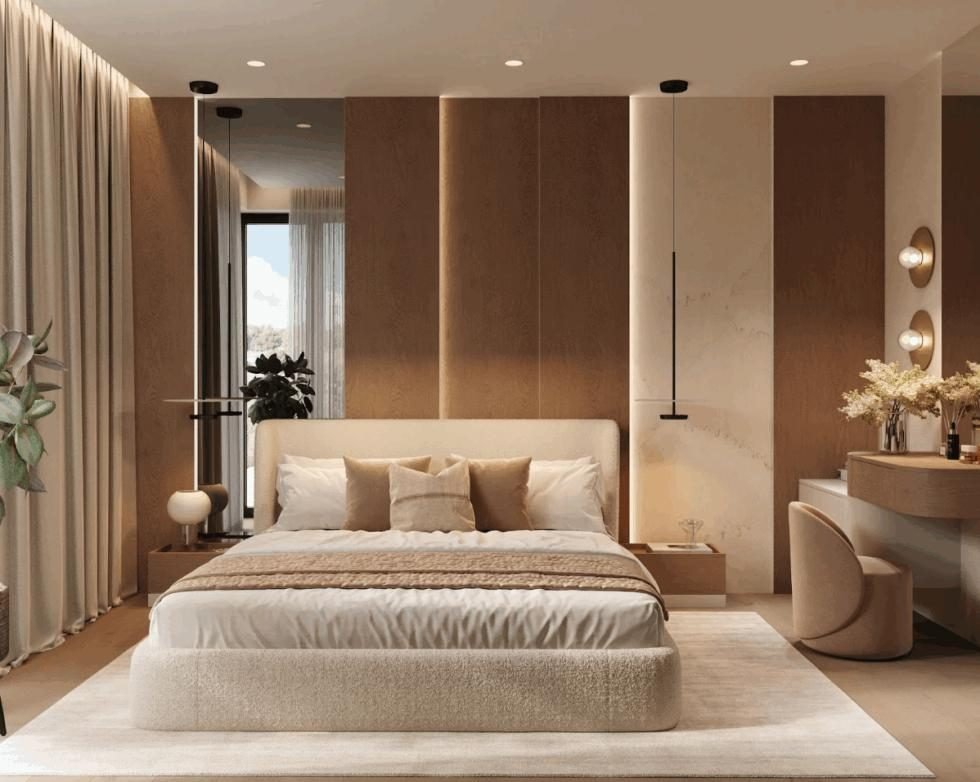
Bringing natural materials indoors is a hallmark of biophilic design. A reclaimed wood accent wall introduces warmth and a sense of history that synthetic materials struggle to replicate. The natural variations in grain and colour give you a built-in palette for the rest of the room.
To keep the look modern, think about the direction of the boards. Vertical planks can make a low ceiling feel higher, while a herringbone or chevron pattern adds a refined, crafted touch. If a full wall feels like too much, a live-edge timber headboard is a good compromise, showing off the raw beauty of the wood while the wall behind stays a neutral backdrop.
3. Mural wallpaper
Wallpaper has enjoyed a real revival, moving away from repeating patterns towards large-scale murals that work as floor-to-ceiling art. A mural behind the bed can transport you somewhere else entirely, whether a misty forest, a vintage botanical garden or an abstract watercolour landscape.
When choosing a mural, scale matters. Large, sweeping designs stop the wall from feeling cluttered. For a cohesive look, pull one or two colours from the mural into your cushions, rugs or curtains. This ties the "art" on the wall to the practical pieces in the room and creates a seamless visual flow. If you are still deciding on a finish, see wallpaper vs paint.
4. Architectural moulding
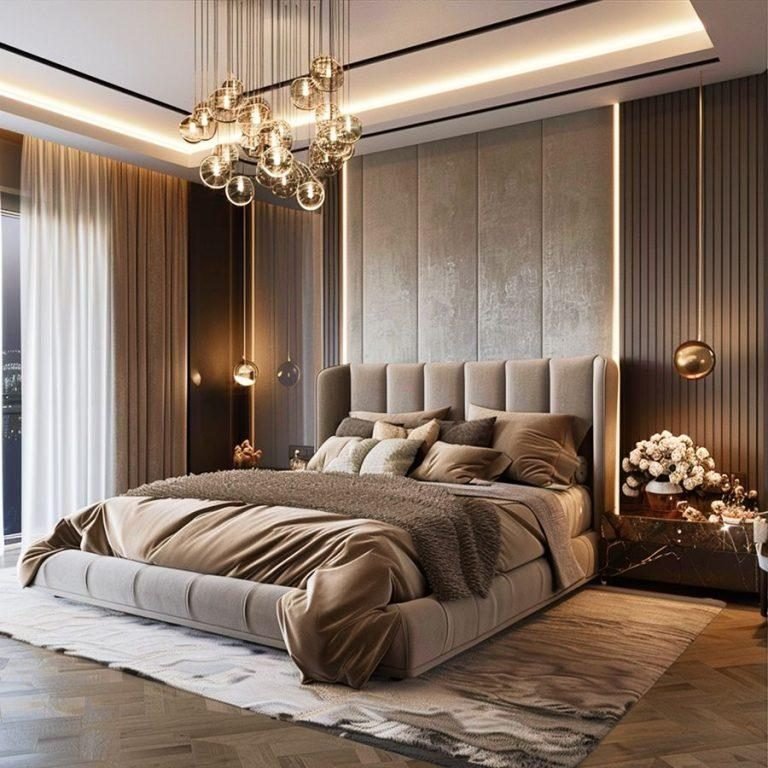
If you prefer a more structured and timeless look, architectural moulding (wainscoting, picture-frame moulding or board-and-batten) adds three-dimensional interest without relying on bold colours or busy patterns. It gives a sense of permanence and "bones" to a room that might otherwise feel like a plain box.
Painting the moulding the same colour as the wall creates a subtle, sophisticated texture that changes as the light moves across the room and casts different shadows. A contrasting colour, on the other hand, emphasises the geometry of the design. This approach works especially well in transitional and traditional spaces.
5. Floating shelves
Functional design is increasingly popular in modern homes, where every square metre counts. Building floating shelves into the accent wall gives you a rotating gallery of personal pieces, which suits anyone who enjoys a curated look.
A single long shelf spanning the width of the headboard can act as a ledge for leaning artwork, so you do not have to commit to permanent nail holes for a gallery wall. Paired with a low-profile headboard, the shelf adds vertical interest and gives you somewhere for essentials such as reading glasses or a small decorative lamp.
6. Geometric paint
Paint is one of the most cost-effective ways to create an accent wall, and modern techniques go well beyond a single colour. Geometric colour-blocking gives a custom, graphic look that can define the bed area without a physical headboard at all.
Using painter's tape for sharp, clean lines, you can paint a "faux" headboard straight onto the wall. Circles, arches and triangles are popular shapes that add a playful, modern feel. It is an excellent solution for smaller rooms, where a bulky headboard might take up too much physical or visual space.
Tip: Before painting, sketch your shape lightly in pencil and live with it for a day or two. Check it from the doorway and from the bed so the proportions feel right from both viewpoints.
7. Integrated lighting
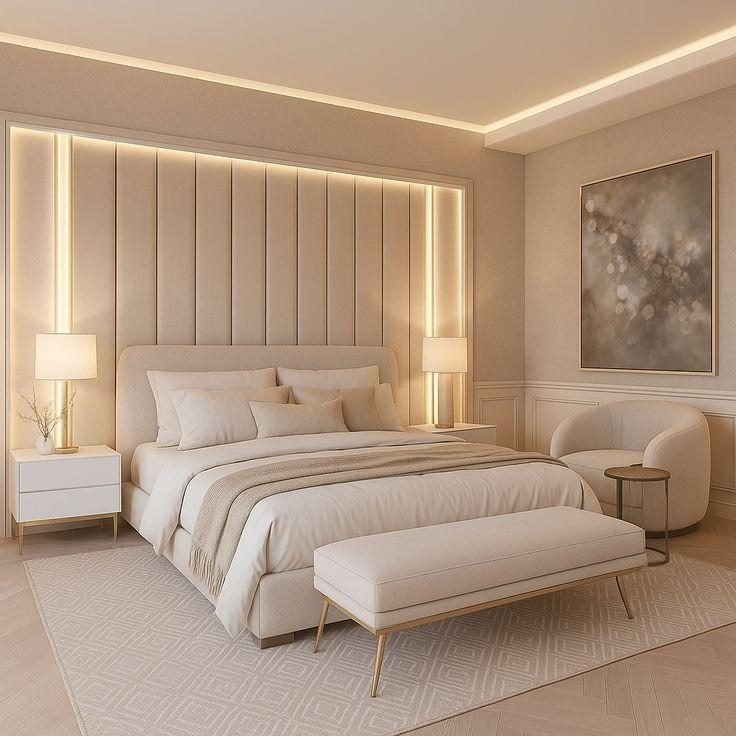
Lighting is the secret ingredient in professional interior design. By building lighting into the headboard or the accent wall, you create an atmosphere that can shift from practical to romantic with a dimmer switch.
Backlighting a floating headboard or a set of 3D wall panels creates a "halo" effect that makes the bed appear to float. Recessed cove lighting along the top of an accent wall can wash the whole surface in a soft glow, picking out the texture of wallpaper, stone or wood. It can also reduce the need for bulky bedside lamps, giving a cleaner, more streamlined look.
8. Stone veneer
For a look of permanence and natural luxury, stone veneer is hard to beat. Whether you choose the rugged texture of stacked slate or the smooth, polished surface of large-format marble tiles, stone brings an earthy, grounded feel to the bedroom.
Stone is naturally cool, which you can balance with warm-toned woods or soft, plush fabrics in the bedding and rugs. Because stone is visually heavy, it often works best when the rest of the room is kept fairly minimal, letting the natural veining and texture of the stone take centre stage.
9. Cane webbing
The grandmillennial and bohemian trends have brought natural fibres such as rattan and cane back to the forefront of interior design. A cane-webbed headboard has a light, airy feel that is perfect for smaller bedrooms or rooms that need a touch of vintage charm.
The open weave lets the colour of the accent wall peek through, creating a layered effect. Pairing a natural cane headboard with an earthy, muted paint colour such as sage green, terracotta or ochre gives a room that feels warm, natural and very inviting.
10. Mirrored panels
Mirrored accent walls are a classic designer trick for making a small bedroom feel larger and brighter. By reflecting light from windows and lamps, mirrors can turn a dark corner into a lively part of the room.
To avoid a "gym-like" look, choose antiqued mirror, smoked glass or panels with decorative bevelling. Framing the mirrored section with timber moulding or metallic trim adds another layer of sophistication. This approach is especially effective in glamorous or Hollywood Regency-style interiors, where shimmer and reflection are key to the design.
Conclusion: balancing the elements
The most successful bedroom designs balance hard and soft, light and dark, and practical and decorative. When planning your headboard and accent wall, consider the room's proportions. A very tall headboard needs a high ceiling to avoid feeling cramped, while a dark accent wall needs good lighting so the room does not feel gloomy.
Choose one of these ideas as your starting point and you can create a focal point that anchors the room and makes it a better place to rest. Whether through the tactile comfort of velvet or the drama of a stone wall, the wall behind your bed is a wonderful expression of your personal style.
For more wall ideas, see our living room feature wall ideas, and to finish the look read our bed styling guide. Our bedroom decoration and wall decor and wallpaper services can design and install your headboard wall, or you can book a consultation.


