The Art of the Feature Wall: Transforming Living Spaces with Style and Substance
Twelve feature wall ideas for the living room, from bold paint and textured wallpaper to timber slats, stone, panelling, mirrors, moss and murals.
By Admin Published 8 min read

The living room is the social heart of the home, a place to relax and a canvas for personal expression. In contemporary interiors the feature wall has grown from a single coat of bright paint into a real architectural tool, used to define space, set a mood and show off individual style. Whether you live in a compact city apartment or a large family house, a well-executed feature wall gives the room a focal point that anchors the layout and sets the tone for everything around it.
An impactful feature wall balances texture, colour and light. It is less about decorating a surface than about telling a visual story. From the rustic charm of reclaimed timber to the polish of marble, the options are wide. This guide covers twelve of the most compelling feature wall ideas to help you lift your living room.
1. Bold paint
The most accessible way to create a feature wall is bold paint. Neutrals like beige and grey are a safe backdrop, but a single wall in a deep, moody shade such as forest green, navy or terracotta instantly changes the energy of a room. This accent wall works best on the wall the eye goes to naturally, usually behind the sofa or the television.
When choosing a colour, consider the room's orientation and light. South-facing rooms can carry cooler, darker tones, while north-facing rooms suit warmer shades that counter the bluish daylight. Think about finish too: matte absorbs light and hides imperfections for a velvety, high-end look, while eggshell or gloss adds a subtle sheen that bounces light around. Our living room colour scheme guide covers palettes in more depth.
2. Textured wallpaper
Wallpaper has made a strong comeback, moving away from repetitive florals towards rich textures and bolder designs. Textured papers such as grasscloth, silk or embossed vinyl add a tactile luxury that paint cannot match. Grasscloth, woven from natural fibres like jute or seagrass, brings organic irregularities that make a room feel grounded and calm.
For a bigger statement, large-scale botanical or geometric prints can take the place of art. The key is keeping the rest of the room fairly restrained. Let the wall be the hero, and pick upholstery and rugs from the secondary colours in the pattern so the scheme flows. If you are deciding between the two, see wallpaper vs paint.
3. Timber slats
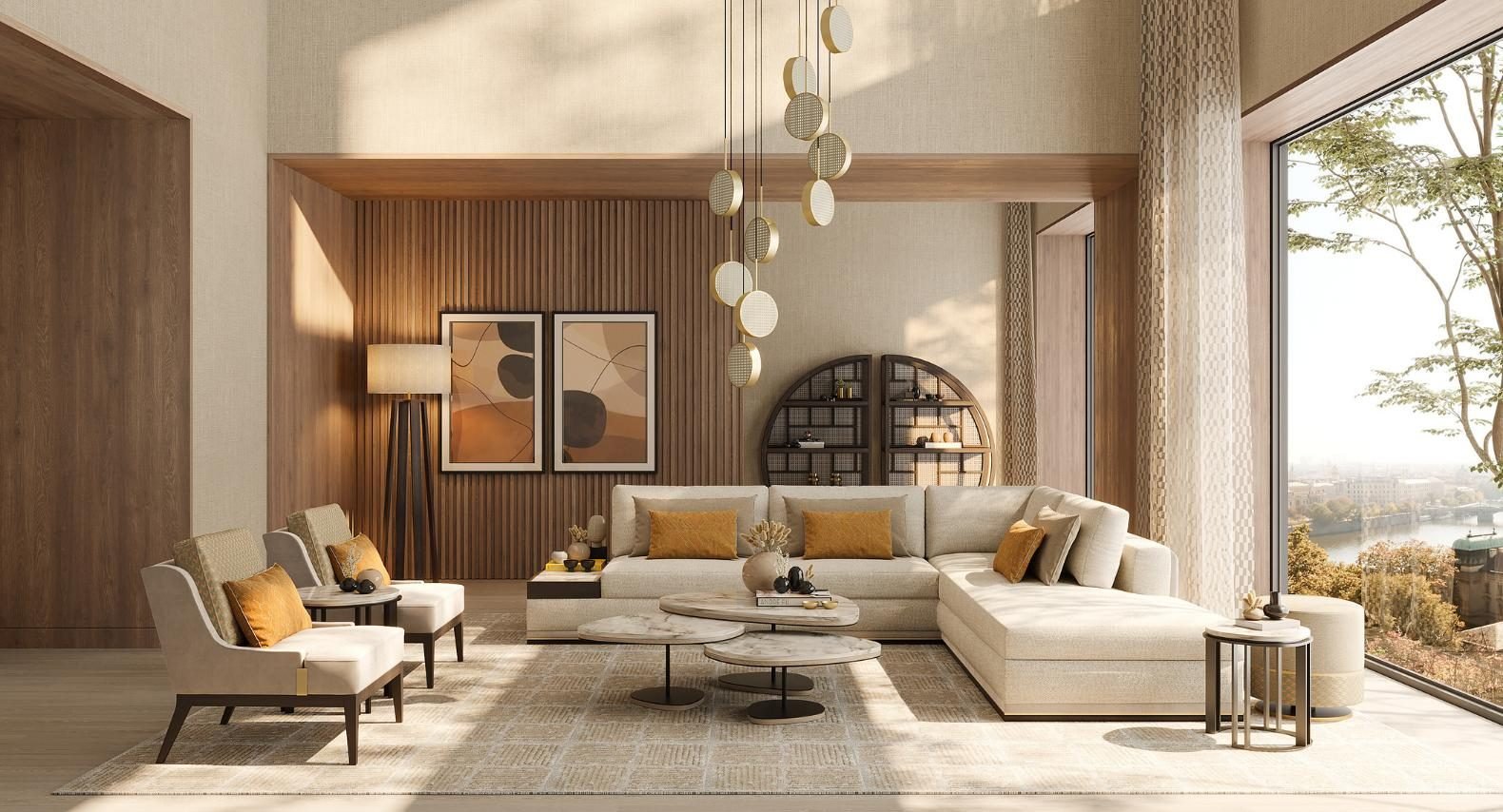
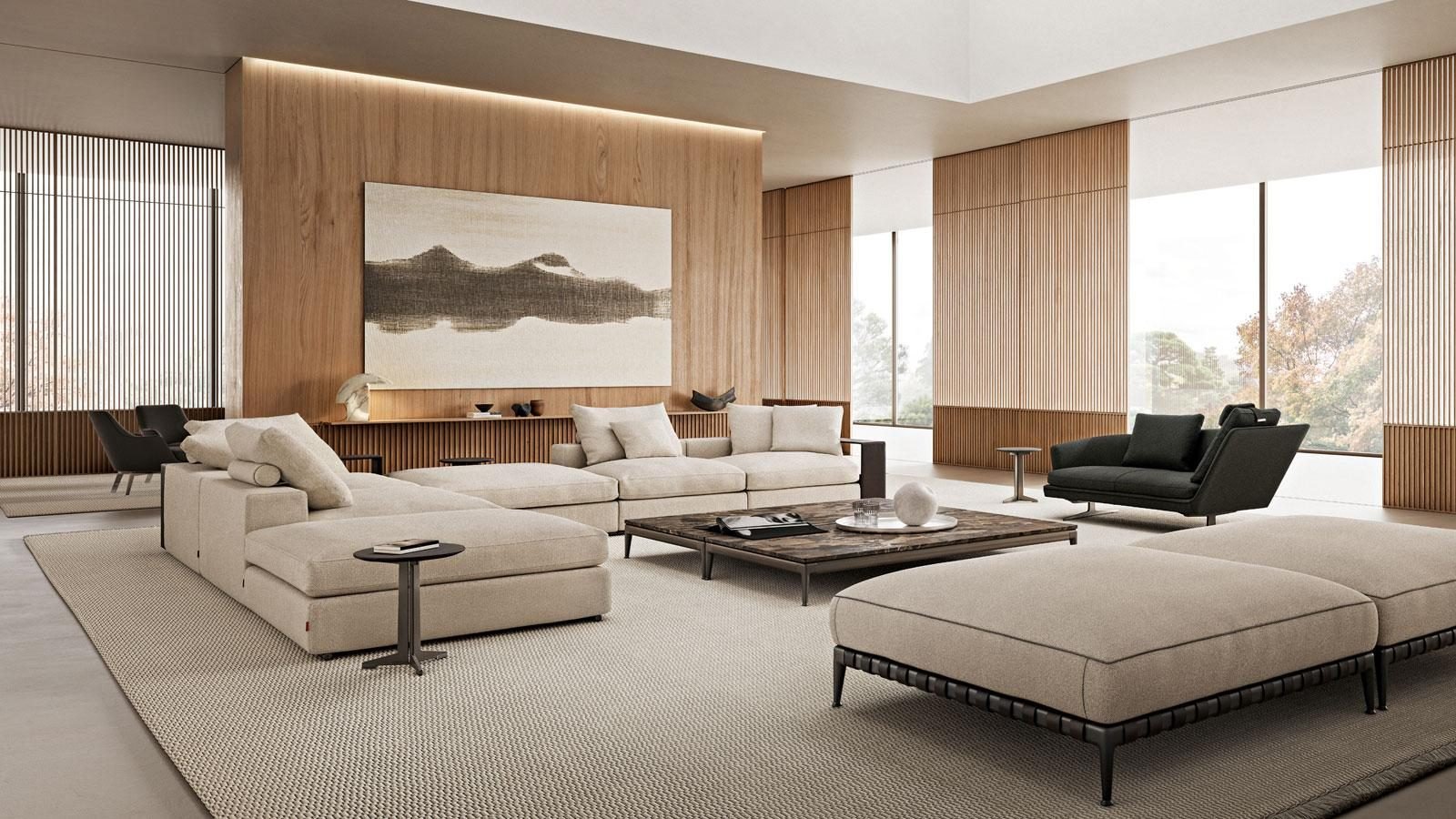
Slatted timber walls have become a hallmark of modern and Scandinavian design. Thin vertical or horizontal battens are fixed across the wall, often over a dark backing to create depth, giving the room the architectural quality of bespoke joinery.
Slatted panels, especially those with an acoustic felt backing, can also help soften echo, which makes them a good choice for living rooms that double as a home cinema. Whether you choose warm walnut, light oak or a painted black finish for a more dramatic look, slats add a rhythmic, geometric element that feels both timeless and current.
4. Gallery wall
A gallery wall is perhaps the most personal kind of feature wall, bringing memories, art and interests together into one visual story. The secret to a professional result is organised variety: the pieces can be eclectic, but something should tie them together, such as a consistent colour palette, a single frame style or a shared theme.
To plan one, lay the frames out on the floor first and experiment with the arrangement. Mix a few large anchor pieces with smaller fillers. Do not be afraid to include unexpected items such as a vintage clock, a wall-mounted sculpture or decorative plates; they add depth and stop the wall looking like a flat grid.
5. Stone and marble
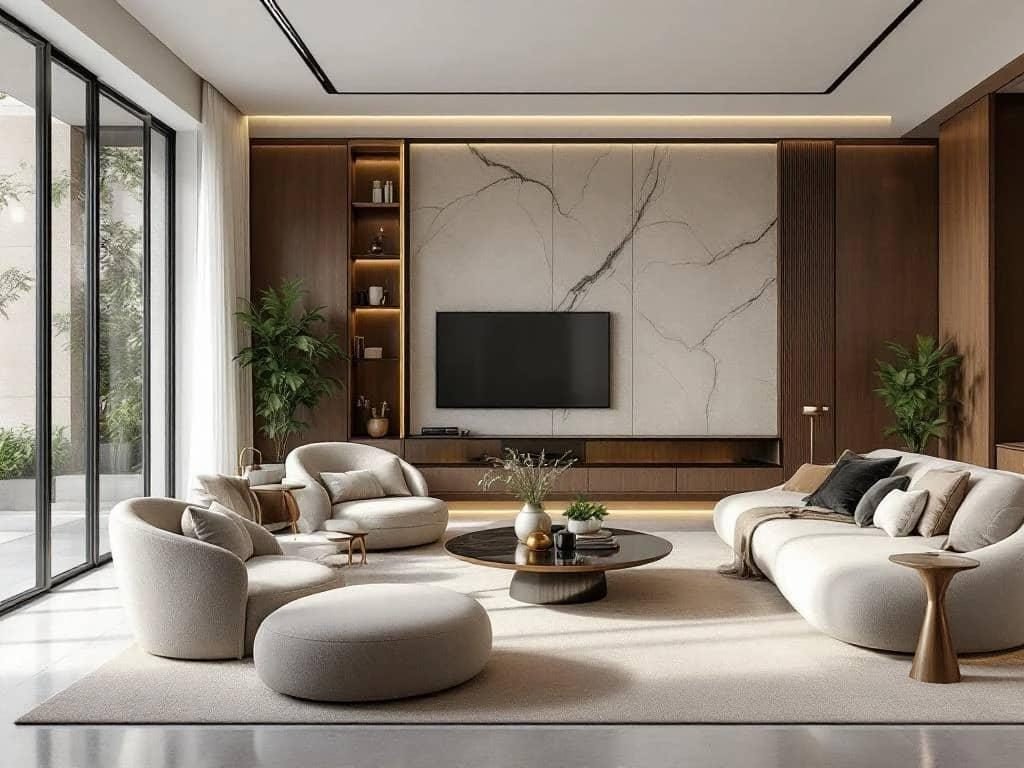
For a look of permanence and luxury, stone is hard to beat. It brings the beauty of natural materials indoors: stacked stone cladding gives a rustic, lodge-like feel, while large-format marble or travertine slabs look sleek and contemporary.
Stone walls come alive with integrated lighting. Uplighters or recessed wall-washers pick out the natural texture and create a dramatic play of light and shadow in the evening. Because stone is visually heavy, keep the surrounding furniture simple and clean-lined so the room does not feel crowded.
6. Floating shelves
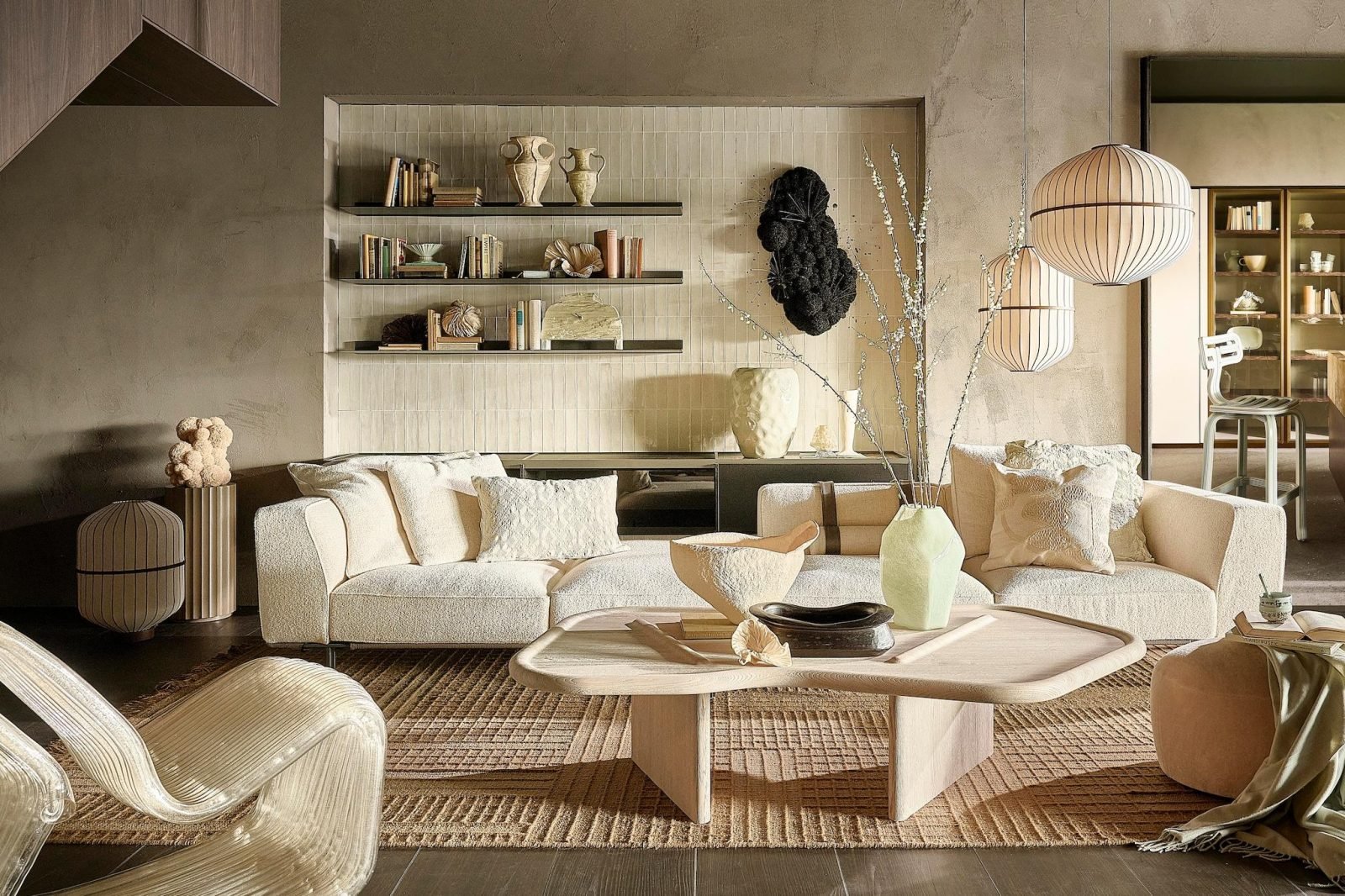
Floating shelves turn storage into a design statement. Chunky shelves with concealed brackets look both practical and minimal, and they give you a place to rotate seasonal pieces, books and art.
To style them well, follow the rule of three: group objects in odd numbers and vary their heights to keep the eye moving. Stack some books upright and some flat to create different levels, and add a few small plants, such as ivy or pothos, to soften the hard lines of the shelves and the wall.
7. Large-scale art
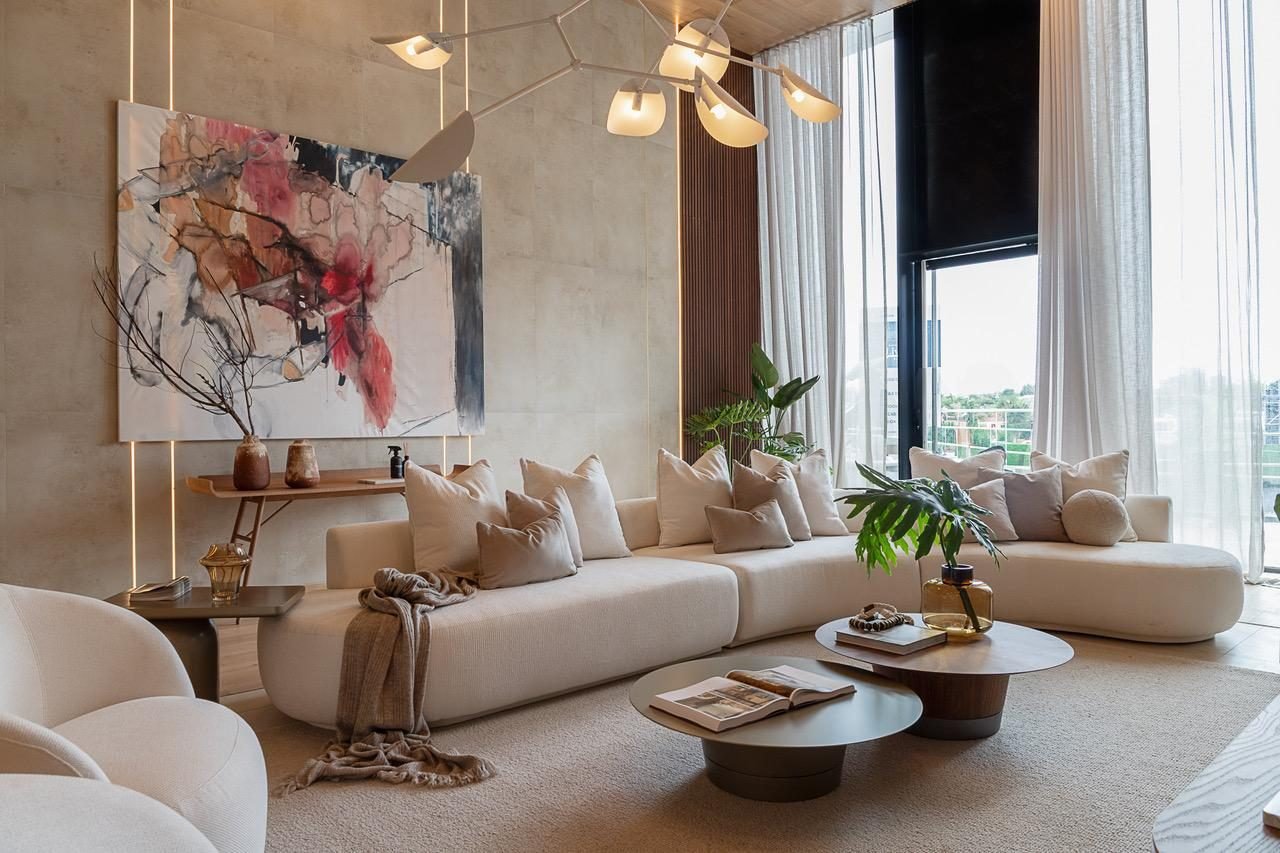
Sometimes less is more. One oversized artwork can have more impact than a dozen smaller pieces, simplifying the view and making the room feel larger and more curated. It is a favourite technique in minimal and luxury interiors, where the aim is a strong first impression without clutter.
Consider the scale of the furniture below: the artwork should usually be about 60 to 75 percent of its width. Hang it with the centre at roughly eye level, around 145 to 150 cm (57 to 60 inches) from the floor, so it feels connected to the room rather than floating near the ceiling.
8. Exposed brick
Exposed brick brings a much-loved industrial character. If your home has no original brickwork, good brick slips or veneers give a very similar look. Brick adds warmth through its earthy reds and browns, and its rough texture contrasts beautifully with soft wool rugs and velvet chairs.
If red brick feels too heavy, try a German smear or a simple whitewash, applying a thin layer of wet mortar or diluted paint over the bricks to soften the colour while keeping the texture. The result is bright and airy, closer to a European cottage or a modern farmhouse.
9. Mirror arrangements
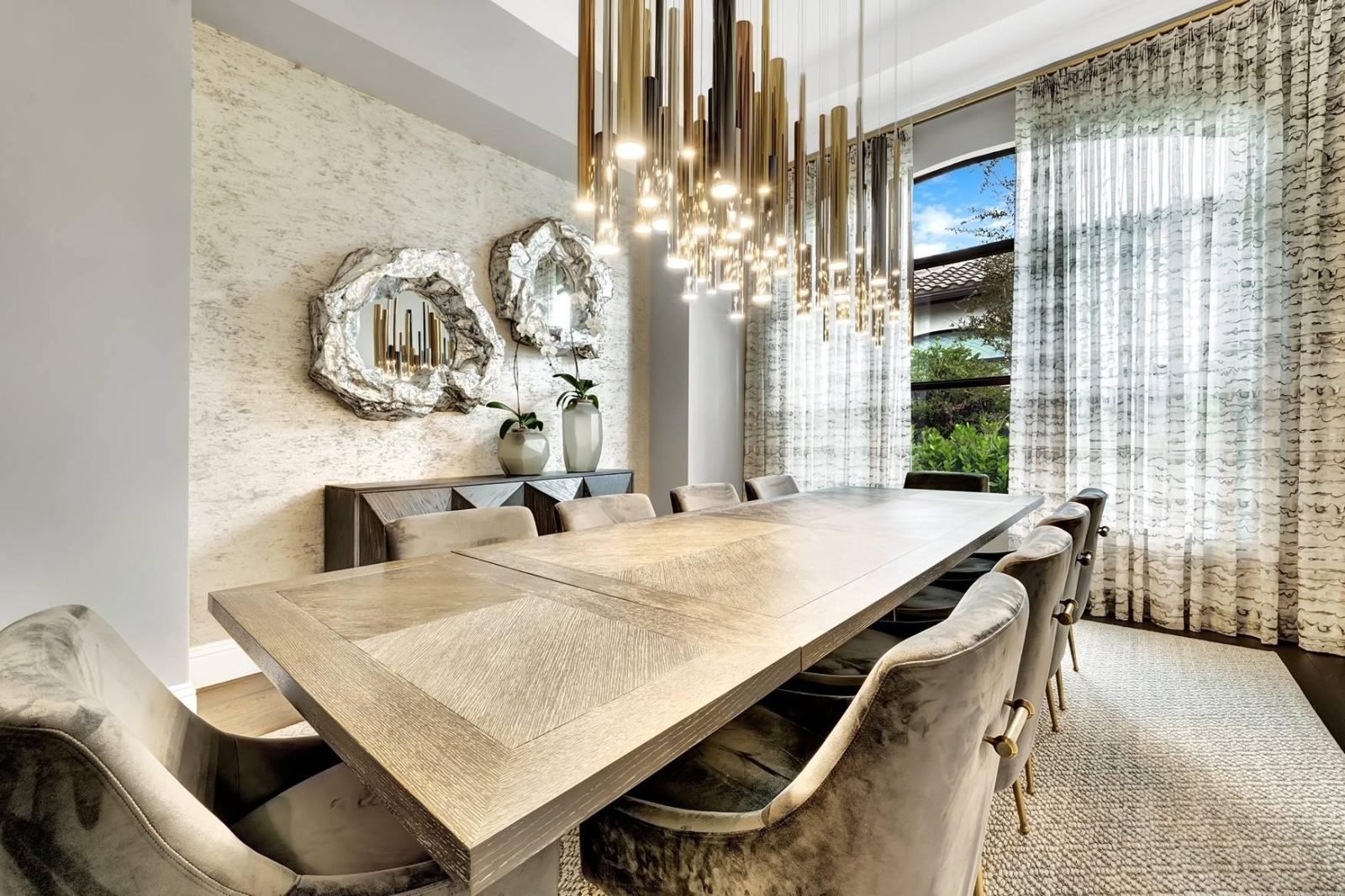
Mirrors are a designer's secret weapon for small or dark living rooms. A mirrored feature wall, whether one oversized floor mirror or a grid of smaller framed pieces, adds visual depth and spreads natural light.
For a more sophisticated look, consider antiqued glass, which has a softly mottled, vintage finish. It tones down the reflection and adds a sense of history. Place mirrors opposite a window or a beautiful piece of furniture so that what they reflect is worth seeing twice.
10. Preserved moss
Biophilic design, which connects interiors with the natural world, has made preserved moss walls increasingly popular. They introduce greenery without the care that houseplants need: preserved moss needs no watering or sunlight and keeps its colour for years, although it is best kept out of direct sun and very dry air.
Moss walls also help soften sound and bring a calm, organic presence to a room. Because moss comes in different textures, from flat sheet moss to rounded cushion moss, you can create sculptural designs that look like a forest seen from above. It is a bold choice and an instant conversation starter.
11. Panelling and wainscoting
If you prefer a traditional or transitional look, wall panelling (tongue-and-groove, board-and-batten or picture-frame moulding) gives a room architectural bones. Picture-frame moulding is especially popular for a refined, Parisian-apartment feel. It breaks up large plain walls and adds a sense of craftsmanship.
To modernise it, paint the panelling and the wall above in the same colour. This tonal approach shows off the shadows and shapes of the moulding without the contrast looking dated. Alternatively, paint the lower panelling a contrasting colour for a classic, grounded look that draws the eye down towards the furniture.
12. Digital mural
Advances in digital printing have made custom murals more accessible than ever. A mural can transport your living room to a misty forest, a city skyline or an abstract watercolour. Unlike repeating wallpaper, it is a single image made to fit the exact dimensions of your wall.
Murals work particularly well in rooms with little furniture, where they supply all the visual interest. Make sure the wall is perfectly smooth before hanging, because a high-resolution print shows every bump and crack. A landscape with a vanishing point, such as a path leading into the distance, visually pushes the wall back and can make a small living room feel larger.
Tip: Before committing, order a large sample or tape up a print-out of the design and look at it in both daylight and lamplight. A feature wall is the first thing people see, so it is worth living with it for a few days.
Conclusion: finding your focus
A feature wall is more than decoration; it is a chance to define the character of your home. Whether you choose the quiet elegance of textured wallpaper, the presence of stone or the personal touch of a gallery wall, the most successful designs reflect the people who live with them. Consider scale, lighting and texture, and a plain wall can become a captivating focal point. Design evolves, so choose a wall that suits your style today and feel free to adapt it as your tastes change.
For help placing furniture around your new focal point, read our living room furniture arrangement guide. Our wall decor and wallpaper service can design and install your feature wall, or you can book a consultation.


